


Queen conch mobile hatchery records first hatch in The Bahamas

Queen Conch Mobile Lab produced its first juvenile queen conch, marking a milestone for restoration efforts across the Caribbean
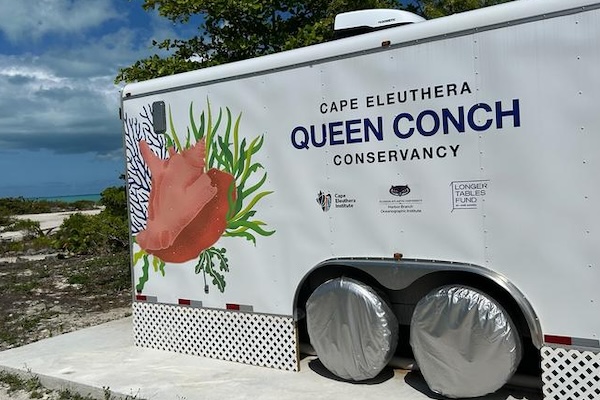
A mobile hatchery for queen conch conservation in The Bahamas has recorded its first egg masses and successful hatch, marking a milestone for efforts to help restore the endangered marine species.
The Queen Conch Mobile Lab, developed by Florida Atlantic University’s Harbor Branch Oceanographic Institute in partnership with The Island School’s Cape Eleuthera Institute, recently became fully operational on the island of Eleuthera. Part of the Cape Eleuthera Queen Conch Conservancy, the solar-powered, self-contained hatchery is designed to produce up to 2,000 juvenile queen conch annually for restoration efforts across the Caribbean.
Researchers introduced the first queen conch egg masses into the mobile lab in April and soon recorded its first successful hatch. Since then, teams from FAU Harbor Branch and the Cape Eleuthera Institute have been refining the hatchery’s systems to support egg hatching, larval development and juvenile rearing.
The first egg mass has already produced about 200 juvenile conch. According to the Cape Eleuthera Institute, more than 100 additional conch from the same cohort and a second egg mass have also completed the transition from larvae to juveniles.

“Seeing the first egg masses and hatch in the mobile lab means we are now actively growing the next generation of queen conch for restoration, for healthy seagrass ecosystems and for the communities across The Bahamas,” said Megan Davis, Ph.D., director of FAU Harbor Branch’s Queen Conch Lab and a research professor of aquaculture and stock enhancement. “It’s a transformative and hopeful moment for conservation.”
The conch have now transitioned from free-swimming larvae to juvenile conch. After hatching, the larvae completed a 21-day development cycle before undergoing metamorphosis in response to cues from seagrass detritus. The juvenile conch will continue growing in the hatchery for about one year before they are ready for release into the wild.
“Fewer than 1 percent survive to adulthood in the wild,” said Davis. “Queen conch reach adulthood at approximately 4 to 5 years of age, when the lip of their shell thickens to about 9 to 15 millimeters, and they can live up to 40 years, carrying the same shell throughout their entire lives.”
Native to Florida and the Caribbean, queen conch help maintain healthy seagrass habitats by grazing on algae. But populations have declined sharply due to overfishing and habitat degradation. The species is listed as threatened under the U.S. Endangered Species Act, and surveys suggest commercial fishing in The Bahamas could become unsustainable within the next 10 to 15 years without intervention.
Between 1980 and 2020, an estimated 31,000 metric tons of queen conch were harvested annually across the Caribbean, generating nearly $39 million in fisheries value each year.
During the breeding season, the conch will be transferred to grow-out tanks, where they will be fed natural diatoms and a seaweed-based gel diet. Once the conch reach approximately 7 to 9 centimeters in length, they will be acclimated in protected pens before being released into nearby seagrass habitats with local community members.
Beyond its conservation goals, the project is also designed to support education and community engagement. The mobile lab is expected to engage 1,000 to 1,500 visitors each year while providing workforce training, aquaculture education and outreach programs for local residents and fisherfolk.
“What continues to inspire us is the way this project brings people together,” said Becky Holt, assistant director of the Queen Conch Lab. “Scientists, students, fishers, interns and community members are all sharing in these moments together – whether it’s gathering late at night to witness a hatch for the first time or learning the techniques needed to support sustainable aquaculture. The mobile lab has become more than a research facility. It’s a place where conservation, education and community connection are happening side by side.”
The Eleuthera lab is part of a broader effort by FAU Harbor Branch to establish community-based queen conch farms across the Caribbean. Since launching its first mobile hatchery in 2022, the program has expanded to locations in Puerto Rico, Jamaica, Curaçao and The Bahamas.
“This work is about creating a future where Caribbean communities can actively help restore and sustain their own queen conch populations,” said Davis. “Our vision is to continue expanding these mobile labs across the region, building local expertise, creating marine science opportunities and strengthening conservation efforts country by country. The queen conch is deeply tied to the identity, economy and ecosystems of the Caribbean, and we believe these partnerships can help ensure the species thrives for generations to come.”
Last year, FAU won a Responsible Seafood Innovation Award for bringing restoration science out of the lab and into Caribbean communities through the mobile labs.
Now that you've reached the end of the article ...
… please consider supporting GSA’s mission to advance responsible seafood practices through education, advocacy and third-party assurances. The Advocate aims to document the evolution of responsible seafood practices and share the expansive knowledge of our vast network of contributors.
By becoming a Global Seafood Alliance member, you’re ensuring that all of the pre-competitive work we do through member benefits, resources and events can continue. Individual membership costs just $50 a year.
Not a GSA member? Join us.
Author

Related Posts
Responsibility
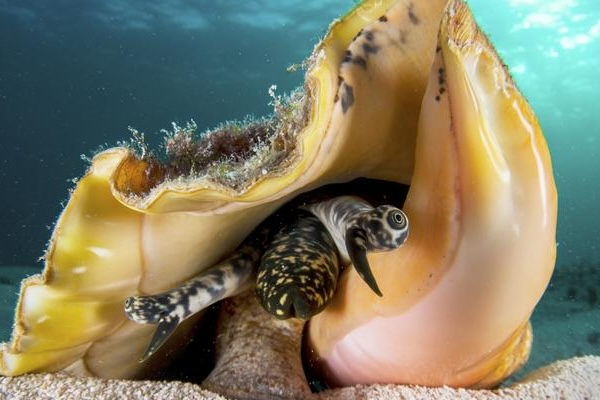
Bahamas aquaculture project to restore queen conch and support sustainable fisheries
New Bahamas project to restore queen conch will grow 2,000 juveniles yearly and train locals in sustainable fishing and conservation.
Intelligence
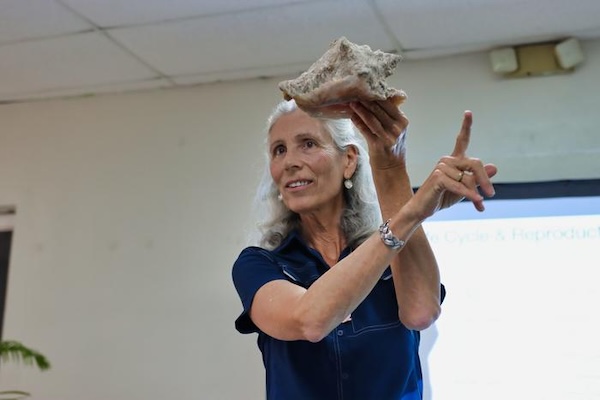
Want to learn how to grow queen conch in the Caribbean? Start online
A free online training program, eConch, helps Caribbean communities learn to conserve and culture the endangered queen conch.
Responsibility
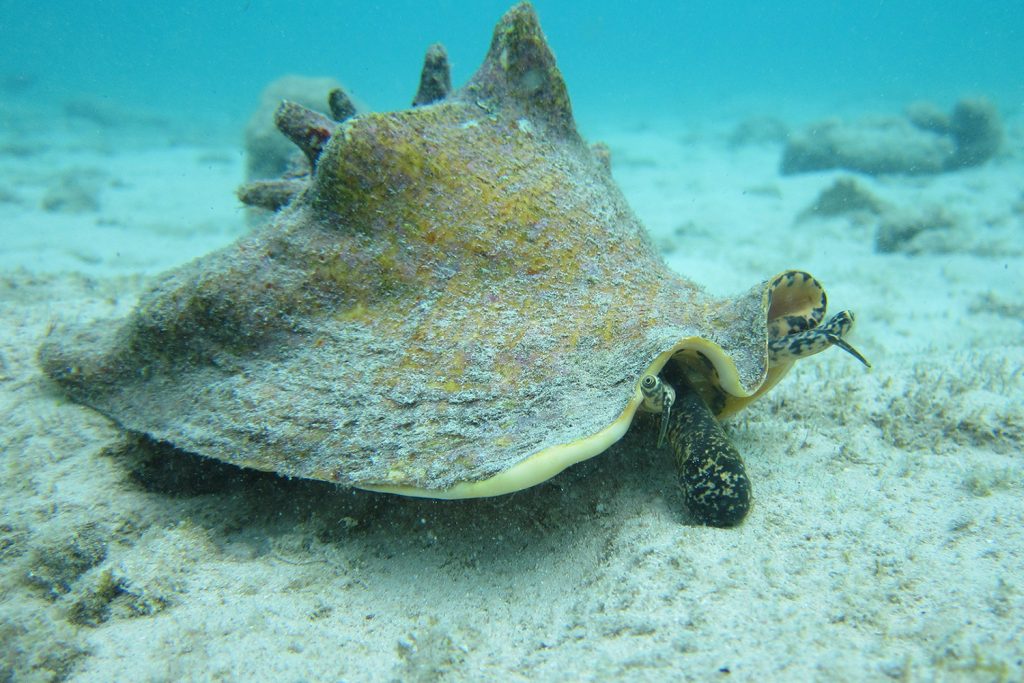
Aquaculture aids the restoration of iconic Caribbean shellfish queen conch
Dr. Megan Davis has written the book on culturing queen conch and will form a course to teach responsible practices to Caribbean communities.
Intelligence
FAU study will test commercial viability of queen conch aquaculture
A 12-month FAU study in The Bahamas will assess market potential, farm design and environmental benefits of scalable queen conch aquaculture.