


Inside the science: How mitochondria could boost New Zealand fish farms’ climate resilience

New Zealand researchers are studying mitochondria to improve fish growth, survival and climate resilience in aquaculture
New Zealand’s aquaculture sector is seeking practical strategies to increase production performance and strengthen its resilience to climate change in increasingly challenging farming environments.
One promising approach is to focus on mitochondria, which drive metabolism and influence temperature sensitivity, offering strong potential to enhance performance and address fundamental challenges efficiently.
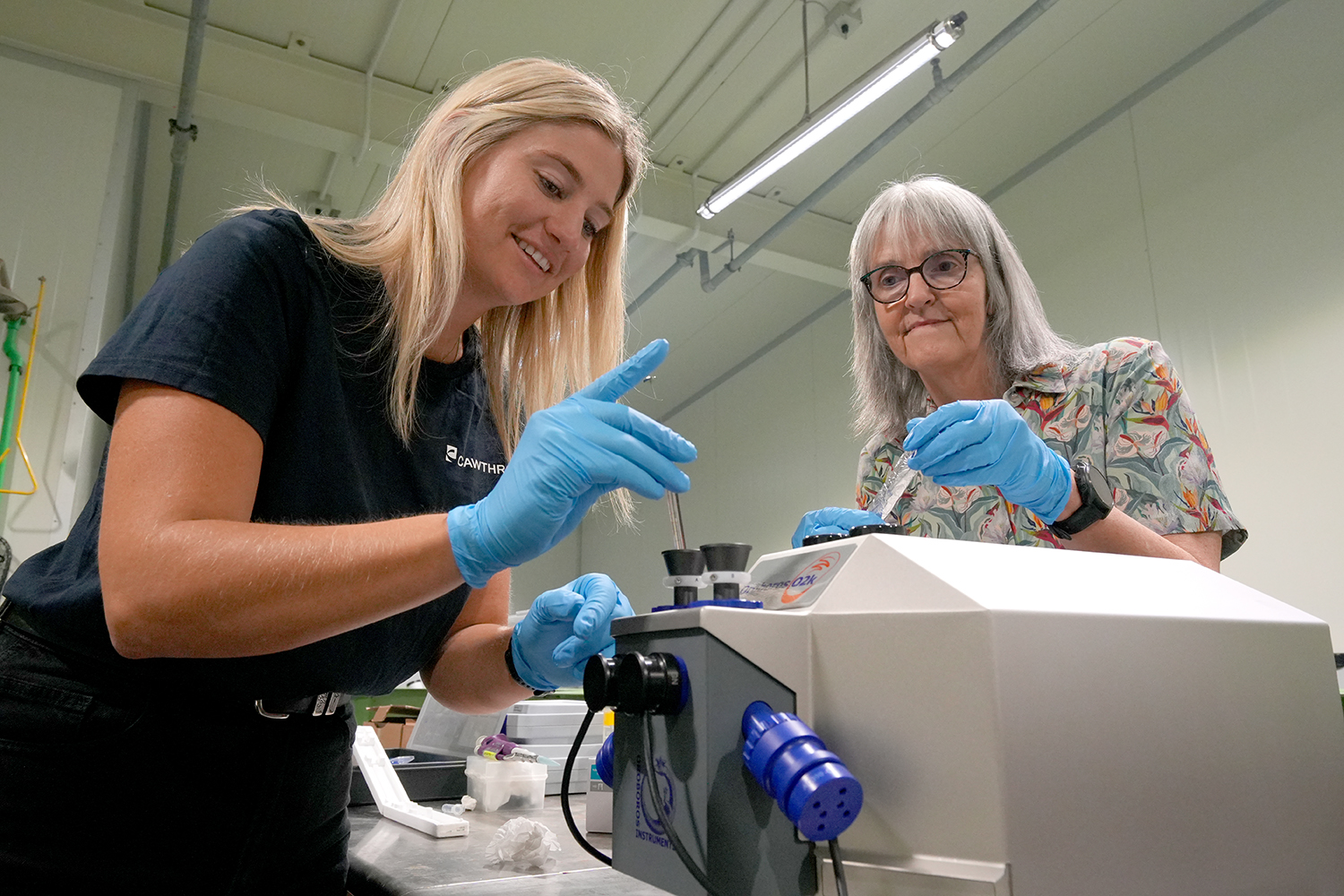
Scientists at the Cawthron Institute in Nelson are exploring the potential of boosting mitochondria to benefit fish farmers. As part of a two-year project called Supercharging Mitochondrial Function, the team will examine how enhancing mitochondrial performance can improve the growth, climate resilience and survival of aquaculture species.
“Our research has been focusing on understanding what makes fish more climate-resilient, which is critical for aquaculture in an uncertain future,” Dr. Leteisha Prescott, fish physiologist at the Cawthron Institute, told the Advocate. “Through different thermal tolerance trials, we were able to identify individuals that continued feeding and growing under suboptimal conditions. We suspected that this could be linked to mitochondrial function and connected with researchers at the University of Auckland to explore a pilot study integrating mitochondrial function into our research.”
![Ad for [BSP]](https://www.globalseafood.org/wp-content/uploads/2025/07/BSP_B2B_2025_1050x125.jpg)
New Zealand’s aquaculture sector faces mounting challenges, including rising sea temperatures, harmful algal blooms, marine heatwaves and storms, with salmon and mussels especially vulnerable to warming waters. Prescott and her team are aiming to help the industry adapt by developing new protocols and strategies to respond accordingly. By clarifying the role of mitochondria in fish and shellfish performance – and whether this role can be enhanced – they hope to create a tool that can better assess the health of farmed species.
“Mitochondria are essential for converting ingested energy into cellular energy and underpin nearly all aerobic processes,” said Prescott. “For fish and shellfish, this is even more important because they are ectothermic and must sustain these processes as environmental temperatures change. The role of mitochondria in stressor performance remains largely unexplored, particularly in terms of aquaculture species and the impacts on production biology. We believe that by increasing mitochondrial plasticity and manipulating it in different ways, we may be able to improve performance under suboptimal conditions.”
The project will investigate both genetic, nutritional and environmental strategies to enhance mitochondrial efficiency, including targeted breeding, diet formulations and husbandry practices that support metabolic function and stress tolerance. It will assess how mitochondrial function influences performance, resilience and robustness in the three main aquaculture species in New Zealand – Chinook (king) salmon, GreenshellTM mussels and Pacific oysters – as well as the emerging species snapper. The research will focus on mitochondria across different tissues using high resolution respirometry and fluorometry.
“The target tissues are crucial for the questions we’re addressing,” said Prescott. “For thermal tolerance in fish, for example, the heart and brain are vital for survival but are often the first organs to fail under heat stress, likely due to mitochondria not producing enough adenosine triphosphate (ATP). We also plan to explore how mitochondria in salmon hearts perform and determine if mitochondrial performance relates to their thermal tolerance. We will measure mitochondrial respiration rates, simulating and isolating different respiratory complexes involved in generating ATP and manipulate factors such as temperature, oxygen, or salinity to study mitochondrial performance under various environmental stressors.”
“Our research often uses family individuals with known genetics,” said Dr. Jane Symonds, senior aquaculture scientist at the Cawthron Institute. “We will compare individuals with different phenotypes – fish that thrive under stress and those that don’t – to see if mitochondrial function varies, which parts of the pathways differ, and whether there are any differences in the mitochondrial or nuclear genomes.”
The project has the potential to bring significant economic and environmental benefits to New Zealand, including faster growth and better adaptability to climate change and open-ocean farming. It will also advance knowledge of mitochondrial function and its importance, said Prescott, as well as its role in survival, particularly during challenging conditions like marine heat waves.
With interest from salmon feed companies, the team also plans to test responses to different feeds and ingredients and their effects on mitochondrial function. Ultimately, the project aims to identify practical strategies such as improved diet and breeding to boost mitochondrial function and give farmers a tool to assess animal health and performance and predict how well those animals might perform under varying conditions.
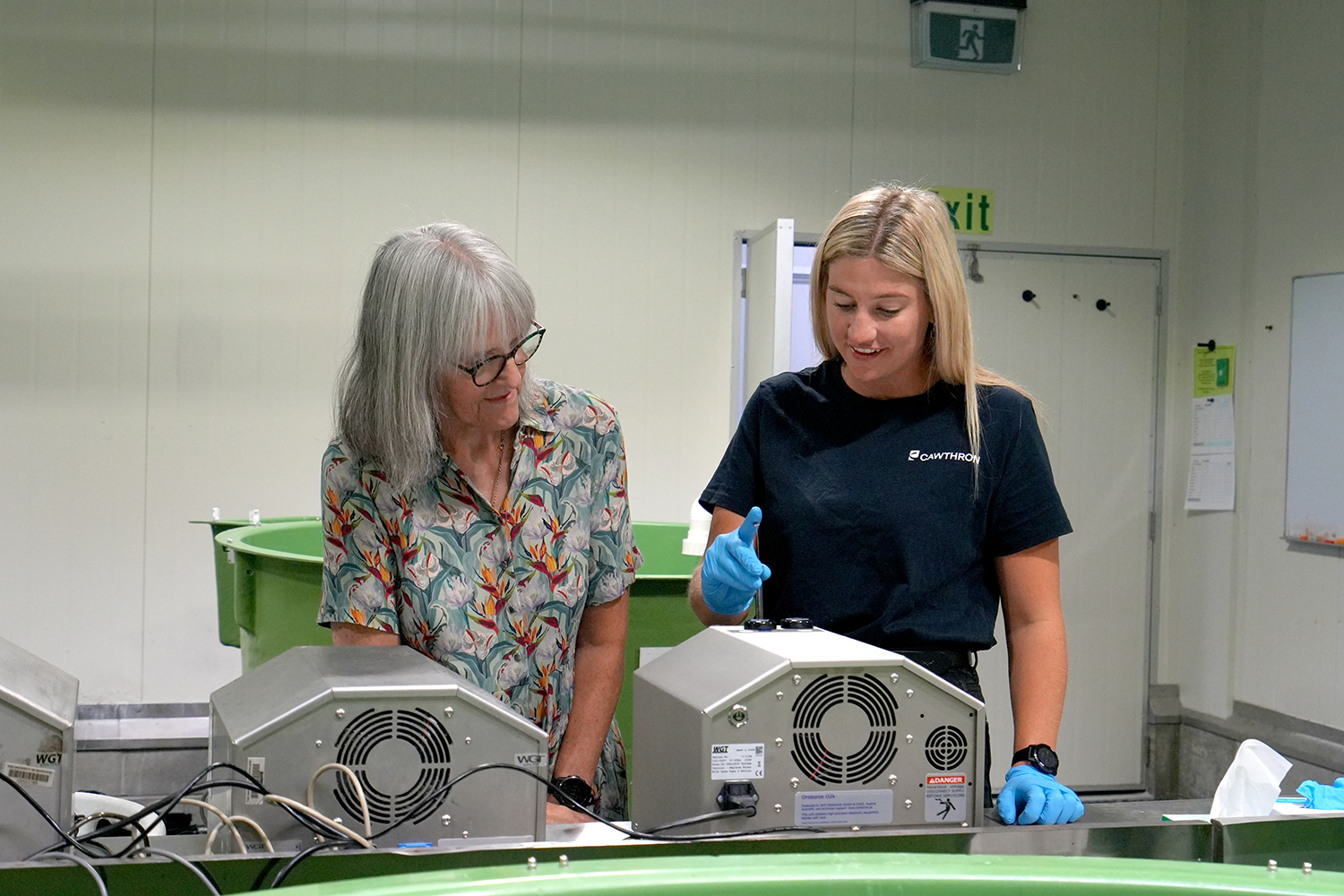
“Jane (Symonds) and her team are aiming to better understand what makes a climate-adapted finfish, with particular focus on the genetic factors behind their performance,” said Prescott. “This project ties into our mitochondrial research, linking mitochondrial function to genomics. Our work with salmon involves commercial farms as well, which means that findings can be applied directly to their industry breeding programs. If we identify mitochondrial genes that improve function, they can be used immediately. We’re also examining how macronutrient ratios affect mitochondria and production, with results shared with feed companies for use in commercial diets or R&D.”
With growing interest and involvement in the project from outside New Zealand, the team will be working to ensure that their findings are applied to commercial practice as soon as possible.
“Through this project, I hope to improve the health, welfare and survival of farmed individuals, especially under suboptimal conditions,” said Prescott. “More resilient stocks and a better understanding among farmers of how their stock responds to these conditions would be a massive benefit that would allow real-time management to mitigate challenges effectively.”
“It’s about understanding the whole fish or shellfish, their responses to changes, and improving health, welfare and survival while helping farmers develop more resilient stocks,” said Symonds. “At the Cawthron Institute, our decades of research, industry partnerships and expertise in physiology, breeding and nutrition allow us to offer advice and consulting to the global industry to improve farm performance and adapt to climate change. We are excited to play a part in addressing real-world challenges that aquaculture is facing today, not just in New Zealand but also worldwide.”
Looking ahead, the team plans to study how static and fluctuating temperatures affect mitochondrial function in snapper and conduct a nutritional study in salmon to examine how macronutrient ratios impact production performance and metabolic health. Meanwhile, a swimming trial with commercial Chinook salmon families will assess links between swimming performance, genetics, mitochondrial function and heat tolerance.
Now that you've reached the end of the article ...
… please consider supporting GSA’s mission to advance responsible seafood practices through education, advocacy and third-party assurances. The Advocate aims to document the evolution of responsible seafood practices and share the expansive knowledge of our vast network of contributors.
By becoming a Global Seafood Alliance member, you’re ensuring that all of the pre-competitive work we do through member benefits, resources and events can continue. Individual membership costs just $50 a year.
Not a GSA member? Join us.
Author
-

Correspondent Bonnie Waycott became interested in marine life after learning to snorkel on the Sea of Japan coast near her mother’s hometown. She specializes in aquaculture and fisheries with a particular focus on Japan, and has a keen interest in Tohoku’s aquaculture recovery following the 2011 Great East Japan Earthquake and Tsunami.
Related Posts
Fisheries
Amid warnings, some marine species exhibit climate resilience as oceans warm
Warming oceans are causing major changes, yet some fish species, where the waters are most in flux, are showing climate resilience.
Responsibility
Does aquaculture really need a heat-tolerant salmon to adapt to rising ocean temperatures?
With rising ocean temperatures, are efforts to breed a heat-resistant salmon a race against nature? Or does the ideal fish for tropical aquaculture already exist?
Health & Welfare
Barcoding, nucleic acid sequencing are powerful resources for aquaculture
DNA barcoding and nucleic acid sequencing technologies are important tools to build and maintain an identification library of aquacultured and other aquatic species that is accessible online for the scientific, commercial and regulatory communities.
Health & Welfare
No fluke: Cawthron Institute’s new web tool could help fish farmers tackle parasitic infection
Cawthron Institute has developed “BeNeZe” – a new web tool to help fish farmers manage parasitic infection in Kingfish and Amberjacks