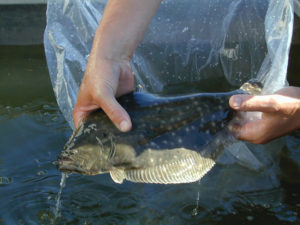
Southern flounder culture at Texas Parks and Wildlife Department
The Texas Parks and Wildlife Department’s southern flounder stock enhancement has stocked more than 400,000 fingerlings into Texas bays and estuaries.



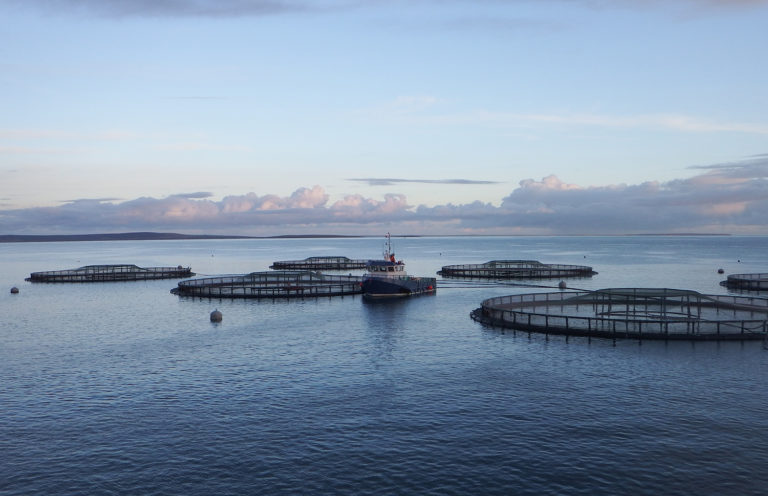
Despite the positive outputs of the global salmon farming business it remains a target for sharp criticism. In Scotland, the industry’s battle against misleading and inaccurate information reaches a new level.
The Texas Parks and Wildlife Department’s southern flounder stock enhancement has stocked more than 400,000 fingerlings into Texas bays and estuaries.
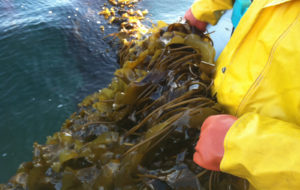
Grown for hundreds of years, seaweed (sugar kelp, specifically) is the fruit of a nascent U.S. aquaculture industry supplying chefs, home cooks and inspiring fresh and frozen food products.
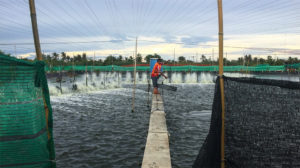
For small-scale aquaculture farmers in far-flung regions, creating traceability data can present major challenges, both linguistic and technological. It’s those challenges that VerifiK8 is poised and ready to help solve.
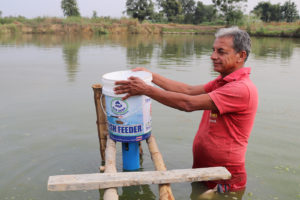
A study evaluated demand feeders on carp production in Nepal. Results showed that use can improve production, productivity and farmers’ livelihoods.
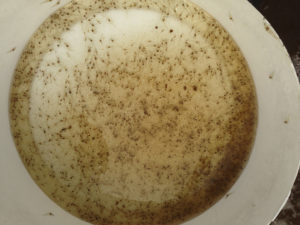
Prof. Claude Boyd on the importance of carbon-nitrogen ratios for pond fertilization and biofloc systems, and the relevance of precise carbohydrate inputs.
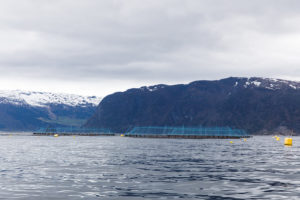
Focused on land-use implications of terrestrial meat production, the study concluded that aquaculture can meet the protein demands of a growing global population without adding strain on arable land, water or our other natural resources.
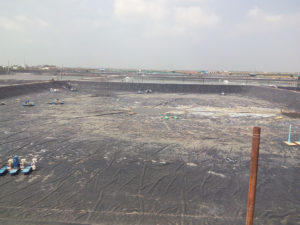
The use of plastic-lined ponds by shrimp farmers can significantly improve production efficiency, support more production cycles per year, and higher mechanical aeration rates and stocking densities. The capital cost of lining ponds can be very significant, so a thorough feasibility analysis is recommended when considering this production tool.
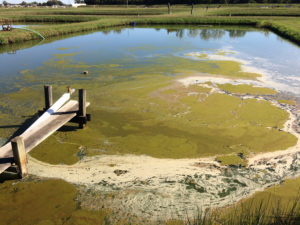
Results of this study demonstrated that a commercial, granular, SCP-based algaecide corresponding to 2.5 mg/L H2O2 can be recommended as an eco-friendly strategy to effectively remove populations of the cyanobacterium Planktothrix sp. without compromising water quality or other plankton communities.
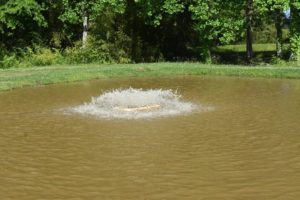
This study compared water temperature and water loss by evaporation in control ponds and in ponds aerated with surface aerators at four different aeration rates. Increased aeration rate increases the evaporation rate, which in turn lowers water temperature.
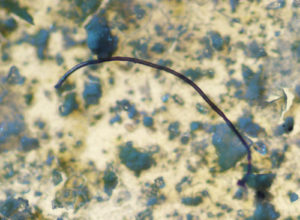
How has the plastic in aquaculture operations contributed to microplastic pollution? And is plastic pollution contaminating aquaculture products? The Advocate takes a closer look.
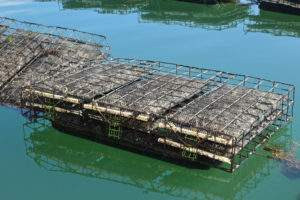
The Shellfish Growers Climate Coalition, an initiative of seven founding U.S. aquaculture farmers, last week launched a partnership with The Nature Conservancy (TNC) to spread public awareness about climate change and its impact on their businesses.
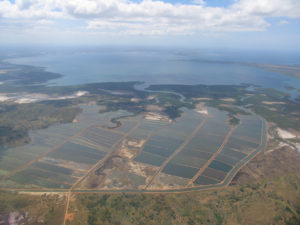
This article by Dr. Claude Boyd reports on global estimates for shrimp pond area in several countries. Because land use is an important indicator of the environment impact of an activity, better data on the shrimp pond area and the areas devoted to other types of aquaculture are needed.

While talk of preservation and conservation dominated the annual event, a blunt query reminded all that the oceans need protection and sustainable development.
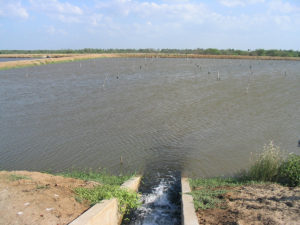
Ionic imbalance in low-salinity culture water may negatively influence shrimp survival and growth, and it is common to apply various mineral salts to low-salinity shrimp ponds.
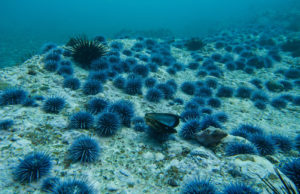
With Norwegian knowledge and a partnership with Mitsubishi, Urchinomics aims to turn worthless empty urchins into valuable seafood while restoring kelp forests and creating jobs.