Hybrid tilapia culture in an outdoor biofloc production system
This study in an outdoor biofloc technology production system evaluated impacts on fish production indices, common microbial off-flavors and water quality dynamics for hybrid tilapia.



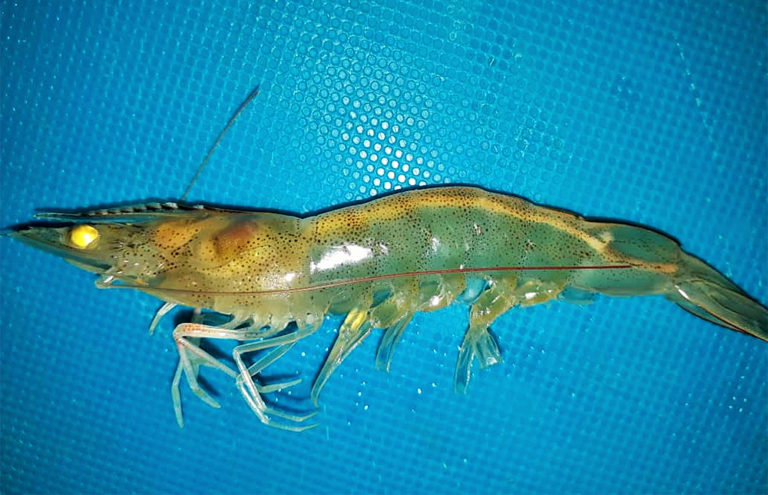
Study demonstrates strong association between White Feces Syndrome and Enterocytozoon hepatopenaei in EHP-endemic regions. Biosecurity strategies can minimize the risk of pathogen’s spread in the Americas.
This study in an outdoor biofloc technology production system evaluated impacts on fish production indices, common microbial off-flavors and water quality dynamics for hybrid tilapia.
This study evaluated the effect of feeding juvenile L. vannamei several times a day versus two and four times – manually or with an automatic feeder – with a low-fishmeal diet supplemented with crystalline amino acids.
This study investigated the effects of increasing levels of dietary soybean meal (SBM) with constant taurine supply in the induction of enteritis in juvenile totoaba.
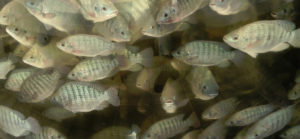
The latest knowledge about fumonisins in aquaculture and the importance of preventing synergistic interactions between different mycotoxins.
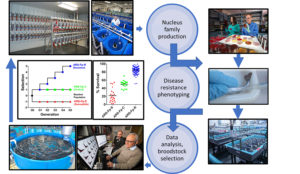
This study, involving more than 10 years of research on selective breeding, has shown that selective breeding can create considerable phenotypic divergence in rainbow trout lines when targeting a specific pathogen.
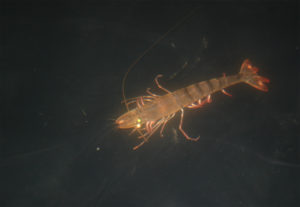
A research project aimed at improving shrimp hatcheries’ welfare practices shows there is a viable alternative to a common spawn-inducing technique.
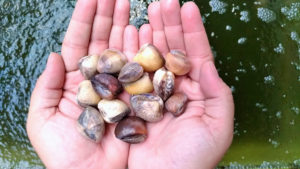
Larviculture and culture density research with West Indian pointed venus is relevant to restocking efforts to support the extractive fisheries from natural banks and also for the development of aquaculture.
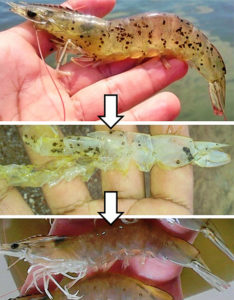
Shrimp hemocytes are an important defense against attacks by external agents such as viruses and bacteria. Health diets complement antibacterial action.
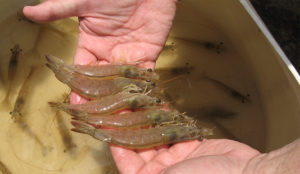
A new nested PCR method specific to farmed shrimp pathogen EHP can be used in routine diagnostics and is also useful to detect low-grade EHP infection.
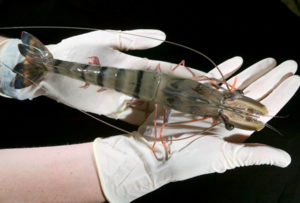
This study simulated the commercial grow-out of two cohorts of P. monodon that differed in their broodstock IHHNV infection loads, and showed that the viral prevalence, survival and growth performance of pond progeny were significantly affected.
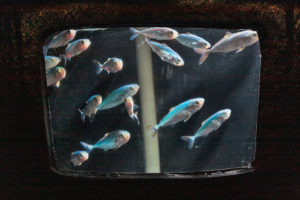
This study compared production performance and tissue fatty acid composition of California Yellowtail fed diets containing various saturated lipids.
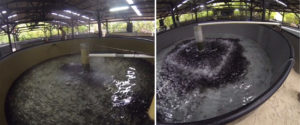
Hyperthermia, or heat shock treatment, is an unconventional approach to pathogen control in fish aquaculture that appears to have potential to improve disease resistance in fish like tilapia and barramundi.
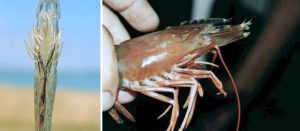
Authors describe conventional PCR and real-time PCR assays based on the NHPB flgE gene as alternative methods for the detection and quantification of NHPB in shrimp and shrimp-associated samples, including artemia. This newly described method will be an additional diagnostic tool for confirmation of this pathogen.
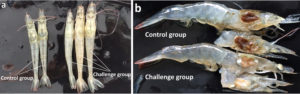
SHIV is a new Pacific white shrimp virus in the Iridoviridae family. Authors also developed an ISH assay and a nested PCR method for its specific detection.
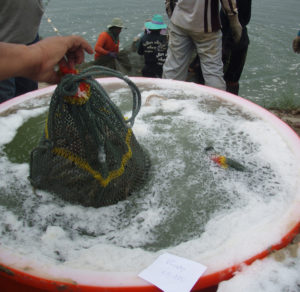
Study evaluated effects of stunning methods (thermal shock and electric shock) on the welfare of three crustacean species, including Pacific white shrimp.