Bridging the omega-3 gap with methane, microalgae
Innovation is leading to new ingredient options for renewable sources of omega-3 fatty acids. But Replicating long chain fatty acids is a tall order, Advocate contributor Lisa Duchene discovered.
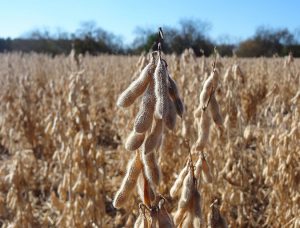
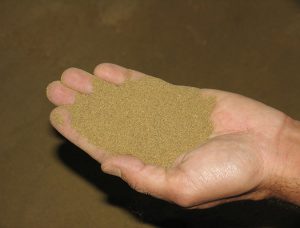
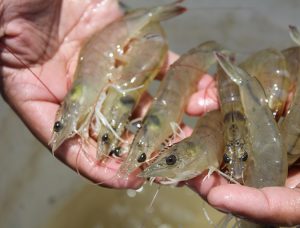
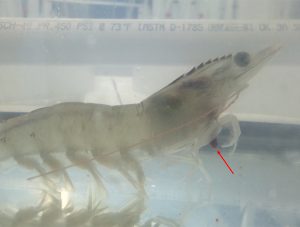
The performance of a new fishmeal replacement product was assessed for Pacific whiteleg shrimp juveniles using various experimental diets. Results indicate that this plant-based, fishmeal replacement product could be used to replace significant levels of fishmeal in shrimp aquafeed diets.
Innovation is leading to new ingredient options for renewable sources of omega-3 fatty acids. But Replicating long chain fatty acids is a tall order, Advocate contributor Lisa Duchene discovered.
The stable isotopes technique with δ13C and δ15N can be used to determine the relevance of different food sources to shrimp feeding during the pre-nursery phase of Litopenaeus vannamei culture. During this trial, different types of commercial feed, microalgae, Artemia sp. nauplii and bioflocs were used as food sources.
A competition designed to drive innovation in aquafeeds has doubled its original funding goal and has attracted some of the biggest names in fish feed. F3 has also served as a catalyst for collaboration among feed manufacturers and ingredient suppliers.
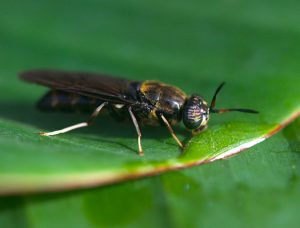
Black soldier flies are gaining interest as a leading alternative ingredient in aquafeeds. But will the “ick” factor be a turn-off? Advocate contributor Clare Leschin-Hoar investigates.
A study was conducted using a Twin-Screw Extruder equipped with Specific Mechanical Energy (SME) and Density Control valves, to determine the effect of SME on the water stability of shrimp feeds. Further research is needed to evaluate the performance.
Extrusion processing can be a better alternative to produce high quality-low- polluting shrimp feeds. Extruded pellets with high water stability can be produced by controlling the Specific Mechanical Energy (SME) and without the inclusion of artificial binders. New extruders are equipped with state-of-the art SME controls that permit the adjustment of the SME to the desired range, to produce soft very hydrostable pellets.
At the biannual International Symposium on Fish Nutrition and Feeding in Idaho, experts from around the world will discuss fish nutrition and health, feed research, cellular nutrition, nutritional modeling, nutrigenomics and effective feeds for quality consumer products.
The control of temperature and light intensity in microalgae culture in outdoor tanks is difficult. Progress in algal biotechnology and the use of photo-bioreactors, metabolic engineering and other advances supported development of a novel underwater light bank reactor that allows for more effective light utilization by cultured microalgae.
The development of this reactor for the indoor cultivation of non-suspended microalgae like important diatoms such as Amphora spp., and the cellular dry matter values produced in this study will help bio-filming science support the development and improvement of in situ feed supplementation for fish and shrimp ponds, particularly in desert environments.
A recent study evaluated the effects of a fishmeal-free diet on Atlantic salmon performance and fillet quality during successful growout to market-size in a commercial-scale, land-based, closed-containment system using water recirculation technology. Test fish performed well, with 97 percent survival during the 10-month growout period.
Well-designed and managed biofloc technology systems are a viable alternative for production of various species like tilapia, to increase feed efficiency by lowering aquafeed protein requirements and to help reduce or eliminate effluent discharges.
The effects of the dietary acidifier and feed additive potassium diformate (KDF) were tested in diets of juvenile Asian seabass (Lates calcarifer) in Thailand. Results show that including KDF at 0.5 percent in the diets can help improve growth, survival and therefore overall production of this species.
Carotenoids are important pigments that contribute characteristic quality criteria for the marketing of aquaculture products. Aquatic animals cannot biosynthesize carotenoids de novo, hence their inclusion in aquafeeds is important because they are associated with various metabolic functions.
The U.S. Soybean Export Council is a huge supporter of aquaculture growth globally, as so many aquafeed formulators rely on U.S. soy to create nutritious diets. The Southeast Asia senior technical advisor for USSEC’s aquaculture program talks about this symbiotic partnership.
A novel blend of organic acids (OAB) microencapsulated in a lipid matrix and supplemented in the diets of Litopenaeus vannamei enhanced their growth, phosphorus utilization, resistance to Vibrio harveyi and immunity. This may have implications as an eco-friendly prophylactic strategy.