


Study: American lobster fishery’s past could help improve future forecasts

Looking at the lobster fishery’s past could help scientists improve how forecasts are communicated and used to guide future decisions
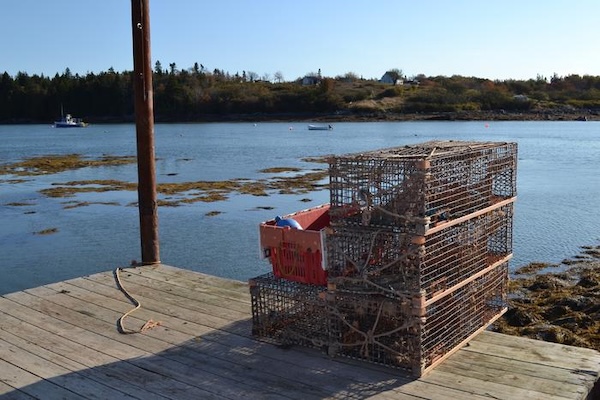
Researchers examining decades of American lobster (Homarus americanus) forecasts say understanding the fishery’s history and social context could make future projections more useful to fishermen, managers and coastal communities.
A study led by Bigelow Laboratory for Ocean Sciences reviewed how forecasts for the lobster fishery have evolved and how fishermen and other stakeholders have responded to them. The researchers said the findings underscore the importance of considering historical and socioeconomic factors when communicating projections about lobster abundance, landings and habitat change.
The study, published in FACETS, drew on news archives, historical lobster landing data, oceanographic data and archival quotes from the fishing industry.
“People’s reactions to forecasts are just as interesting as the forecasts themselves,” said Nick Record, senior research scientist and director of the Tandy Center for Ocean Forecasting at Bigelow Laboratory. “Forecasting the ocean isn’t just scientific – it’s social.”
![Ad for [BSP]](https://www.globalseafood.org/wp-content/uploads/2025/07/BSP_B2B_2025_1050x125.jpg)
Researchers pointed to predictions of a lobster fishery collapse in the 1970s and 1980s as an example of how past experiences can shape reactions to current forecasts. According to the researchers, Maine lobster fishermen who experienced those predictions may be more skeptical of forecasts today, depending on how the information is communicated.
That history matters because forecasts can influence decisions about fishing effort, investments in boats, pricing and other aspects of the fishery, the researchers said.
The study comes as increasingly sophisticated algorithms and growing amounts of data are being used to forecast changes in lobster abundance, landings and habitat. Researchers argue that improving the usefulness of those projections requires looking beyond the underlying scientific and environmental data to consider how forecasts are interpreted by the communities they affect.
“If we want to understand the ocean’s future, we have to understand its past, both in terms of the oceanographic and socioeconomic dynamics,” Record said.
The research also highlights the potential to combine environmental information with socioeconomic data. Bigelow Laboratory’s Tandy Center for Ocean Forecasting recently took ownership of the National Ocean Economics Program, which provides economic and social data related to oceans and marine resources.
Researchers said combining those types of data could provide a broader picture of changing marine ecosystems and their effects on coastal communities.
Now that you've reached the end of the article ...
… please consider supporting GSA’s mission to advance responsible seafood practices through education, advocacy and third-party assurances. The Advocate aims to document the evolution of responsible seafood practices and share the expansive knowledge of our vast network of contributors.
By becoming a Global Seafood Alliance member, you’re ensuring that all of the pre-competitive work we do through member benefits, resources and events can continue. Individual membership costs just $50 a year.
Not a GSA member? Join us.
Author

Related Posts
Fisheries
Researchers to monitor socioeconomic resilience of Maine’s lobster fishery
University of Maine research is measuring the socioeconomic resilience of the state's iconic lobster fishery and its supporting communities.
Fisheries
$18 million invested in fishing gear innovation to support North Atlantic right whale conservation
NFWF-NOAA funding will help develop and integrate new fishing gear in New England fisheries to help North Atlantic right whale conservation.
Fisheries
Maritime Canada’s lobster population is strong. So why are scientists worried?
The lobster population in Canada’s Maritime region falls within the healthy zone, but scientists worry about the effects of climate change.
Fisheries
DFO Canada: Season length a key tool for managing Maritime lobster fisheries
A new DFO study finds season length could be an effective tool for managing Maritime lobster fisheries as ocean conditions change.