


‘No longer quiet members’: How women are transforming Indonesia’s blue swimming crab fisheries

In Indonesia, women are stepping into leadership roles, turning local resources into economic opportunities while strengthening crab fisheries and coastal communities.
In coastal nations like Indonesia, fisheries are more than an industry – they are a lifeline, providing food security, livelihoods and cultural identity. Yet women’s contributions are often undervalued or overlooked, despite their vital roles in processing, trading or supporting community resilience. Closing these gender gaps is not just a matter of equity; it also strengthens fisheries by sharing knowledge, broadening opportunities and creating more inclusive decision-making.
In Lampung, at the southern tip of Sumatra, this shift is taking shape in the blue swimming crab (Portunus pelagicus) fishery, where women’s empowerment is helping transform both communities and the crab fishery.
Mitra Bentala Indonesia, a Lampung-based NGO, works across a range of community development initiatives, including efforts to promote sustainable blue swimming crab fisheries along the eastern coast. In partnership with the Environmental Defense Fund (EDF), the organization also supports women’s groups involved in processing and marketing blue swimming crab, helping to strengthen their roles and opportunities in the fishery.
The women’s groups receive training in seafood processing, marketing and financial management, alongside sustainable fisheries practices and how they connect to household well-being. The training programs aim to expand economic opportunities, build financial literacy, enhance organizational capacity and support better business management.
![Ad for [Aquademia]](https://www.globalseafood.org/wp-content/uploads/2025/07/aquademia_web2025_1050x125.gif)
“Our interventions focus on improving the economy of coastal communities,” Destia Novasari, program coordinator at Mitra Bentala, told the Advocate. “The initiative began during the COVID outbreak, which hit local livelihoods hard, especially women. We helped them form seafood processing groups (Poklahsar), turning local resources into products, while empowering and supporting them. This has continued over the years, with help available for both women and crab fishermen.”
Most women in the crab fishery are fishermen’s wives, supporting their households in many ways. They often prepare their husbands and equipment for fishing trips, repair nets or help with other fishing-related tasks. Many peel crabs or take part in seafood processing and marketing.
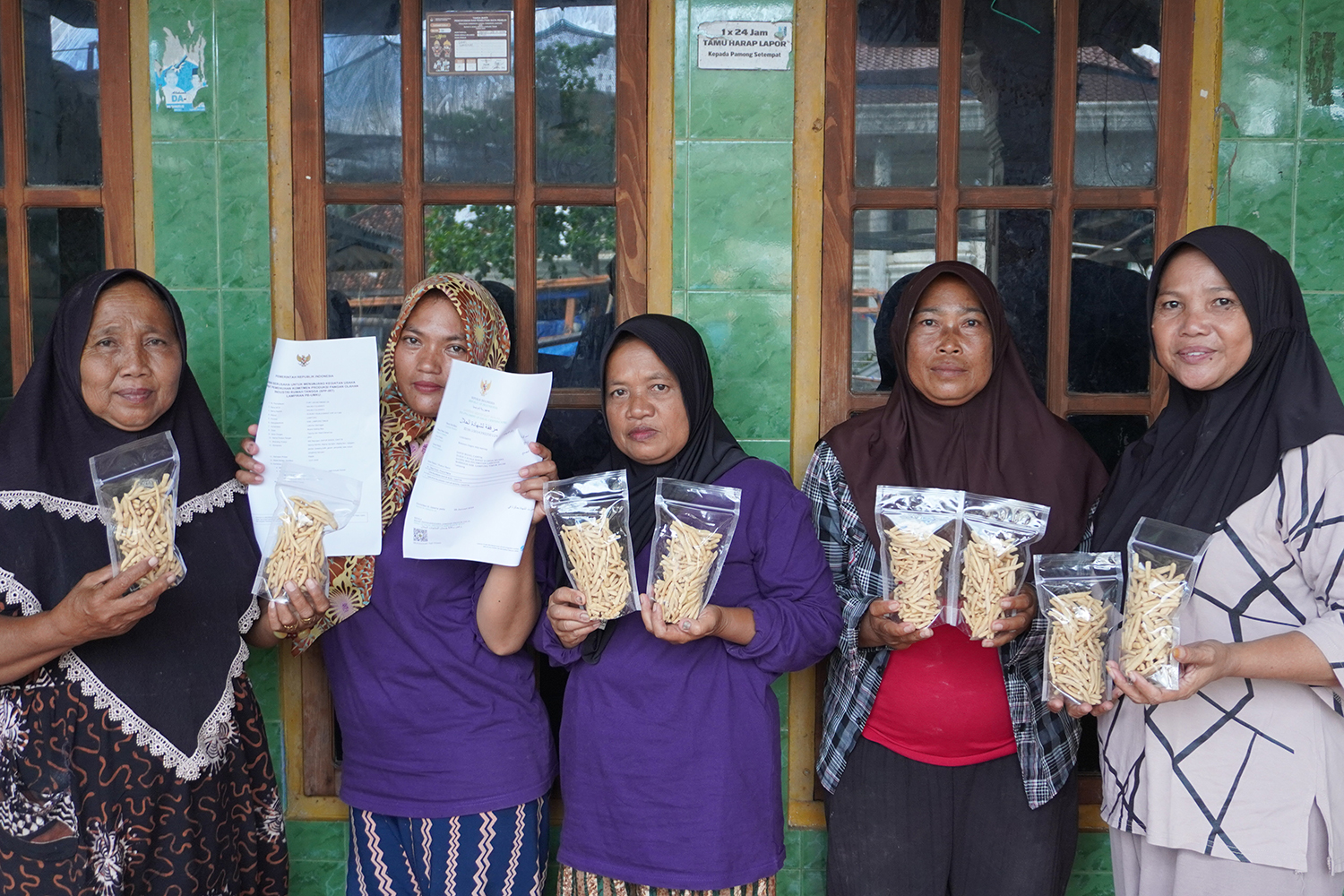
With training from Mitra Bentala, in collaboration with the Bogor Agricultural University, women’s groups have learned to produce fishery-based products. Blue swimming crab is transformed into snacks and chips, while clams are processed into sauces. By distributing these products beyond their village or district, some women have created new sources of income and greater economic independence.
Despite these gains, women in many coastal communities continue to face persistent stereotypes and social stigma. Many are still expected to stay at home or work only in the kitchen – deeply rooted beliefs that can limit their confidence, opportunities and participation.
“It’s still ingrained that it’s always the man’s role to speak or show up,” said Rizani Ahmad, executive director at Mitra Bentala. “Women here often lack the access or privilege that men have, so they feel hesitant to speak in meetings, share ideas or develop skills like public speaking.”
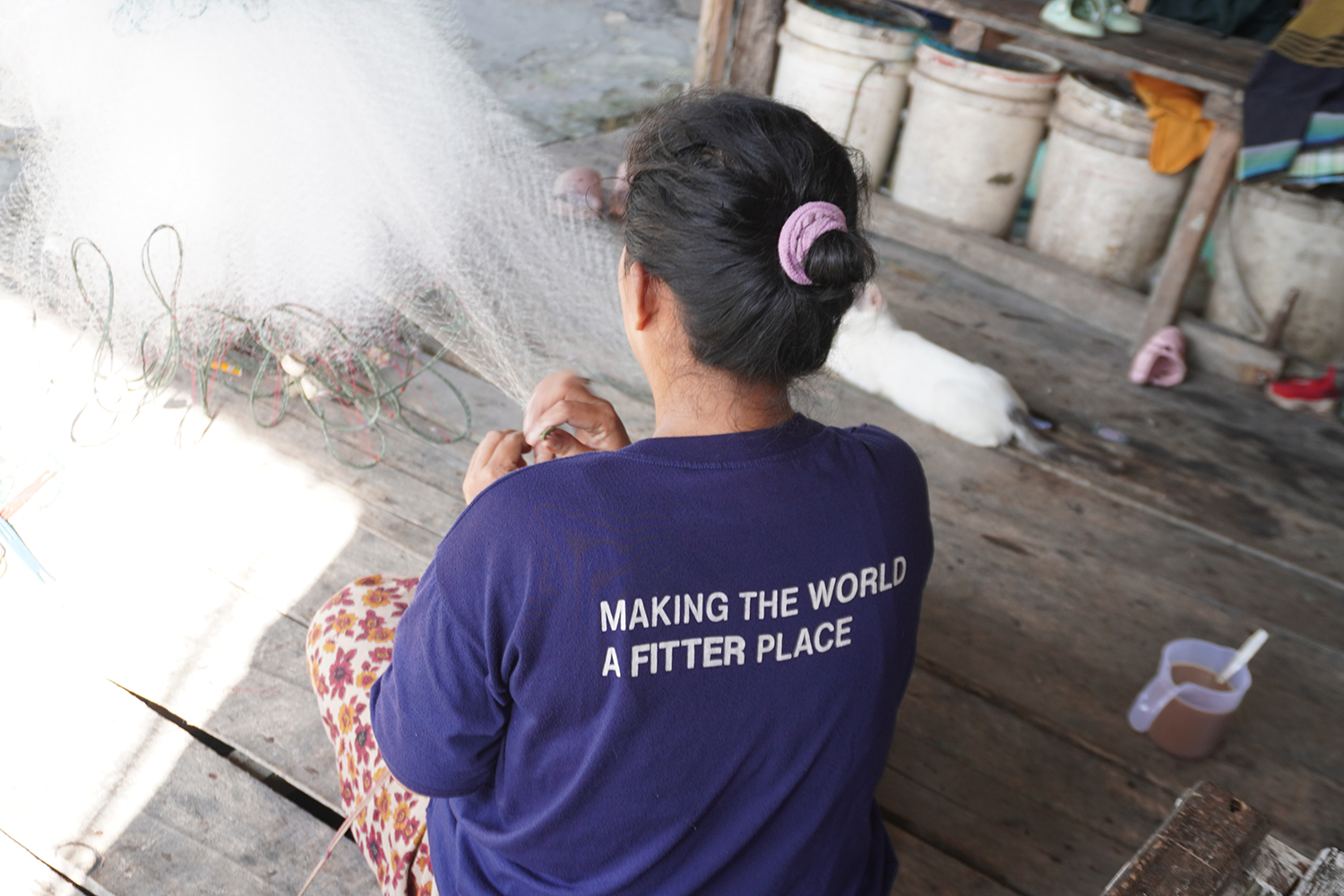
Despite these barriers, Mitra Bentala continues to empower women by encouraging them to voice their aspirations, market their products and reach wider audiences. Access to resources remains a challenge, said Rizani, with many women seeking more support or better tools to produce higher-quality snacks or products. For those in remote villages, long distances to markets make distribution even harder, limiting the reach of their work.
Still, the women’s groups persevere. They are steadily building confidence, improving products and overcoming social and logistical obstacles to create new economic opportunities for themselves and their communities. Over the years, interventions have led to notable improvements: women are increasingly involved in village meetings, fisheries management forums and even dialogues with government representatives on blue swimming crab issues.
“This involvement is crucial because it raises women’s position and voice,” said Novasari. “Previously, they were supporting actors in these discussions, but now they are taking on central roles.”
As a result, women leaders have emerged within the groups, confidently speaking up about responsible fisheries and advocating for long-term resource management. Their influence now extends beyond their villages, with some sharing their experiences and perspectives with provincial government representatives. Beyond advocacy, the groups also demonstrate innovation, finding new ways to use local resources and generate fresh ideas for development.
“We’ve seen women grow in confidence and take on leadership roles as group representatives,” said Novasari. “When invited to the capital to promote products or share challenges from their villages, one champion from each village often inspires others to participate more.”
When invited to village discussions, women now speak up about the support they need and publicly share their ideas – even with the men present. This change reflects the impact of the training and capacity-building interventions they have received, said Novasari.
In the village of Sungai Burung, they participate in sea patrols through Pokmaswas (community surveillance groups), helping monitor illegal fishing, protect marine areas and disseminate information about the blue swimming crab fishery. They also lead environmental initiatives, including establishing a waste bank to keep the village clean and raise awareness about sustainable practices. Their growing involvement demonstrates how women’s increased leadership is strengthening both communities and marine conservation.
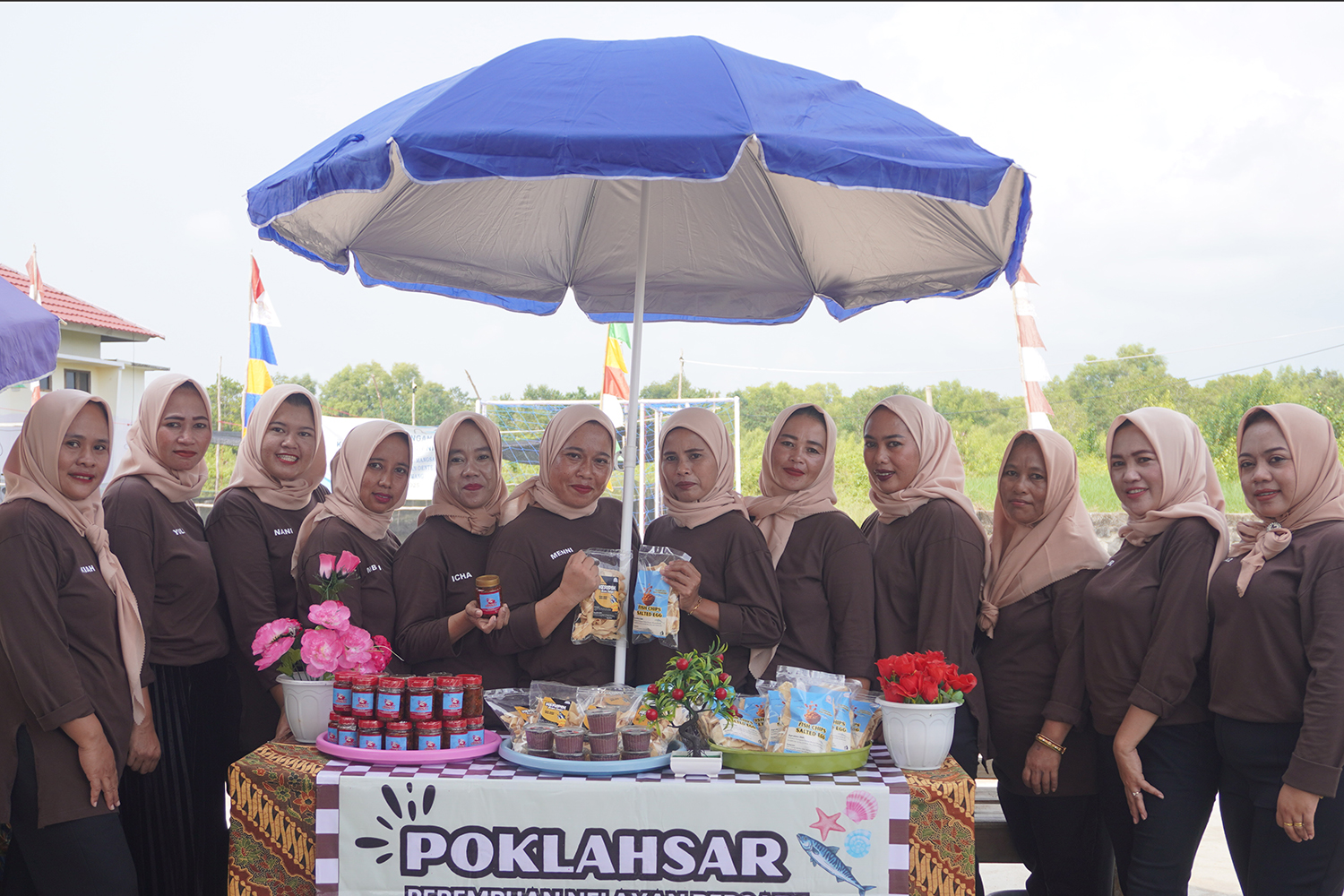
“They’re no longer quiet members – they’re speaking openly about the challenges they face in daily life,” siad Novasari. “We also support nine women’s groups across five project locations on the eastern coast of Lampung. These groups are part of fisher forums, where they advocate for fisheries’ interests with wider stakeholders. We expect women’s participation to increase in future.”
One of the women’s groups has already reached an important milestone: their snack products are now stocked by a well-known retailer in the city of Bandar Lampung, demonstrating its potential to reach larger markets. Although production remains small-scale, this achievement reflects years of dedication, growing skills and expanding opportunities.
With support from the Blue Action Fund between 2025 and 2030, alongside the Ministry of Marine Affairs and Fisheries (MMAF) and the Lampung Marine and Fishery Department, these initiatives will further strengthen women’s roles in Lampung’s blue swimming crab fishery and support stronger fisheries and community development.
“Going forward, we need to ensure that women’s participation is not just about meeting quotas, but also about empowering them to become drivers of change in sustainable blue swimming crab fisheries for their communities,” said Onesya Damayanti, Manager, Environmental and Social Safeguard at EDF.
For a deeper look at how these women’s groups are converting crab shell waste into nutritious products and gaining formal representation in fishery governance, see here.
The United Nations has declared 2026 the International Year of the Woman Farmer (IYWF 2026). The year will spotlight the essential roles women play across agrifood systems, from production to trade, while often going unrecognized. Women farmers are central to food security, nutrition and economic resilience. The International Year of the Woman Farmer will raise awareness and promote actions to close the gender gaps and improve women’s livelihoods worldwide.
Now that you've reached the end of the article ...
… please consider supporting GSA’s mission to advance responsible seafood practices through education, advocacy and third-party assurances. The Advocate aims to document the evolution of responsible seafood practices and share the expansive knowledge of our vast network of contributors.
By becoming a Global Seafood Alliance member, you’re ensuring that all of the pre-competitive work we do through member benefits, resources and events can continue. Individual membership costs just $50 a year.
Not a GSA member? Join us.