


Germany’s aquaculture paradox: global innovator, modest producer

Germany may produce relatively little seafood, but strengths in engineering, RAS, AI and research give it a growing influence over aquaculture worldwide
While Germany imports around 90 percent of the seafood it consumes and produces relatively little through aquaculture, it has quietly become an important innovation hub for modern fish farming. According to a recent Hatch Blue report, Germany’s aquaculture future will be driven less by domestic production and more by exporting its technology, engineering and expertise worldwide.
While domestic production is still dominated by traditional pond-based carp and trout farming, Germany has emerged as a major supplier of recirculating aquaculture system (RAS) technology, automation, water treatment systems, sensors, biotechnology solutions, feed additives and engineering expertise for projects around the world. Germany is already the world’s fourth-largest supplier of RAS technology, behind only Norway, the United States and Denmark, according to the report.
For Hatch Blue Senior Project Manager Nitzan Unger, Germany’s success is directly attributable to the country’s industrial DNA.
“Germany has a world-class engineering base, strong industrial automation expertise, outstanding universities and a deep culture of process optimization,” he told The Advocate. “Those capabilities translate remarkably well into modern aquaculture.”

The report argues that aquaculture is evolving from a traditional farming activity into a high-tech process industry, where biological production is increasingly managed through sensors, automation, predictive analytics and tightly controlled production environments.
This is another trend that plays directly to German strengths, Unger suggested.
“We’re seeing aquaculture increasingly viewed through an industrial lens,” he said. “It’s about process control, efficiency, digitalization and engineering excellence.”
Unger said that as aquaculture production systems become more automated, controlled and data-driven, the sector is attracting more professionals and companies with backgrounds in computer science and engineering.
“Take Siemens, for example,” he said. “It’s not an aquaculture company, but it has recognized opportunities around land-based farming and has become involved through monitoring systems, sensors and digital automation technologies.”
It’s still early days, though, Unger said, and public awareness of aquaculture in Germany remains very low.
“Most students graduating from universities simply don’t know the industry exists or that they could apply their expertise to it,” he said. “Aquaculture probably isn’t their first career choice because it isn’t visible enough yet. But this is now starting to change.”
Despite Germany’s strong research base that is “doing outstanding work,” Unger believes one of the country’s biggest challenges is commercializing innovation. He argues that more university research – and particularly Ph.D. projects – should be translated into startups, products and businesses.
“There’s excellent intellectual property being generated,” he said. “But the pathway from research to commercialization is not as strong as it could be.”
European indoor shrimp farming – investment vacuum or viable, high-end enterprise?
The promise (and challenge) of RAS
Environmental pressures, climate change, fish health concerns and stricter regulations are increasing interest in land-based aquaculture production systems that offer greater biosecurity and environmental control. Against this backdrop, the report identifies RAS technology as an important part of Germany’s aquaculture future.
However, both the report and industry leaders caution that large-scale RAS has not yet reached full commercial maturity.
“I would not say large-scale RAS is fully commercially viable yet,” said Dr. Bert Wecker, CTO of German land-based aquaculture specialist Oceanloop. “We see the big salmon projects in Denmark, Norway and Poland still struggling with high capex, high operational costs and technical challenges. The technology is improving, but it’s still developing.”
Even so, Wecker believes the industry is advancing quickly but is still on a steep innovation curve.
“Companies such as Danish Salmon and The Kingfish Company are making progress,” he said. “As long as investment continues and they can keep improving, the industry will develop too.”
Wecker is less certain whether the recent shift toward hybrid flow-through systems being adopted by several salmon producers will remain the long-term answer.
“These systems solve some major challenges like sea lice, escapes and seabed impacts, but they’re still highly dependent on water intake conditions,” he said. “With climate change, I think we will need even more resilient systems.”
Oceanloop’s own history reflects the ongoing transition in Germany. Wecker traces the company’s origins to pioneering recirculation research at Kiel University in the 1990s, which built on aquarium technologies first developed in Germany during the 1970s.
“What we did from the very beginning was work on grow-out systems,” he said. “We started from a blank sheet of paper and designed systems that cut almost every link to the environment to make permitting easier and improve control.”
Today, Oceanloop operates highly intensive land-based systems with water renewal rates below 0.5 percent, with the goal of reducing that rate to below 0.1 percent.
Regulation hindering progress and investment
Although Germany has the technology and expertise to expand its aquaculture sector, Hatch Blue identifies regulation as a barrier to growth. Permitting processes vary across federal states, aquaculture is treated inconsistently in planning frameworks and approval timelines can be lengthy and unpredictable.
“The biggest obstacle is regulatory complexity rather than lack of innovation,” the report states.
Unger described Germany’s regulatory structure as “highly fragmented,” with 16 federal states occasionally taking different approaches and hundreds of municipalities that can impose additional requirements. He added that the Thünen Institute has recently explored a Federal Aquaculture Competence Center to consolidate expertise, analyze fragmented state-level regulations and streamline processes.
“There is no single, clear pathway explaining what permits are required, what documents must be submitted or how long approvals will take,” he said. “The difference between a six-month permitting process and a two-year process is enormous for new companies trying to survive.”
“We have a federal system, and every state handles things differently,” Wecker said. “I think every neighboring country does it better than Germany in that respect.”
The regulatory uncertainty created by permitting challenges has also made investors more cautious. While Germany has attracted significant innovation funding, large-scale aquaculture projects continue to face difficulties securing capital.
“We have seen a lot of failures,” Wecker said. “That naturally makes investors more cautious.”
The report notes Germany’s aquaculture sector has undergone significant consolidation, with the number of aquaculture businesses falling by around 40 percent between 2015 and 2024, even as overall production volumes remained relatively stable during that period.
It also identifies energy costs, which can account for between 20 percent and 40 percent of operating outlays in many RAS facilities, as perhaps the most important economic factor affecting German land-based aquaculture. This has prompted many companies to increasingly integrate renewable power, waste-heat recovery and solar power generation into their production models.
For Oceanloop, access to low-cost renewable energy is becoming a key factor in future expansion decisions, Wecker confirmed.
“We want to connect aquaculture with renewable energy potential,” he said. “We see locations such as the Canary Islands as extremely interesting because of solar resources, wind potential and climate advantages that simply don’t exist in Germany.”
While Wecker expects Oceanloop’s next major commercial scale-up to take place in Germany, where permits and infrastructure are already in place, he added that the company’s longer-term growth will likely focus more on international markets.
AI transitions to a business tool
Artificial intelligence (AI) and data-driven farm management are other areas where both the report and industry see promise. With its strengths in industrial automation and digital engineering, Germany is well positioned to become a leader in so-called “smart aquaculture.”
For Wecker, the real value of AI lies less in replacing workers and more in improving decision-making and system resilience.
“It’s an assistance system,” he said. “We can now monitor biomass, growth, feeding behavior and potentially survival rates on a daily basis rather than taking occasional samples.”
Oceanloop is participating in SEADEEP, a major European research initiative exploring how AI can analyze the vast datasets generated by modern aquaculture systems. The project aims to identify patterns that can improve feed conversion, growth performance and fish welfare.
“We collect more than 100 data points from our systems,” Wecker said. “Traditional analysis can only go so far. Pattern recognition and AI allow us to understand relationships that aren’t immediately obvious.”
He believes the greatest benefit may come from identifying problems before they become critical: “Everything we do is aimed at increasing system resilience and giving operators more time to react.”
‘This fish could be a jackpot’
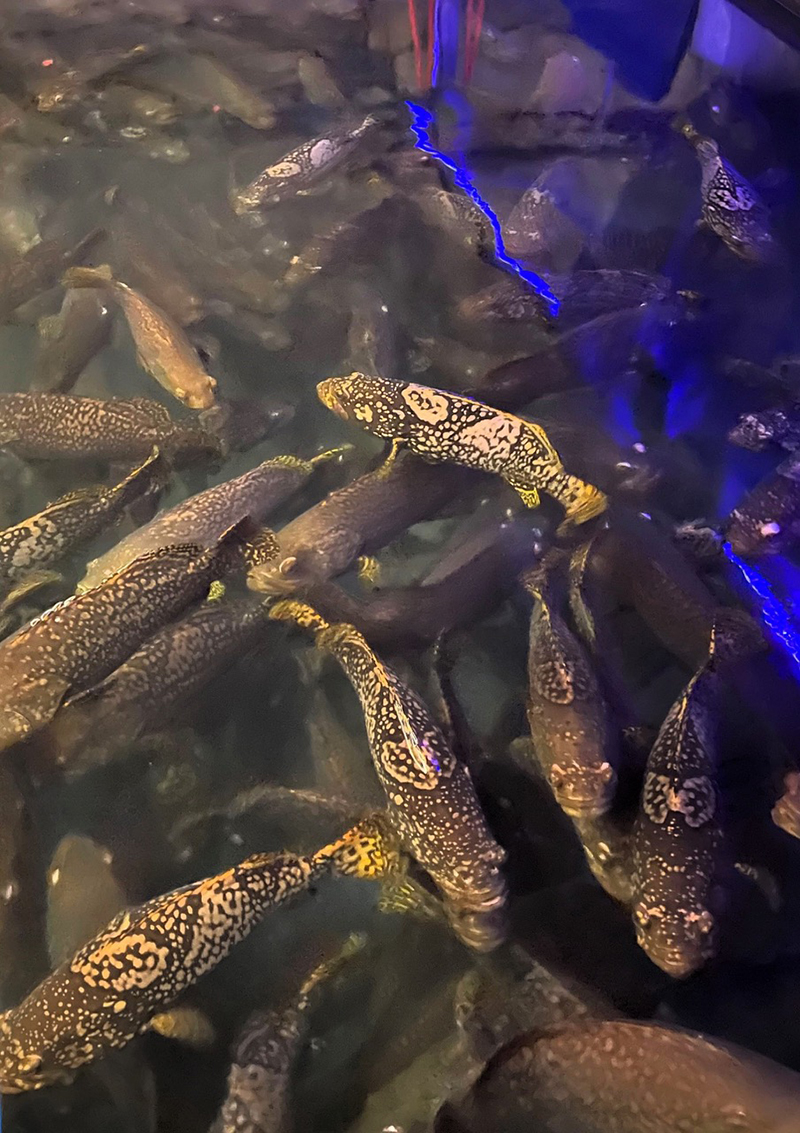
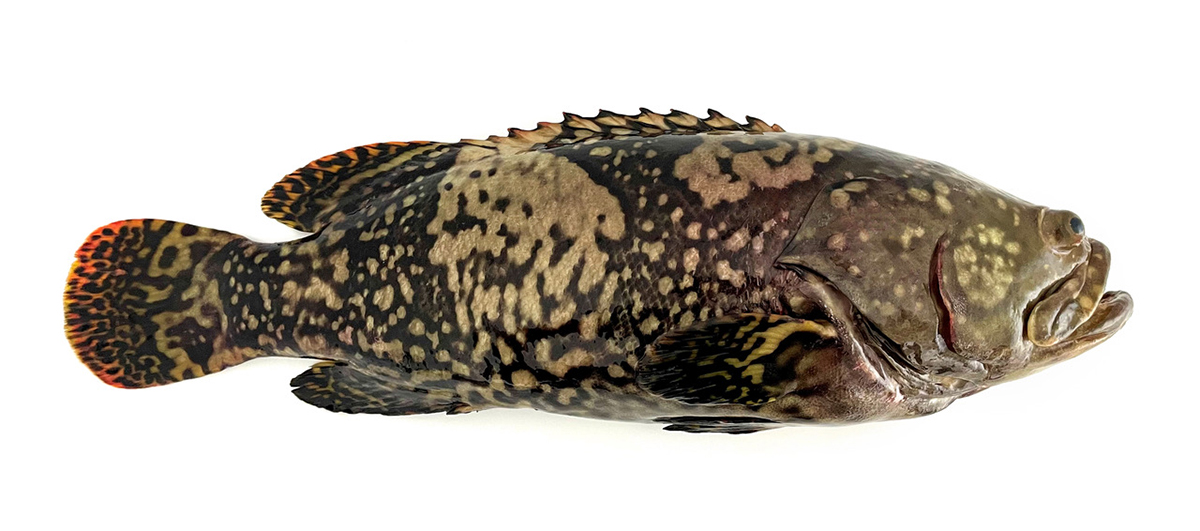
Meanwhile, an area where Oceanloop diverges from many other land-based aquaculture developers is its focus on species diversification. The company is currently scaling production of giant grouper, which Wecker describes as potentially transformational for RAS economics.
“This fish could be a jackpot,” he said. “I’ve worked with many species over 25 years and I’ve never seen farming metrics like it.”
More broadly, Wecker believes the future of land-based aquaculture lies in producing multiple species rather than relying on a single fish.
“I don’t dream about farms producing one species,” he said. “I dream about farms with several species, supplying a seafood portfolio rather than just one fish.”
This approach, he argues, offers flexibility, reduces biological and market risks, and allows producers to respond more effectively to changing consumer demand.
Ultimately, the report concludes that Germany’s competitive advantage may lie not in becoming a major seafood producer on the scale of Norway or other major E.U. producers, but in becoming a global supplier of aquaculture technology, fish health innovation, automation systems, alternative proteins and AI-driven farming solutions.
Unger sees this as a natural evolution.
“Germany doesn’t need to compete with Norway on production volume,” he said. “It can have a much greater impact by enabling aquaculture growth globally.”
Wecker largely agrees: “Germany has huge potential,” he said. “The market is there, the technology is there and the expertise is there.”
Yet, he remains realistic about where growth may ultimately occur.
“It may be German technology and German innovation, but increasingly it will be applied internationally.”
Unger supports this view.
“The reality is that technology companies don’t want to wait years for the domestic market to develop,” he said. “Instead, they establish the business in Germany, take advantage of the country’s engineering standards and research capabilities, and then target markets such as Norway, the U.K., the U.S. and elsewhere. That’s already the business model for many of these companies,” he said.
Could these high- and low-tech approaches help curb fisheries bycatch?
Price-sensitive consumers
With regards to domestic seafood self-sufficiency, Unger believes that while Germans like fish and consume it regularly, it’s unlikely the country will ever become a major production hub.
“It simply won’t, because it doesn’t really have the tradition, environmental setup or geographic framework for it,” he said. “The country doesn’t have a lot of coastline, and what it does have in the northwest is very shallow. That limits opportunities for sea-cage farming.”
“The seabed is also very muddy, and the coastline isn’t particularly extensive,” Unger added. “Most of the existing marine aquaculture activity is mussel farming, which is already well established and accounts for a significant proportion of Germany’s seafood production.”
Although Germany has some land-based production of shrimp and a few other species, Unger said the overriding challenge is that it’s very difficult to compete with Asian imports and pricing.
“Everyone talks about local production being more traceable, more transparent, more responsible and antibiotic-free, but for countries in the Northern Hemisphere, it always comes back to energy costs and labor costs,” he said. “That means locally produced seafood often ends up costing two, three or four times more than imported commodity seafood.
“There’s certainly a premium market willing to pay for that, particularly in restaurants and among high-end consumers, but those remain niche markets. They cannot support large-scale industry growth on their own.”
For local production to really grow, products also need to be carried by the major retail chains, Unger said: “They need shelf space in the big supermarkets where consumers can actually see them. But at the moment, local producers are still too small.”
“I understand that retail procurement teams want reliability,” he added. “They want to know they can source a certain amount every week. But small producers often can’t guarantee that level of supply. The farmers need off-take agreements before they expand production, while retailers want to see the production capacity before making commitments. It becomes a classic chicken-and-egg situation.
“Germany is unlikely to achieve seafood self-sufficiency because the geography and economics simply don’t support large-scale expansion. In fact, many smaller producers are closing rather than growing.”
Asked what would constitute success for German aquaculture, Unger said that stabilizing the declining number of businesses and perhaps adding to their number would be a good starting point.
Unger believes the introduction of federal aquaculture guidelines could be an important milestone. Even if not every state adopts them immediately, having a federal framework would represent formal recognition of the industry. For Unger, “that alone would be a major success.”
“I don’t necessarily expect permitting times to fall significantly, because those processes vary too much, but federal acknowledgement of aquaculture as an important industry would be a significant step forward,” he said. “Germany has all the ingredients for success – world-class research, engineering excellence and strong innovation capabilities. The challenge now is creating the conditions that allow those strengths to translate into more aquaculture businesses, more commercialization and a stronger domestic industry.”
Now that you've reached the end of the article ...
… please consider supporting GSA’s mission to advance responsible seafood practices through education, advocacy and third-party assurances. The Advocate aims to document the evolution of responsible seafood practices and share the expansive knowledge of our vast network of contributors.
By becoming a Global Seafood Alliance member, you’re ensuring that all of the pre-competitive work we do through member benefits, resources and events can continue. Individual membership costs just $50 a year.
Not a GSA member? Join us.
Author
-

Correspondent Jason Holland is a London-based writer for the international seafood, aquaculture and fisheries sectors. Jason has accrued more than 25 years’ experience as a B2B journalist, editor and communications consultant – a career that has taken him all over the world. He believes he found his true professional calling in 2004 when he started documenting the many facets of the international seafood industry, and particularly those enterprises and individuals bringing change to it.
Related Posts
Intelligence
Bangladesh seeks more buck for its ‘bagda’
As more than 80 percent of Bangladeshi shrimp exports already go to EU markets, a consultation meeting involving buyers from the bloc and Bangladesh industry stakeholders and authorities was held at the end of last month in Utrecht, the Netherlands.
Fisheries
As ocean technology advances, fisheries face a new challenge: scaling it
From AI to vessel tracking, ocean technology is transforming fisheries – but getting them into the water at scale remains difficult.
Fisheries
Beyond bait: Fisheries innovators use light, behavior and biology to reduce impact
Fisheries innovators are exploring “baitless” systems using visual stimuli, species-specific responses and gear design to draw in target species.
Fisheries
Could an electric-pulsed device help mitigate shark bycatch in longline fisheries?
Research shows that SharkGuard, an electric-pulsed device that attaches to longline fishing rigs, can significantly reduce shark bycatch.