


How a deadly fish pathogen survives long periods without food: New insights into aquaculture management of Columnaris disease

Study results show how bacteria use reversible epigenetic changes to survive long periods without food and then can become active again when conditions improve
Scientists from the City University of Hong Kong recently provided important new understanding of how the prominent aquatic pathogenic bacterium Flavobacterium columnare survives for long periods with almost no nutrients – a common situation on many fish farms between production cycles, during fallowing, or in low-organic-matter conditions.
The study’s results showed that epigenetic changes (smart control systems that help organisms adjust which genes are active without permanently changing their DNA; like temporary instructions written on top of the genetic code) are an important way bacteria adapt to long periods with little or no food. The study – authored by Drs. Yuxuan Zhang, Yanwen Shao, Shengnan Gao, Runsheng Li and Wenlong Cai – investigated how this bacterium survives when food is almost completely absent.
The authors have provided new insights into how epigenetic changes help bacteria adapt to long periods without nutrients. They have provided a useful guide for future research that uses Nanopore sequencing (a modern technology used to read DNA; it works by passing a strand of DNA through a tiny hole, called a nanopore, in a special membrane) and DNA methylation (a small chemical tag added to DNA that acts like a switch, turning genes up or down without changing the DNA sequence itself; it is a key mechanism of epigenetic regulation) to study epigenetics in bacteria.
“We found that Flavobacterium columnare can maintain a highly stable genome during long-term starvation while utilizing DNA methylation changes to cope with environmental stress,” correspondent author Dr. Wenlong Cai told the Advocate. “This suggests that the pathogen may rely on epigenetic flexibility to survive nutrient-limited conditions. For aquaculture, this finding is important, as bacterial persistence in the environment can increase the risk of recurring disease outbreaks. A better understanding of how F. columnare survives outside the host may ultimately support improved pathogen surveillance, biosecurity and disease control in farming systems.”
![Ad for [BSP]](https://www.globalseafood.org/wp-content/uploads/2025/07/BSP_B2B_2025_1050x125.jpg)
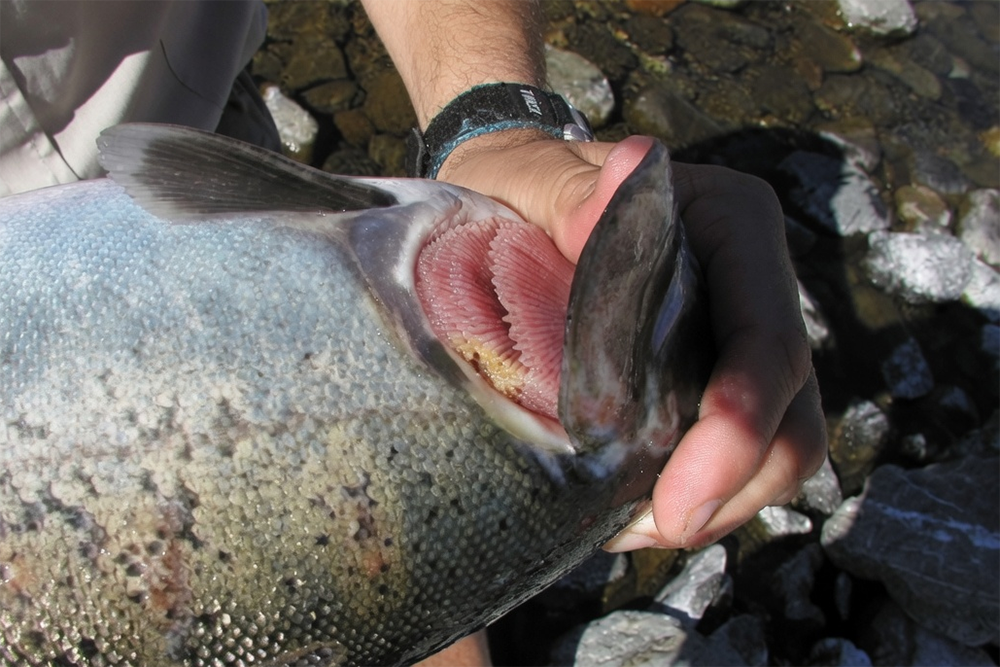
Columnaris disease, caused by the bacterium Flavobacterium columnare, is one of the most serious and widespread bacterial infections in freshwater aquaculture. It affects many important species including tilapia, catfish, carp, trout and salmon, often leading to rapid mortality through skin ulcers, fin erosion and severe gill and mouth damage. The pathogen is found in water and sediment even when fish are absent, making it difficult to eradicate from farms.
The researchers took a strain of F. columnare originally isolated from diseased fish and placed it in sterile water with no added food for a full 10 months. They maintained the bacteria at two temperatures (22 and 28 degrees-C) to see how temperature affects survival strategies. After this long starvation period, the bacteria were revived in nutrient-rich broth and analyzed using advanced Nanopore sequencing technology, which can read both the DNA sequence and chemical modifications on the DNA at the same time.
Results showed that the actual DNA code (the genetic instructions) remained remarkably stable. There were only a few minor mutations and none were consistent across the different temperatures. This means the bacterium did not rely on permanent genetic changes to survive starvation. Instead, it changed its epigenetic marks, the tiny chemical tags on the DNA that act like volume knobs for genes. These tags can turn gene activity up or down without altering the DNA sequence itself.
One specific tag pattern became much weaker during starvation. This change affected more than 1,300 places in the genome, many in genes involved in energy use, protein building and iron scavenging. Another tag pattern changed depending on the temperature. The starved bacteria also changed their appearance – colonies became smoother and cells became smaller, likely reducing movement and energy use to help them survive.
The findings also indicated that these epigenetic changes appear to be reversible. When the bacteria were given nutrients again, they recovered and could return to normal activity. This suggests the pathogen can “remember” how to survive hard times and then switch back to a more active, potentially disease-causing state when conditions improve.
This research has direct practical importance for fish farmers. Ponds, tanks and recirculating systems often experience periods with low nutrients. The study shows that F. columnare can persist in these conditions not by going dormant in a simple way, but by actively adjusting its gene activity through reversible epigenetic changes. This helps explain why Columnaris outbreaks sometimes return even after the fish ponds have been empty or partially cleaned. The bacteria are not just surviving – they are using a sophisticated system to stay viable and ready to infect new fish when they are stocked or when organic matter increases.
Temperature effects on one of the tag patterns also match what farmers already observe, with disease problems often increasing in warmer water. Additionally, the bacterium is known to form biofilms on surfaces, which further helps it persist in farm environments. And other researchers have reported that several closely related bacterial species can cause Columnaris-like disease, adding complexity to diagnosis and control, making accurate identification and management even more important.
Results of this study are significant in better understanding the ecology of this important pathogen. It changes the management approach beyond simply killing bacteria with chemicals and toward thinking about how they persist and adapt in real farm conditions. Current management recommendations – including reducing stress, maintaining good water quality, proper stocking densities and careful handling – remain essential. However, this study suggests closer attention is needed for environmental reservoirs of the bacteria during fallowing and between fish production cycles.
In the future, these epigenetic insights could lead to:
- Better tools to detect whether bacteria in a pond are in a low-activity but “primed” state
- Improved disinfection and fallowing protocols that target persistent forms of the pathogen
- New research into whether certain management practices (such as temperature control or specific water treatments) can disrupt the bacteria’s survival strategy
While practical applications based on epigenetics are still developing, the findings already reinforce the need for integrated, ecology-based approaches to disease control rather than relying only on reactive treatments. This research also demonstrates the power of modern sequencing tools like Nanopore technology for studying aquatic pathogens in new ways. Similar approaches could be applied to other important pathogenic bacteria in aquaculture.
“In summary, F. columnare uses reversible epigenetic ‘memory’ to survive long periods without food and rebound when conditions improve. For the aquaculture industry, this knowledge supports stronger focus on breaking persistence cycles between production cycles while continuing proven good management practices. Continued research in this area has significant potential to improve how to prevent and manage one of the most persistent bacterial diseases in fish farming,“ the study concluded.
Now that you've reached the end of the article ...
… please consider supporting GSA’s mission to advance responsible seafood practices through education, advocacy and third-party assurances. The Advocate aims to document the evolution of responsible seafood practices and share the expansive knowledge of our vast network of contributors.
By becoming a Global Seafood Alliance member, you’re ensuring that all of the pre-competitive work we do through member benefits, resources and events can continue. Individual membership costs just $50 a year.
Not a GSA member? Join us.
Author
-

Editor Emeritus
Related Posts
Health & Welfare
Assessing bactericidal activity of peracetic acid to selected fish pathogens in RAS water
RAS producers should know about the effectiveness of peracetic acid in reducing populations of specific bacterial pathogens.
Health & Welfare
Different routes of formalin-killed vaccine administration and effect on immunity and disease resistance of Nile tilapia
Efficacy of an oral vaccine in trials with tilapia shows it to be a viable, cost-effective alternative to administering vaccines by injection.
Health & Welfare
Parasite treatment reduces F. columnare infection in tilapia
The authors conducted a study to evaluate whether treatment of Trichodina-parasitized tilapia with formalin would improve fish survival and reduce F. columnare infection. Tilapia not treated with formalin showed significantly higher mortality than treated fish.

Health & Welfare
Studies move toward standardized challenge model for Columnaris in channel catfish
Columnaris disease in channel catfish is caused by Flavobacterium columnare, a gram-negative, long rod-shaped bacteria ubiquitous in freshwater environments.