


‘Who will win and who will lose?’ How climate change is shifting the ocean food chain – and potentially global fisheries

As climate change shifts phytoplankton and fish worldwide, will ocean warming upend ecosystems, fisheries and global food security?
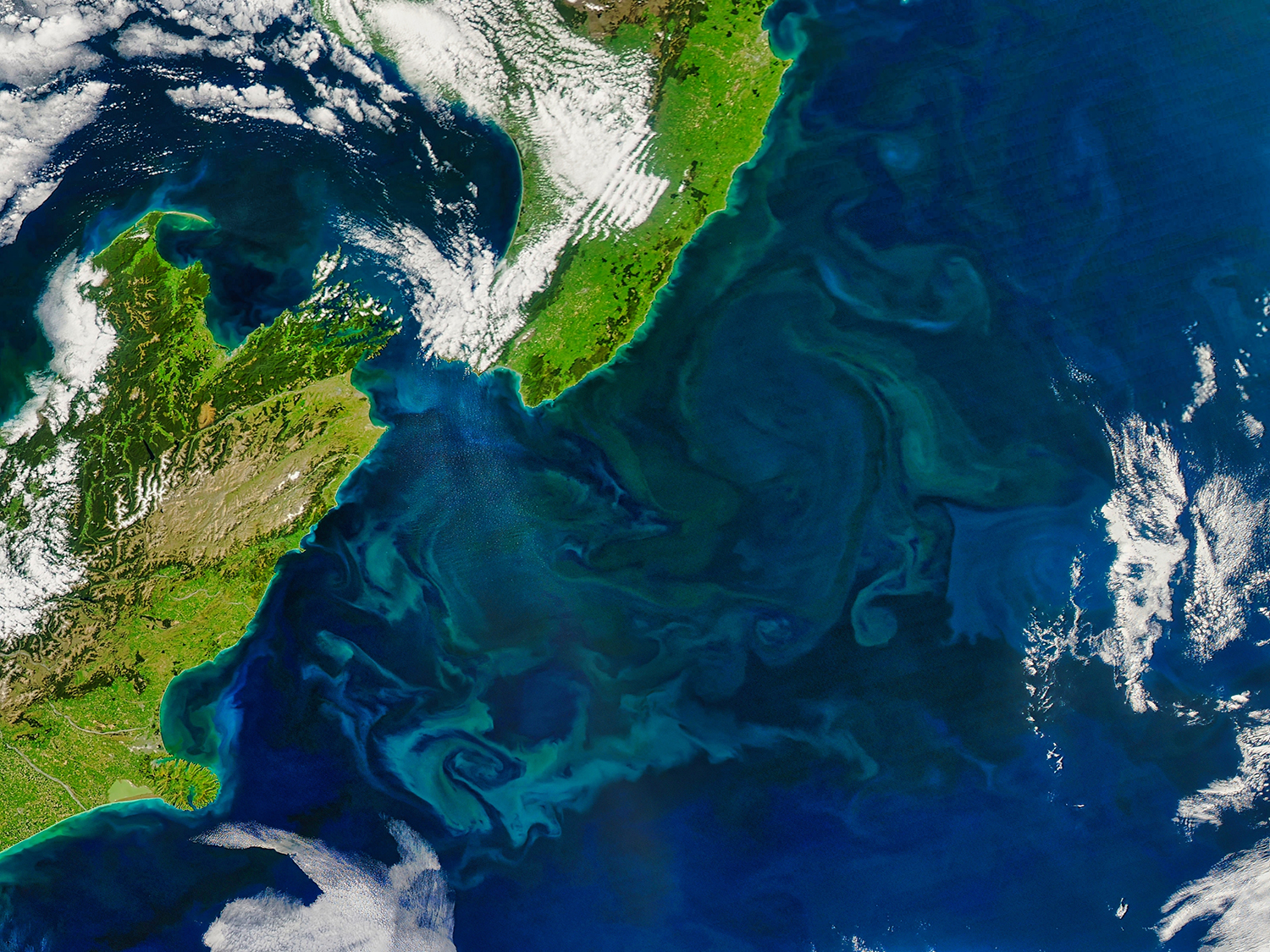
A recent satellite data analysis has revealed a striking shift in the global distribution of ocean chlorophyll: High-latitude waters near the poles are turning green, while tropical and subtropical waters are losing their chlorophyll.
That green comes from chlorophyll, a pigment in microscopic plants called phytoplankton. More chlorophyll typically means more phytoplankton, but not always. Researchers now want to find out if the amount of phytoplankton is actually changing – something that could shift fish populations toward the poles.
“Phytoplankton form the base of the aquatic food chain and are a key source of food for everything, from small fish to whales” said Nicolas Cassar, professor at Duke University’s Nicholas School of the Environment. “We measure their biomass by weight, or by the amount of carbon they contain.”
Cassar is one of four authors of the paper published in Science tackling this topic. The team, co-led by Haipeng Zhao and Susan Lozier at Georgia Tech, analyzed satellite data collected between 2003 to 2022 by a NASA instrument. The study did not examine fish directly – satellites can’t measure them – so the findings on fish migration remain inconclusive.
![Ad for [BSP]](https://www.globalseafood.org/wp-content/uploads/2025/07/BSP_B2B_2025_1050x125.jpg)
“Fish will migrate due to food supply and other environmental forces like water temperature and oxygen levels,” Zhao said. “You need more infrastructure to access data that would reveal any changes in the distribution of fish across the global ocean.”
If phytoplankton – the foundation of the marine food chain – decline, Cassar speculated that it could impact upper levels of the food chain, potentially redistributing fish populations, particularly in equatorial regions. Such a shift could have far-reaching implications for nations like those in the Pacific Islands, where communities rely on fish for food.
Professor Martin Genner at the University of Bristol School of Biological Sciences cautioned against assuming that changes in fish abundances are directly caused by temperature-driven increases in phytoplankton primary productivity (chlorophyll). However, he added that, on a global scale, the biomass of fish caught in fisheries has been generally linked with primary productivity.
“In the long run, we might expect greater primary production in polar habitats to lead to increases in fished biomass,” he said. “Focusing on the Arctic, we know that warming temperatures have had a major influence on fishes of the region, with species typically associated with more southerly habitats now doing well there. The Gordó-Vilaseca et al. 2023 paper is particularly convincing, showing major changes in the fish communities. There is even evidence that the most northerly distributed species in the Arctic are starting to decline as seas get too warm.”
In December 2024, Genner published a study in Proceedings of the National Academy of the Sciences examining how climate warming is affecting freshwater fish. He linked temperature data from 1958 to 2019 with a multicontinental database of riverine fish population. The sampled waters warmed by 0.21 degrees-C per decade, and Genner warned that projected future warming is likely to drive widespread shifts in riverine community structure.
“Warming waters are impacting freshwater river fishes that are rich in biodiversity and traditionally important to cultures across the world,” he said.
The changes were most evident among species with larger body sizes, higher trophic levels, river-to-sea migratory patterns and more widespread distributions. Genner noted that freshwater species play an important role in food security in Asia, Africa and South America.
“If climate change is starting to impact the ability of equatorial populations to sustain these freshwater fisheries in the natural environment and aquaculture, that’s potentially a food security issue,” he said. “But if their marine environment also becomes less conducive to fishing, this could lead to major food production challenges among some of the most needy populations worldwide.”
Global freshwater temperatures are currently rising by 1.5 degrees-C per decade and are projected to increase to 2–3 degrees-C in the future.
“These are unprecedented temperature changes, and we need to better understand how they might affect fisheries in the future,” he said.
Genner’s study examined commercially fished freshwater species and found a clear trend: Equatorial populations are declining, while poleward populations, such as salmon, trout and pike, are increasing.
“It’s possible to imagine that around the coastal waters of the UK and northern Europe, we’ll see an increase in species we’d normally associate with the Mediterranean,” he said. “We might see increases in Atlantic herring farther north than we’ve seen them up until now. And we might see populations that have always been around in lower abundance, start to become more abundant.”
The key takeaway? Genner said it’s simple: Climate change is already reshaping fish populations.
“Populations of species closest to the equator are starting to decline, most likely due to the effects of temperature increases,” he said.
The relocation of fish species is already disrupting the global fisheries industry, said Ray Hilborn, professor in the University of Washington School of Aquatic and Fisheries Sciences.
“It’s causing enormous problems in Europe, where they allocated fishing rights based on where the fish were 30 years ago,” said Hilborn. “Now that the fish have changed their locations, those quotas are out of whack.”
Hilborn has tracked Bristol Bay salmon, and for the past 15 years, their returns have broken records.
“That’s not so much about phytoplankton, but about warming conditions, because we’re at the northern end of the salmon’s range,” he said. “It’s well documented that these changes are happening, but who will win and who will lose? That’s harder to predict. It remains to be seen who the winners and losers are in terms of fish species, countries and fishing fleets.”
Warming from climate change is a very difficult stressor to deal with, Genner added.
“Ultimately, the only way we’ll be able to help our fish populations in the ocean and freshwater is by reducing our emissions,” he said. “Thereby, reducing the risk of extreme climate change, reducing fishing pressure, improving spawning grounds and making sure that river pollution is eliminated or kept to a minimum.”
Now that you've reached the end of the article ...
… please consider supporting GSA’s mission to advance responsible seafood practices through education, advocacy and third-party assurances. The Advocate aims to document the evolution of responsible seafood practices and share the expansive knowledge of our vast network of contributors.
By becoming a Global Seafood Alliance member, you’re ensuring that all of the pre-competitive work we do through member benefits, resources and events can continue. Individual membership costs just $50 a year.
Not a GSA member? Join us.
Author
-

Vancouver-based correspondent Lauren Kramer has written about the seafood industry for the past 15 years.
Related Posts

Intelligence
Exploring the relevancy, resiliency and scalability of seaweed farming at Seagriculture
Seagriculture, the first international seaweed conference, covers all angles of seaweed farming for food, energy and climate change solutions.
Fisheries
V-notching awareness campaign highlights responsible Maine lobster fishing technique
Maine Lobster advocacy groups launched an awareness campaign to promote a key conservation technique, v-notching, which lobstermen employ.
Intelligence
Threatened by climate change, Maine oyster grower adapts how his business ‘interacts with the planet’
Climate change dictates how oyster farmers operate. To handle heavy rainstorms, Bill Mook's latest adaptation includes underground water tanks.
Intelligence
How a land-preservation easement saved a California oyster company
Hog Island Oyster Company got some last-minute help from Marin Agricultural Land Trust, the first-ever land-preservation easement for mariculture.