


Shrinking cool-water habitat raises humpback whale entanglement risk, study finds

Study links marine heatwaves and habitat compression to spikes in U.S. West Coast whale entanglements and offers a forecasting tool for fisheries
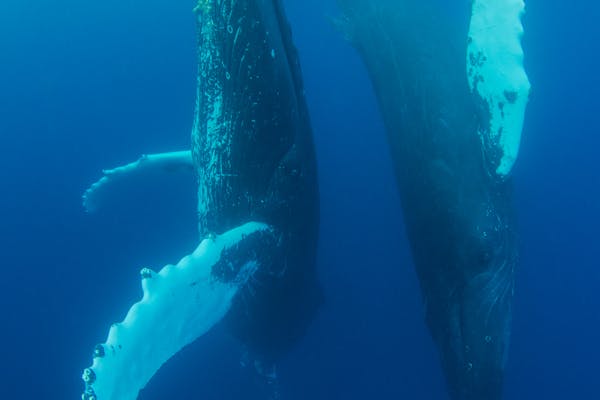
Humpback whales off the U.S. West Coast face a higher risk of entanglement in fishing gear during years when cool-water habitat is scarce, according to research published in PLOS Climate.
The study, led by Jarrod Santora of the National Oceanic and Atmospheric Administration (NOAA), links elevated entanglement risk to reduced availability of the cooler ocean conditions where humpback whales typically feed. The findings suggest that climate-driven shifts in marine habitat may influence how often whales overlap with commercial fishing activity along the West Coast.
Various types of fishing gear, including gillnets and traps, can entangle whales, sometimes causing serious injury or death. Before 2014, fewer than 10 entanglements were reported annually off the U.S. West Coast, but those numbers have risen in recent years, reaching 31 reported cases in 2024.
Previous research has shown that when sea surface temperatures rise, the cooler waters where humpback whales concentrate their feeding become more limited and shift closer to shore – areas that also tend to have higher fishing activity. That compression of habitat may increase the likelihood of whales encountering fishing gear.
![Ad for [BSP]](https://www.globalseafood.org/wp-content/uploads/2025/07/BSP_B2B_2025_1050x125.jpg)
Many entanglements likely go undetected, and even when whales are observed with gear attached, it can be difficult to determine where or when the entanglement first occurred. At the same time, humpback whale populations have rebounded in recent years, which could also contribute to higher reported entanglement numbers.
To clarify the drivers behind rising entanglements, Santora and colleagues examined links between reported cases, whale population size and changes in cool-water habitat over the past 25 years. Using the Habitat Compression Index (cHCI) – a measure of cool-water habitat availability – they found that entanglements were more frequent in years when feeding habitat shrank.
Canada’s five-year plan aims to reduce whale entanglements in commercial fisheries
Population growth alone did not explain the increase, particularly during the 2015–2016 marine heatwave known as “the blob,” when more than 40 entanglements were confirmed. The findings indicate that habitat compression, rather than whale population growth alone, played a key role in elevated risk. The study also found that the cHCI can forecast ocean conditions up to a year in advance.
“Forecasting provides an early warning system,” wrote the authors. “The cHCI effectively predicts ocean conditions 6 to 12 months in advance. For example, January 2024 forecasts correctly predicted the year’s low thermal habitat, which coincided with a rise in entanglements to 31 reports.”
The researchers recommend incorporating the index into fishery management frameworks, including adjustments to fishing season timing and trap limits, to reduce entanglement risk during years of high habitat compression.
“Habitat compression is a primary driver of entanglements,” the authors wrote. “Years with low cumulative thermal habitat consistently resulted in the highest number of entanglements across all US West Coast regions, making cHCI a critical predictor of both risk and detection.”
Now that you've reached the end of the article ...
… please consider supporting GSA’s mission to advance responsible seafood practices through education, advocacy and third-party assurances. The Advocate aims to document the evolution of responsible seafood practices and share the expansive knowledge of our vast network of contributors.
By becoming a Global Seafood Alliance member, you’re ensuring that all of the pre-competitive work we do through member benefits, resources and events can continue. Individual membership costs just $50 a year.
Not a GSA member? Join us.
Author

Related Posts
Responsibility
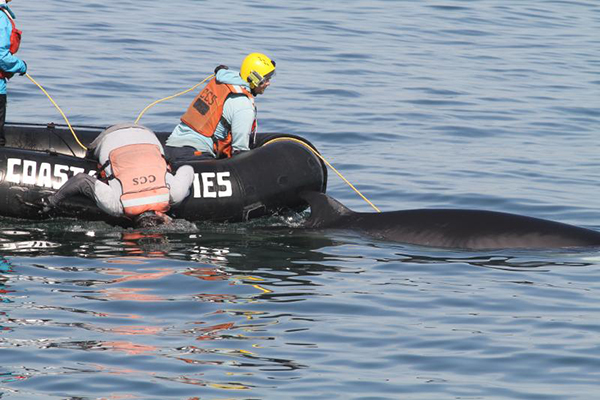
NOAA reports ‘dip’ in confirmed whale entanglements in 2022, zero involving right whales
A new report from NOAA confirms 67 large whale entanglements nationally in 2022 – none involving the North Atlantic right whale.
Fisheries
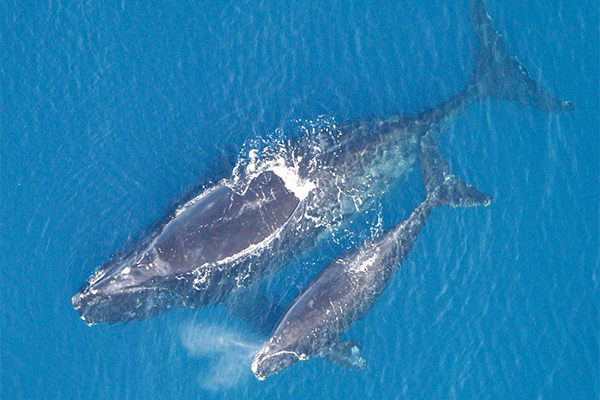
$18 million invested in fishing gear innovation to support North Atlantic right whale conservation
NFWF-NOAA funding will help develop and integrate new fishing gear in New England fisheries to help North Atlantic right whale conservation.
Fisheries
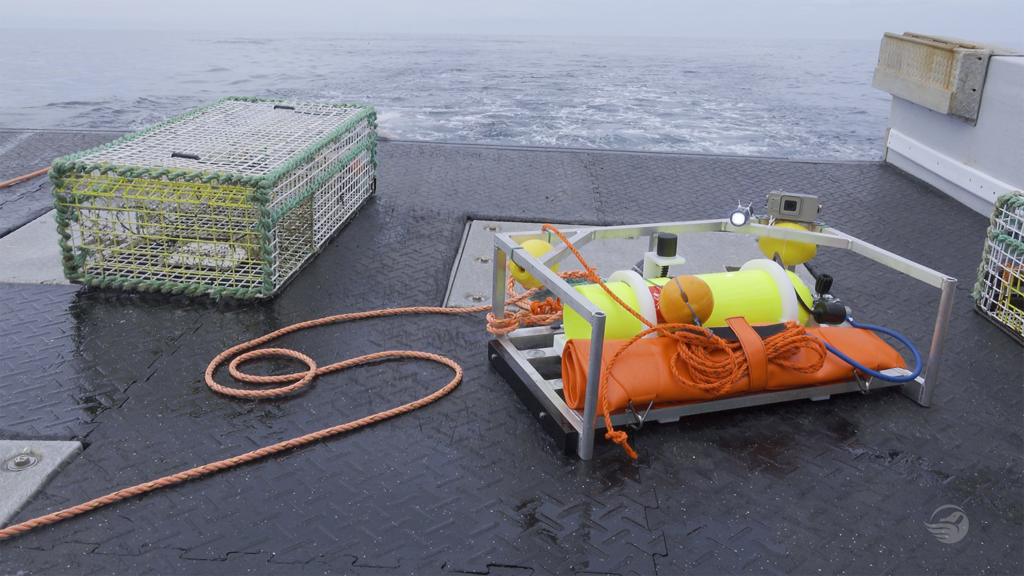
Gear-lending program has harvesters working through closures and trying ropeless fishing gear without commitment
Faced with closures to protect right whales, Canadian commercial fishers are trying ropeless fishing gear via the CanFish Gear Lending Program.
Fisheries
Balancing protection and production: Diving into the North Atlantic right whale conflict with lobster and crab fishing
A closer look at the conflict between North American fixed-gear fisheries and North Atlantic right whale protection measures.