


NOAA scientists track massive marine heatwave affecting U.S. West Coast waters

Researchers say marine heatwave rivals ‘The Blob’ in size and could affect fisheries, species distribution and harmful algal blooms
A massive marine heatwave has dominated waters off the U.S. West Coast since last summer, raising concerns about potential impacts on fisheries and marine ecosystems.
According to scientists with NOAA, this is only the third time on record that such a large stretch of coastal ocean has remained unusually warm for so long – particularly through the winter months – without being linked to an El Niño event.
NOAA Fisheries and partner organizations are tracking the event and its possible consequences. Marine heatwaves can trigger harmful algal blooms, which may sicken marine mammals and lead to shellfish fishery closures.
At its peak last September, the current marine heatwave rivaled the massive 2013–2016 event known as “The Blob” in both size and surface temperatures. The warming has raised water temperatures along the West Coast by roughly 3 to 4 degrees-F above normal.

On Sept. 9, 2025, the northeast Pacific reached its highest average temperature on record at about 69 degrees-F – nearly half a degree warmer than any previous measurement.
Past marine heatwaves have significantly disrupted marine ecosystems in the Northeast Pacific, driving shifts in species distribution, die-offs and other ecological changes.
“We have forecast tools that provide some insight, but we are also watching carefully for implications on the marine ecosystem,” said Andrew Leising, a NOAA research oceanographer who runs the California Current Marine Heatwave Tracker.
Using this tracker, scientists have monitored marine heatwaves off the West Coast using NOAA data from satellites, ships and buoys since 2019.
Since “The Blob,” the North Pacific has repeatedly recorded record or near-record ocean temperatures. Like earlier events, the current heatwave weakened and moved away from the coast in October and November 2025. However, unlike previous heatwaves, it has since strengthened again and returned to coastal waters.
“We’re in La Niña, but water temperatures along our coast look much different,” Leising said. “The conditions are hard to reconcile. We want to be cautious in our interpretation, but at the same time, this is not a situation that we have seen before.”
The current heatwave has already coincided with unusual shifts in species distribution. For example, large numbers of tuna were caught in Alaska last fall, an area where they are not typically seen in such quantities.
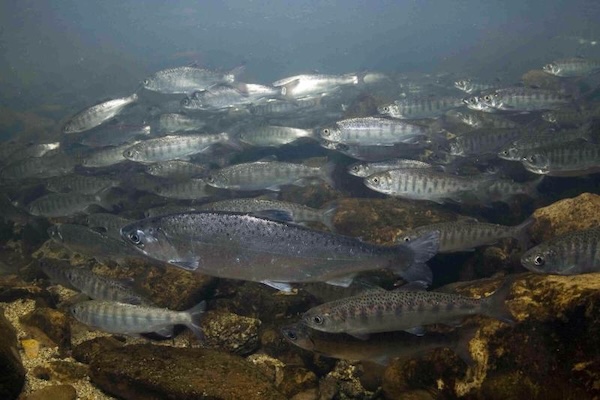
Previous marine heatwaves, including “The Blob,” have also been linked to reduced survival of salmon in the ocean. Lower survival rates can mean fewer fish available for fisheries and fewer returning to rivers to spawn.
“We know these marine heatwaves alter ecosystem conditions, which affects fish and other marine life,” Leising said. “We’re very interested in what the fishing fleet and others who are out on the water are seeing and are looking into new ways to collect this information. Are there species in unusual places, or what might be changing?”
The unusually warm conditions could also set the stage for a repeat of last year’s harmful algal bloom off Southern California. That bloom appeared unusually early in 2025 and killed hundreds of California sea lions, dolphins and seabirds.
Study: Fisheries managers should expect volatility due to marine heatwaves
Harmful algal blooms can also disrupt fisheries. Shellfish can accumulate the toxins produced during these events, sometimes forcing closures of recreational shellfish fisheries and affecting coastal economies.
“Although rivaling the Blob in area, the current marine heatwave has had much less ecological impact since so far since it has not penetrated as deeply into the water column, and has not spent as much time near the coast,” said Leising.
NOAA’s marine heatwave forecasts suggest the unusually warm waters may dissipate in the coming months as warm surface water mixes with cooler water from below.
Even if the heatwave weakens, one key question remains: whether enough warm water will persist and combine with available nutrients to fuel another harmful algal bloom.
“We are in uncharted conditions, so we need to assess the most likely outcome given what we know,” Leising said. “This is what makes the ocean so interesting. We see different pieces of the picture, but ultimately, it’s the marine ecosystem that brings those together and demonstrates where the conditions are leading us.”
Now that you've reached the end of the article ...
… please consider supporting GSA’s mission to advance responsible seafood practices through education, advocacy and third-party assurances. The Advocate aims to document the evolution of responsible seafood practices and share the expansive knowledge of our vast network of contributors.
By becoming a Global Seafood Alliance member, you’re ensuring that all of the pre-competitive work we do through member benefits, resources and events can continue. Individual membership costs just $50 a year.
Not a GSA member? Join us.
Author

Related Posts
Responsibility
Are marine heatwaves causing Pacific cod to reproduce and hatch earlier?
Marine heatwaves trigger shift in hatch dates and early growth of Pacific cod, concludes a new study from Oregon State University.
Fisheries
NOAA confirms link between snow crab decline and marine heatwave
Starvation is most likely the cause of a mass mortality event during the eastern Bering Sea marine heatwave, according to NOAA scientists.
Innovation & Investment
Tool aims to predict effects of marine heatwaves, improve fisheries management
Scientists have developed an ocean management tool that provides real-time predictions of how top predators shift during marine heatwaves.
Fisheries
Study: Coastal fisheries are resilient in the face of marine heatwaves
Marine heatwaves are not having a lasting effect on fish communities with major commercial importance, according to Rutgers-led research.