


How aeration intensity, water quality, nutrient cycling and microbial community structure of biofloc system impacts Pacific white shrimp

Lower aeration intensity produces larger, simpler flocs while higher intensity enhances DHA accumulation
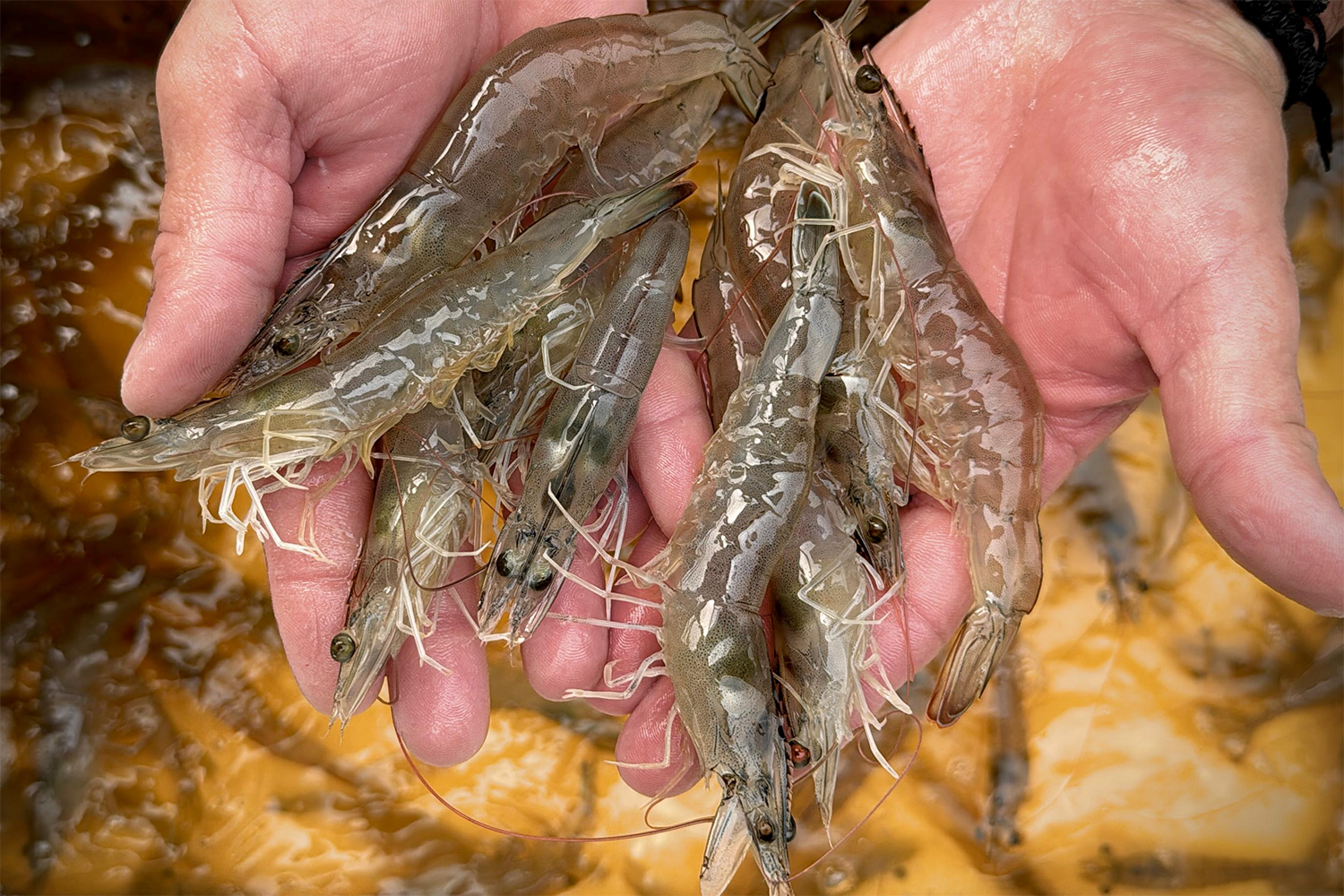
The Pacific white shrimp (Litopenaeus vannamei) is the top shrimp species in global aquaculture production. Advancements in its culture technology have led to higher stocking densities, but also increases in aquaculture waste and higher ammonia and nitrite levels beyond safe thresholds, weakening shrimp immunity and potentially causing substantial economic losses. To address these concerns, production models should be improved.
Biofloc technology (BFT) is an advanced and sustainable aquaculture approach that leverages microbial communities to improve water quality, recycle nutrients, and support the growth and health of cultured aquatic species. Despite these insights, comprehensive studies on the specific effects of aeration on microbial dynamics in BFT remain limited, highlighting the need for further investigation.
Aeration is essential for supplying the dissolved oxygen required for the metabolic processes of aerobic and facultative anaerobic microorganisms in bioflocs. An adequate aeration system supports a diverse and active microbial community, which is responsible for the breakdown of organic matter in water and the formation of protein- and lipid-rich bioflocs. Although the influence of aeration intensity on the nitrification process within biofilms in L. vannamei culture has been previously documented, the effects of aeration intensity on microbial communities, which are linked to nutritional supplementation for aquatic species and water purification, need further clarification.
This article – summarized from the original publication (Han, T. et al. 2025. Effects of Aeration Intensity on Water Quality, Nutrient Cycling, and Microbial Community Structure in the Biofloc System of Pacific White Shrimp Litopenaeus vannamei Culture. Water 2025, 17(1), 41) – discusses research that assessed the pivotal role of aeration intensity within BFT systems, and its influence on microbial community structures, water quality and nutrient cycling for L. vannamei culture.
![Ad for [membership]](https://www.globalseafood.org/wp-content/uploads/2025/07/membership_web2025_1050x125.gif)
Study setup
Three aeration intensity groups (V75: flow rate 75 liters per minute; V35: flow rate 35 liters per minute; V10: flow rate 10 liters per minute) with four replicates per treatment were used in this 2-month experiment. Twelve 40-liter tanks filled with seawater were used to culture biofloc. To simulate their culture environment and maintain the growth of biofloc, 120 juvenile L. vannamei, sourced from a commercial hatchery in Taizhou, China, were distributed into the 12 tanks. The biofloc culture was initiated by daily adding glucose and formulated feeds for L. vannamei (3 percent of body weight) as the carbon and nitrogen sources, respectively. A carbon-to-nitrogen ratio of 20:1 was consistently maintained.
No water exchange was conducted throughout the experiment. Water lost to evaporation in each tank was supplied by fresh water every week. A central air pump with air stones and control valves, was utilized to control the aeration intensity of each treatment. To quantify the air flow, separate commercial rotometers were connected to the aeration inlets of each test setup and adjusted to deliver the specified flow rates as per the experimental protocol. All treatment groups received continuous aeration throughout the two-month experimental period, as well as standard husbandry support.
For detailed information on the experimental design, animal husbandry, and data collection and analyses, refer to the original publication.
Bacterioplankton communities and their temporal dynamics in a biofloc shrimp culture system
Results and discussion
Results showed that the fluctuations in water quality parameters for each experimental group were within acceptable ranges for L. vannamei culture. Floc volume (FV) indicates the total volume occupied by bioflocs in the water column, which is a key measure of the biofloc density and aggregation within the system. It helps in monitoring the balance between the microbial biomass and the available nutrients, ensuring optimal conditions for the growth and metabolic activities of the microorganisms. In this study, FV was positively correlated with the aeration intensity, showing the highest values in the V75 group. Other authors reported similar results. A high FV value typically indicates a robust microbial community that can effectively utilize and recycle nutrients within the system, contributing to improved water quality and overall system stability.
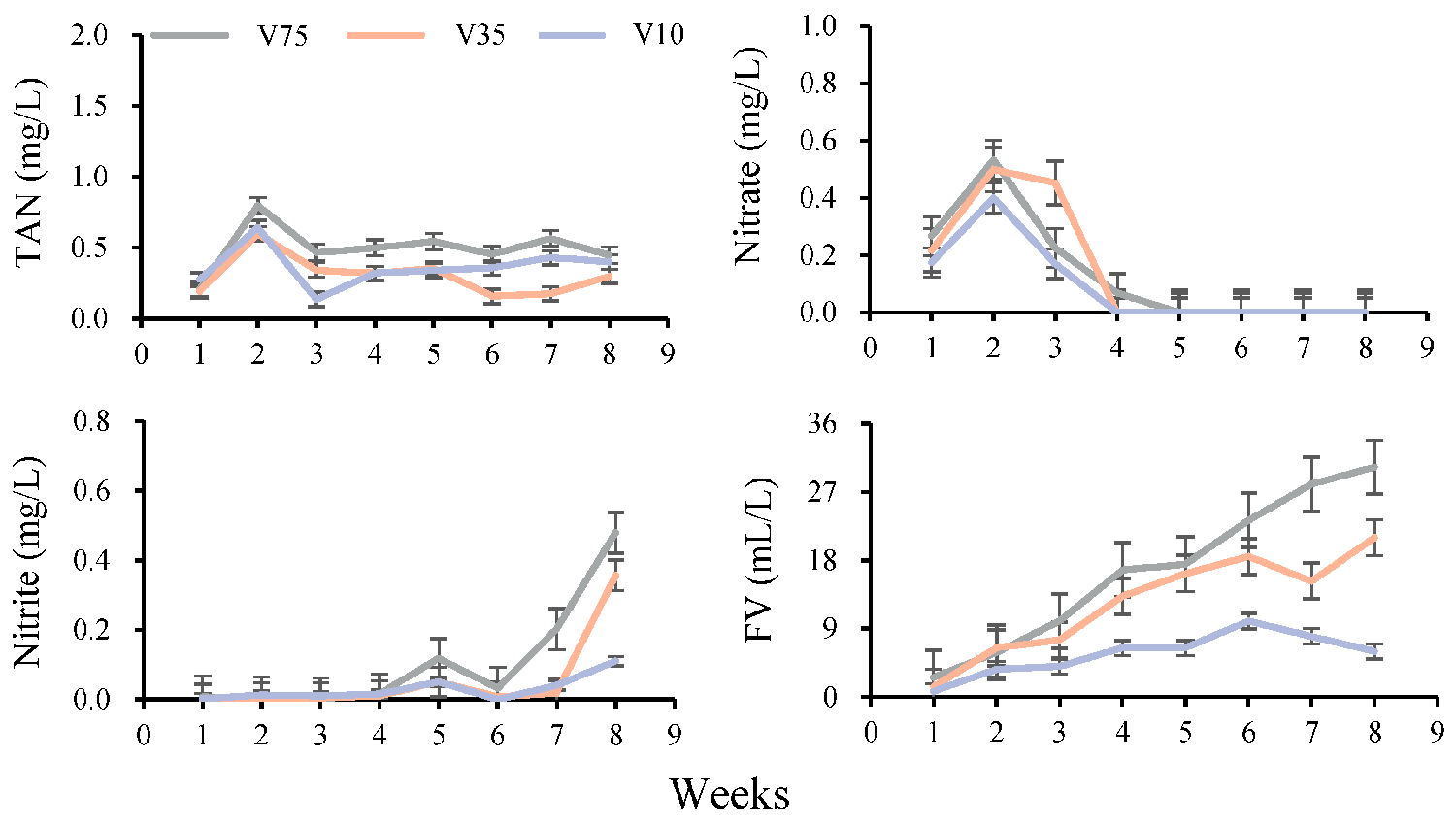
In the BFT system, aerobic heterotrophic bacteria primarily consume organic matter and contribute to the aggregation of particles, playing a crucial role in the formation and stabilization of bioflocs. We found high aeration intensity (V75) supported the growth and activity of aerobic heterotrophic bacteria, showing a trend towards the formation of more flocs compared to the low aeration intensity group. This is likely because the high aeration intensity increases oxygen availability, which accelerates bacterial metabolism, supports efficient oxidative-reduction reactions, and enhances the enzyme activity of aerobic bacteria, ultimately promoting their growth and reproduction. However, high levels of aeration intensity (V75 and V35) may lead to the disintegration of flocs, which in turn results in a reduction in the floc size.
The structure of bioflocs not only includes the size but also the complexity, which determines the settling velocity of the flocs in water and the probability of being captured by aquatic animals. The 2D fractal dimension (a rational statistical index of complexity detail in a pattern) is a key indicator of the structural complexity of bioflocs. Research has shown that aeration intensity influences the 2D fractal dimension, which subsequently affects the ability of cultured species to capture bioflocs.
In this study, the 2D fractal dimension was stable in the V75 group but decreased in the V35 and V10 groups, indicating a reduction in the structural complexity of bioflocs due to lower aeration intensity. This decrease may be due to less turbulent water at lower aeration intensity. The calmer environment can diminish the frequency of collisions and interactions among floc particles, thereby reducing the likelihood of larger particles fragmenting into smaller ones.
In addition, different aeration intensities can significantly affect bubble size, distribution, and rise velocity. Lower aeration rates produce fewer, larger bubbles, while higher rates create smaller, more numerous bubbles due to increased flow speed. These variations can influence oxygen transfer efficiency, biofloc formation, and the overall water environment in aquaculture systems. In the future, evaluation of the aeration effect on the bubble size, as well as its effect on the biofloc formation, will be crucial to optimize floc structure, accommodating the needs of various aquatic species and their distinct life stages.
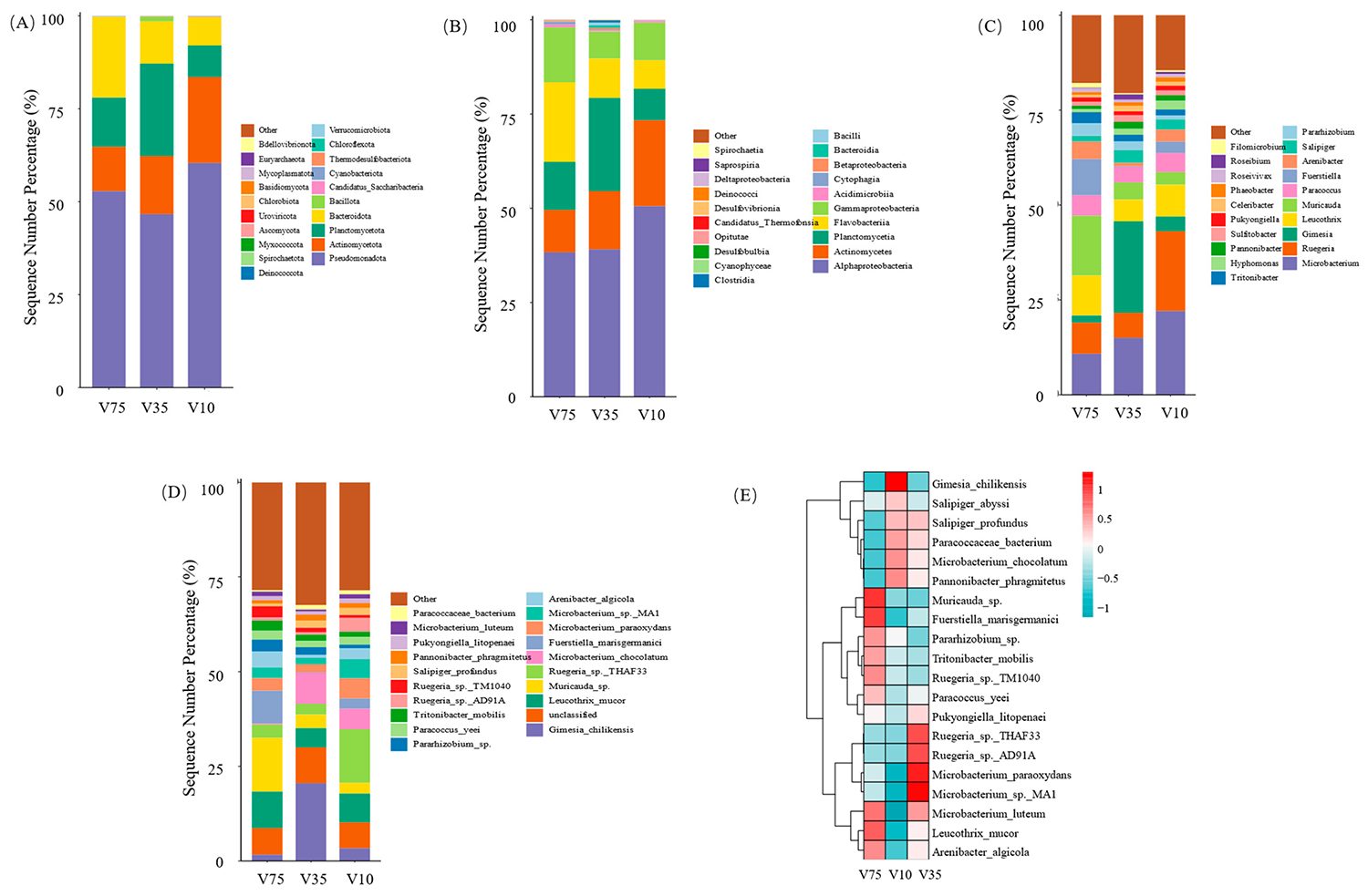
Study results indicate that high aeration effectively reduces nitrate and nitrite concentrations, maintaining levels within the optimal range for sustainable shrimp aquaculture. Our results underscore the importance of Roseobacteraceae in maintaining the ecological health of marine systems. It is important to highlight the significance of microbial toxicity tests in understanding nitrification, denitrification, and the anammox process. These tests can provide valuable insights into how toxic compounds or environmental stressors affect nitrogen metabolism in biofloc systems. Including such assessments in future studies will help optimize microbial efficiency and improve nitrogen management in aquaculture systems.
Bioflocs serve as an additional nutritional source for L. vannamei, providing essential nutrients, such as fatty acids, that support growth, immune function, and overall health. In this study, the contents of crude protein, lipid, and polyunsaturated fatty acids (PUFAs) in the biofloc did not differ significantly across the three treatments. However, the docosahexaenoic acid (DHA) content varied significantly, with the highest value observed in the V75 treatment.
The enhanced aeration provided the necessary oxygen for the DHA synthesis process, supporting the synthesis of DHA and ultimately leading to the observed increase in DHA levels. Interestingly, aeration intensity did not significantly affect the levels of other fatty acids in the bioflocs, and the underlying mechanisms behind this phenomenon remain unclear. The possible explanation is that the biosynthetic pathways of these fatty acids may be less sensitive to changes in oxygen availability.
The functional annotation of genes within microbiota across different groups revealed nearly identical metabolic activities, highlighting the similarity of microbial communities in response to different aeration intensities. The results of this study indicated continuous aerobic respiration and energy production within the microbiota of BFT. Therefore, regulating biofloc technology enables the maintenance of its efficacy in purifying water while concurrently supplying necessary nutrients to aquaculture species, thus yielding ecological and economic advantages.
Perspectives
Aeration intensity influences biofloc characteristics, with lower intensity producing larger, simpler flocs and higher intensity enhancing DHA accumulation. Regardless of aeration levels, biofloc technology effectively reduces ammonia and nitrite concentrations. Microbial functions related to nitrogen metabolism and protein synthesis remain consistent across all aeration conditions, ensuring stable biofloc performance.
Our study highlights the importance of optimizing aeration strategies for L. vannamei farming and effective aquaculture waste management. Future research should explore the impact of aeration on microbial communities and integrate these insights with performance metrics. This study’s findings offer valuable insights for farming shrimp and tilapia, though further evaluation is needed to assess its applicability to other aquaculture species.
Now that you've reached the end of the article ...
… please consider supporting GSA’s mission to advance responsible seafood practices through education, advocacy and third-party assurances. The Advocate aims to document the evolution of responsible seafood practices and share the expansive knowledge of our vast network of contributors.
By becoming a Global Seafood Alliance member, you’re ensuring that all of the pre-competitive work we do through member benefits, resources and events can continue. Individual membership costs just $50 a year.
Not a GSA member? Join us.
Authors
-

Fishery College, Zhejiang Ocean University, 1 Haida South Road Changzhi Island Lincheng New Area, Zhoushan 316022, China
-
Fishery College, Zhejiang Ocean University, 1 Haida South Road Changzhi Island Lincheng New Area, Zhoushan 316022, China
-
Corresponding author
Fishery College, Zhejiang Ocean University, 1 Haida South Road Changzhi Island Lincheng New Area, Zhoushan 316022, China -
Fishery College, Zhejiang Ocean University, 1 Haida South Road Changzhi Island Lincheng New Area, Zhoushan 316022, China
-
Fishery College, Zhejiang Ocean University, 1 Haida South Road Changzhi Island Lincheng New Area, Zhoushan 316022, China
-
Fishery College, Zhejiang Ocean University, 1 Haida South Road Changzhi Island Lincheng New Area, Zhoushan 316022, China
Related Posts
Health & Welfare
Assessing the effect of temperature on FCR in Pacific white shrimp cultured in biofloc systems
Research shows promise to improve shrimp feeding protocols in biofloc systems, especially in regions with significant water temperature fluctuations.
Health & Welfare
Comparative experimental culture of pink and Pacific white shrimp in a biofloc technology system
Study shows L. vannamei are better suited to catch biofloc as a supplementary feed with better grow-out performance when compared to F. brasiliensis.
Responsibility
Malaysia shrimp farm redesign successfully combines biosecurity, biofloc technology
Blue Archipelago’s re-engineering of a large shrimp farm to a modular, biosecure facility set a benchmark for future shrimp culture projects in Malaysia.
Health & Welfare
Biofloc technology: Possible prevention for shrimp diseases
Facing emerging viral problems and rising energy costs, the use of biofloc technology in biosecure systems offers an answer for sustainable shrimp aquaculture. The main attributes of biofloc systems in reducing disease risk include the fact that low water exchange improves pathogen exclusion.