
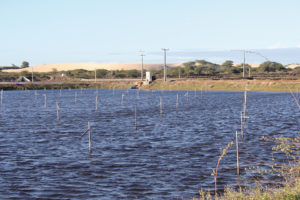
Cobia culture in recirculating systems
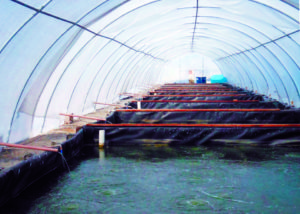
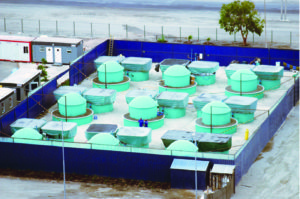
A unique pilot project supported by northern Chile’s biggest power-generating company and the Undersecretary of Fisheries and Aquaculture is raising cobia in a recirculating aquaculture system in the desert.
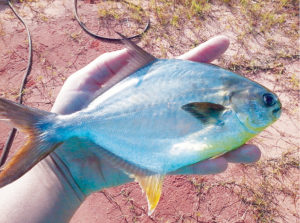
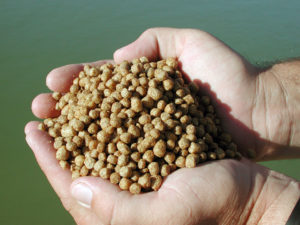
The authors have achieved good growth using a fishmeal-free diet for the carnivorous marine fish Florida pompano. In studies, they used pompano as a model marine species in a cost/benefit analysis of two extruded diets.
A unique pilot project supported by northern Chile’s biggest power-generating company and the Undersecretary of Fisheries and Aquaculture is raising cobia in a recirculating aquaculture system in the desert.
A laboratory study compared conventional soybean meal (CSBM) and low-oligosaccharide soybean meal (LOSBM) as the main protein sources in 28 percent or 32 percent protein diets for channel catfish.
Phytogenics comprise a class of plant-derived feed additives that improve animal performance. They have been shown to exert multiple positive effects in fish and shrimp, including improvement of feeding efficiency and digestion, reduction of nitrogen excretion and improvement of gut flora and health.
A 56-day trial conducted in greenhouse-enclosed clearwater and greenwater systems compared tissue variations among shrimp fed varied dietary levels of fish oil and soy lecithin.
Giant clams are a resource utilized by the food and aquarium trade markets. However, aquaculture production is low and does not supply the demand. Ready availability of broodstock and seed is a major problem, as well as practical and consistent methods for inducing spawning.
The domestication of green tiger shrimp (Penaeus semisulcatus) as a source for seedstock could help expand aquaculture in Egypt. Trials by the authors compared the reproductive performance of wild male/wild female pairings with that of pond-reared male/pond-reared female and wild male/pond-reared female pairings.
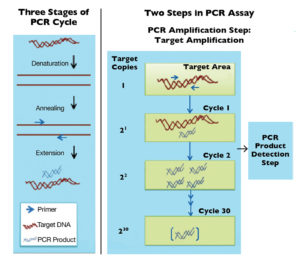
Polymerase chain reaction (PCR) testing demonstrated that Penaeus monodon offspring derived from founder shrimp collected from the Indo-Pacific region had genomic infectious hypodermal and hematopoietic necrosis-related DNA sequences that reacted with OIE-listed IHHN virus diagnostic primers.
Establishing postlarvae quality has become one of the most important aspects in controlling diseases in farmed shrimp. Initial microbial testing can ensure viruses and other pathogens are absent from the animals.
In trials, a culture diet that naturally enhances rotifers and eliminates the need for enrichment was tested. Skretting feed specialists found similar growth and reproduction figures were registered with a conventional rotifer enrichment diet and a standalone diet for a period of nine weeks.
In a commercial field trial, Nile tilapia were distributed in net cages and fed diets containing increasing threonine:lysine ratios.
Field trails in Alabama, USA, demonstrated the potential of raising striped mullet with Pacific white shrimp in inland ponds. Using wild-caught fingerlings at low density, the trials found the same survival rates as for mullet and shrimp grown separately.
The culture of many marine fish species requires the concurrent culture of live feed such as algae and microcrustaceans. The addition of copepods to first feeding often improves survival for small-mouthed species.
Antibody-based enzyme-linked immunosorbent assay (ELISA) tests are proven, sensitive, high-throughput alternatives to more costly and complex test methods for the detection of herbicide residues and other chemicals.
Probiotics can provide needed micronutrients that prime immune responses in larval fish, thus increasing their survival in culture. Probiotic dosing can be applied via immersion, microcosm approaches and enrichment of live and formulated feeds.
Scientists have been working to understand cobia’s nutritional requirements and advance the economic and environmental sustainability of feeding carnivorous fish using fishmeal alternatives.