Kudzu component: Stress reliever for fish?
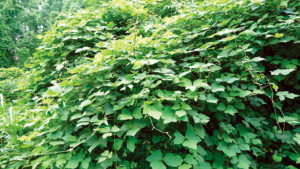
A study was performed to determine the effects of puerarin, a biologically active ingredient in the roots of kudzu, on stress modulation in farmed salmon.
A series of experiments showed that fishmeal is not an essential ingredient in hybrid tilapia feeds and that plant protein-based diets can yield results similar to those obtained with diets containing 10 percent fishmeal.
A study was performed to determine the effects of puerarin, a biologically active ingredient in the roots of kudzu, on stress modulation in farmed salmon.
In a study of juvenile cobia diets, results suggested that lipid sources with high levels of saturated fatty acids and low polyunsaturated fatty acids can replace a large percentage of fish oil in feeds if they are amended with DHA.
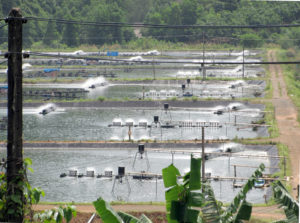
For an intensive shrimp nursery, the main goal in feeding is to supply each animal the proper quantity of feed where it can be easily accessed and consumed.
With the market volatility of fishmeal, as well as rising sustainability concerns, the aquaculture industry is seeking sources of protein, such as animal byproduct concentrates, to substitute for fishmeal.
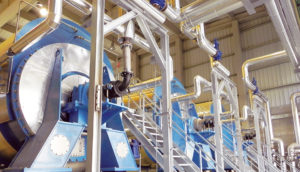
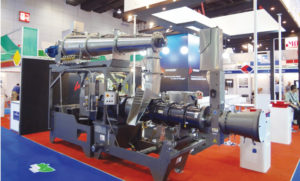
Extrusion manufacturing of aquafeeds has recently seen advances in several areas. The development of new die technology has multiplied hourly output.
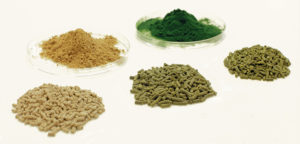
Chlorella and other species have potential as protein sources in aquafeeds. In trials with tilapia fry raised in a recirculating system, the fish received a fishmeal-based control diet or feeds with portions of the fishmeal replaced by Chlorella.
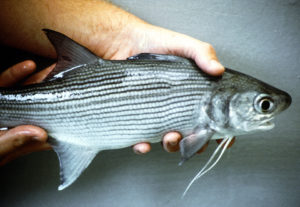
A study evaluated the potential of pink salmon testes meal, a fisheries byproduct, as a feed ingredient to replace fishmeal in diets fed to juvenile Pacific threadfin. Results showed the salmon testes meal contained high levels of protein, taurine and arginine.
Identifying sources for essential macro- and micronutrients is important, as well as understanding how best to manufacture feed to required physical specifications when using these new raw materials.
Controlled by timers, automatic feeders should be placed in deeper areas of ponds and away from aerators. Overfeeding is rare during automatic feeding, and pond bottom quality is maintained through grow-out cycles.
A global survey of feed producers in 134 countries found that aquaculture feed production rose 17 percent in 2012, affirming its position as the fastest-growing species sector.
Traditionally accepted calculations of wild fish use in feed for major farmed species tend to misrepresent fishmeal use. Some more current calculation methods require separate calculations for fishmeal and fish oil, or focus on quantity of protein from wild-caught fish.
A study investigated the effects of storage temperature and duration on the quality of finished fishmeal fed to juvenile shrimp. Diets with 15 percent fishmeal were stored at 4 or 30 degrees-C for six months or 12 months.
Determining the best feed to purchase is one of the most important challenges of running a profitable aquaculture business. Properly conducted on-farm trials provide valuable data that help direct objective feed decisions.
Key molecules found in animal byproduct hydrolysates show potential for use as functional ingredients in aquaculture feeds. Animal co-product hydrolysates from slaughterhouse waste and rendered animal byproducts present a protein alternative.
Since feed costs can contribute up to 60 percent of the expenses for an aquaculture business, it is common for farms to purchase lower-cost feeds.