Global Seafood Alliance Logo
  • Advocate Magazine
  • Aquademia Podcast
  • Blog
  • Contact

Find us on social media

  • Instagram
  • Facebook
  • LinkedIn
  • YouTube
  • Log In
  • About
    • Who We Are
    • Our History
    • Our Partners
    • Our Team
    • Sustainable Development Goals
  • Membership
    • Overview
    • Our Members
    • Corporate Membership
    • Membership FAQs
  • Summit Event
  • Certification
    • Our Certification Programs
    • Get Certified
    • For Consumers
Log In
  • About
    • Who We Are
    • Our History
    • Our Partners
    • Our Team
    • Sustainable Development Goals
  • Membership
    • Overview
    • Our Members
    • Corporate Membership
    • Membership FAQs
  • Summit Event
  • Certification
    • Our Certification Programs
    • Get Certified
    • For Consumers
  • Advocate Magazine
  • Aquademia Podcast
  • Blog
  • Contact

Search Results

You searched for CARBON DIOXIDE. We found 290 results.

Search results were limited to Advocate articles. To search the entire site, use the search in the main navigation.
Carbon dioxide: Waste, nutrient

1 July 2008

Carbon dioxide: Waste, nutrient

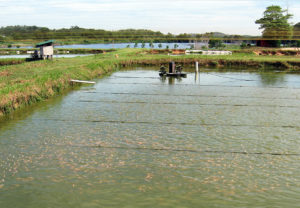
Carbon dioxide is both a nutrient and a waste product in aquaculture. Some pond managers feel that application of organic matter to provide additional carbon dioxide can reduce pH and control blue-green algae. 

Aquaculture ponds hold carbon

1 March 2010

Aquaculture ponds hold carbon

Although 16.6 million metric tons of carbon are annually buried in aquaculture ponds, estimated carbon emissions for culture species have approached several metric tons of carbon per metric ton of aquaculture product. 

Macroalgae aquaculture as a potential carbon dioxide removal strategy

30 January 2023

Macroalgae aquaculture as a potential carbon dioxide removal strategy

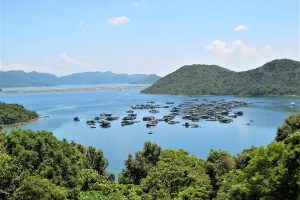
Macroalgae aquaculture has benefits but improvements are needed in monitoring, reporting, verification standards and carbon uptake assessments. 
Assessing the carbon footprint of aquaculture

2 September 2013

Assessing the carbon footprint of aquaculture

A carbon footprint is an estimate of the total carbon emissions resulting from the production, use and disposal of a product or service. Carbon footprints for aquaculture products result mainly from the use of manufactured feed and mechanical aeration. 
The impact of atmospheric carbon dioxide, alkalinity in freshwater aquaculture

4 September 2017

The impact of atmospheric carbon dioxide, alkalinity in freshwater aquaculture

Changes in atmospheric carbon dioxide concentration should have little effect on rising alkalinity concentration in aquaculture systems. Climate change is of greater concern in freshwater aquaculture than is an increase in alkalinity. 

Can burying sulfide with reactive iron capture millions of tons of carbon?

14 April 2025

Can burying sulfide with reactive iron capture millions of tons of carbon?

Enhanced sulfide burial seen as a scalable, cost-effective pathway to mitigate the carbon footprint of fish farming and a tool for climate solutions. 

Can seagrass and mangrove restoration help mitigate ocean acidification and climate change?

1 June 2023

Can seagrass and mangrove restoration help mitigate ocean acidification and climate change?

Researchers suggest seagrass and mangrove restoration could also remove carbon through a novel pathway while combating ocean acidification. 
Greenhouse gas emissions from aquaculture

2 January 2015

Greenhouse gas emissions from aquaculture

To quantify the carbon dioxide and methane fluxes in tropical earthen ponds, the authors used freshwater prawn farming managed according to different strategies as a model. 
Atmospheric pollution affects water quality

1 September 2014

Atmospheric pollution affects water quality

Acid rain typically does not heavily affect aquaculture operations, and application of agricultural limestone can buffer water against the impacts of acid rain at facilities that use stream water. 

Net carbon emissions and economic growth of marine aquaculture in China

27 May 2022

Net carbon emissions and economic growth of marine aquaculture in China

Study results can enhance the ecological value of the marine aquaculture carbon sink and create a “decarbonization space” for sustainable development. 
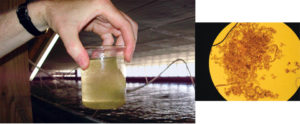
Misuses of sodium bicarbonate in pond aquaculture

1 July 2008

Misuses of sodium bicarbonate in pond aquaculture

Sodium bicarbonate is a useful chemical in recirculating aquaculture systems and fish transport tanks. However, two common uses of the compound in pond culture – to remove carbon dioxide and treat off-flavors – do not work. 

Carbon-nitrogen balance impacts nitrogen removal

1 July 2008

Carbon-nitrogen balance impacts nitrogen removal

For aquaculture managers, it is important to control carbon type and carbon-nitrogen ratio by feed formulation, solids removal or addition of organic carbon. 
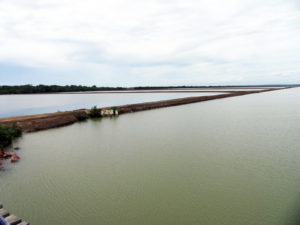
Dissolved oxygen requirements in aquatic animal respiration

1 November 2011

Dissolved oxygen requirements in aquatic animal respiration

Although carbon dioxide is not highly toxic, high levels in the blood have many negative physiological consequences. As carbon dioxide increases, higher dissolved oxygen tension is necessary to load hemoglobin with oxygen. 
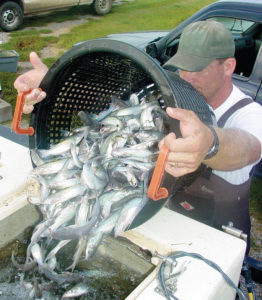
Progress and knowledge gaps in ocean acidification and aquacultured seaweeds

17 January 2023

Progress and knowledge gaps in ocean acidification and aquacultured seaweeds

Emphasize effective, implementable actions against ocean acidification, linking seaweed physiological changes with production costs and profits. 

Understanding pond pH

1 June 2002

Understanding pond pH

Natural waters uninfluenced by high biological activity seldom have pH above 8.5, but in fish or shrimp culture, pond pH levels can rise to 9 or higher. 

Aquaculture, feed companies embark on a carbon-cutting journey

26 April 2021

Aquaculture, feed companies embark on a carbon-cutting journey

The aquaculture value chain can significantly reduce carbon emissions with innovations in feed, transportation and operations. 

Trouts’ carbon dioxide avoidance behavior used to improve transfer, harvest process

1 June 2006

Trouts’ carbon dioxide avoidance behavior used to improve transfer, harvest process

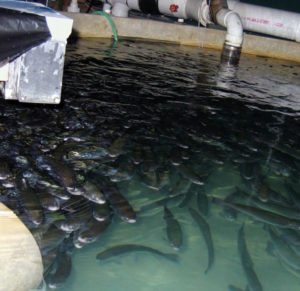
In studies, high dissolved carbon dioxide concentrations in culture tank water induced rainbow trout to swim to an area with lower concentrations. 
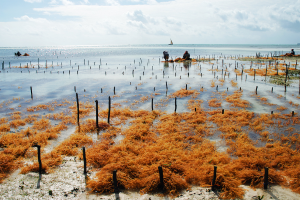
Biofilter start-up problems? Just add sugar!

1 July 2009

Biofilter start-up problems? Just add sugar!

One way to jump start biofilter operation is by adding sugar, which can provide sufficient organic carbon to neutralize the ammonia-nitrogen produced. 

Posts pagination
1 2 3 … 17 »

About The Advocate

The Responsible Seafood Advocate supports the Global Seafood Alliance’s (GSA) mission to advance responsible seafood practices through education, advocacy and third-party assurances. New feature stories and technical articles are published every two weeks!

Learn More

Search Responsible Seafood Advocate
Ad for [BAP certified]

Sponsorship Opportunities

2026 Summit Sponsorship

Categories

Aquafeeds Aquafeeds Fisheries Fisheries From Our Sponsors From Our Sponsors Health & Welfare Health & Welfare Innovation & Investment Innovation & Investment Intelligence Intelligence Responsibility Responsibility Artículos en Español icon Artículos en Español

Don't Miss an Article

Featured

  • Innovation & Investment Responsible Seafood Innovation Award finalist: How upcycling plastic bottles could help small-scale fisheries cut dolphin bycatch
    Responsible Seafood Innovation Award finalist: How upcycling plastic bottles could help small-scale fisheries cut dolphin bycatch
  • Innovation & Investment Responsible Seafood Innovation Award finalist: Why using 100% of Great Lakes fish is ‘the right thing to do’
    Responsible Seafood Innovation Award finalist: Why using 100% of Great Lakes fish is ‘the right thing to do’
  • Innovation & Investment Responsible Seafood Innovation Award finalist: How blue-violet LED lights could help longline fisheries reduce bycatch
    Responsible Seafood Innovation Award finalist: How blue-violet LED lights could help longline fisheries reduce bycatch

Popular Tags

Ad for [Responsible sourcing]
  • About
  • Membership
  • Resources
  • Best Aquaculture Practices (BAP)
  • Best Seafood Practices (BSP)
  • Summit Events
  • Advocate Magazine
  • Aquademia Podcast
  • Blog
  • Contact
  • Glossary
  • Privacy Policy

Stay up to date with GSA

Find us on social media

  • Instagram
  • Facebook
  • LinkedIn
  • YouTube
Copyright © 2026 Global Seafood Alliance
All rights reserved.
Terms of Use