


Ecuador’s shrimp growth tilts toward technification

Productivity gains, rather than simply higher stocking densities, will drive expansion
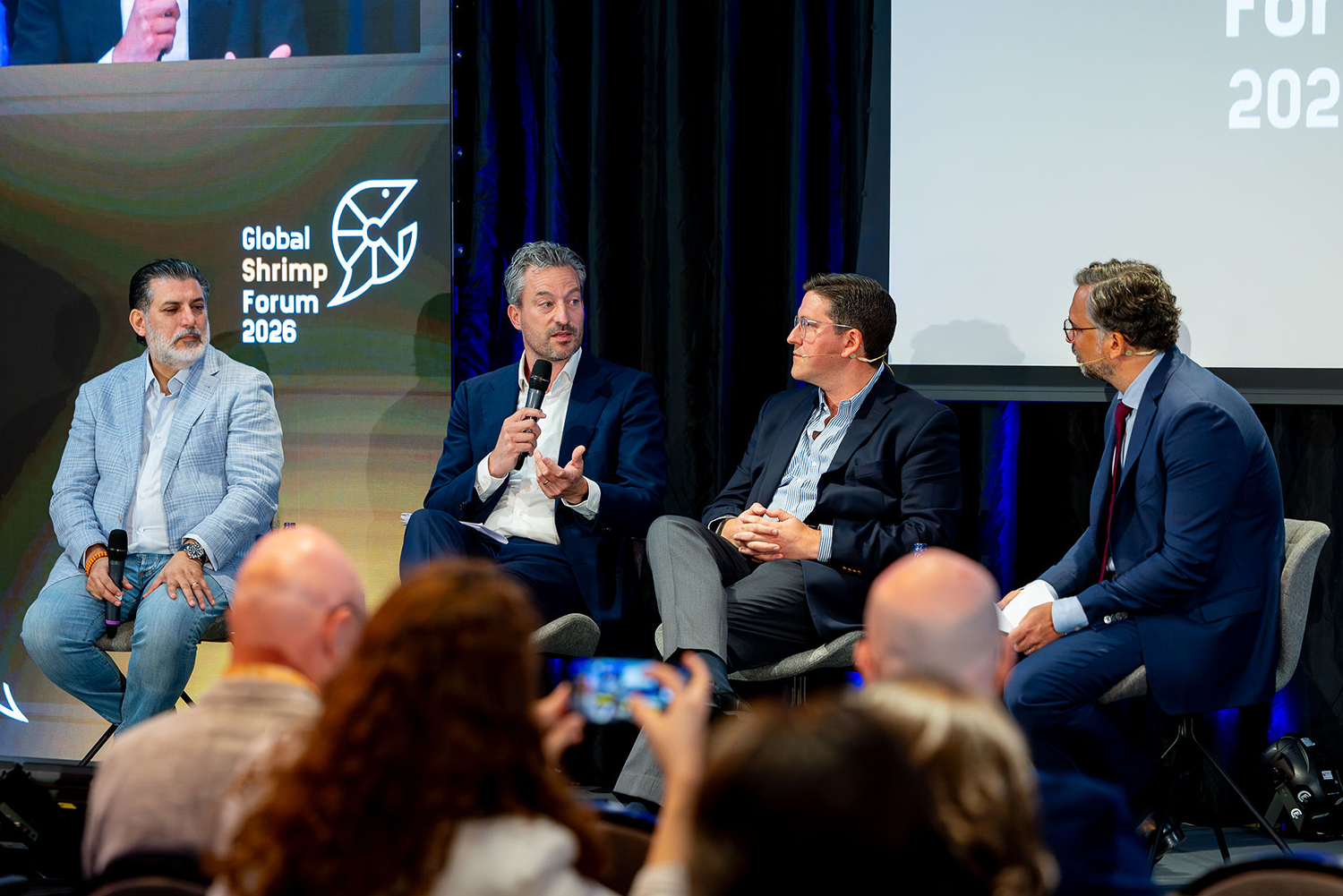
Ecuador’s shrimp industry has entered a new phase of growth in which productivity gains, rather than simply higher stocking densities, are expected to drive expansion, according to Thai Union Feedmill Ecuador CEO Eduardo Arosemena.
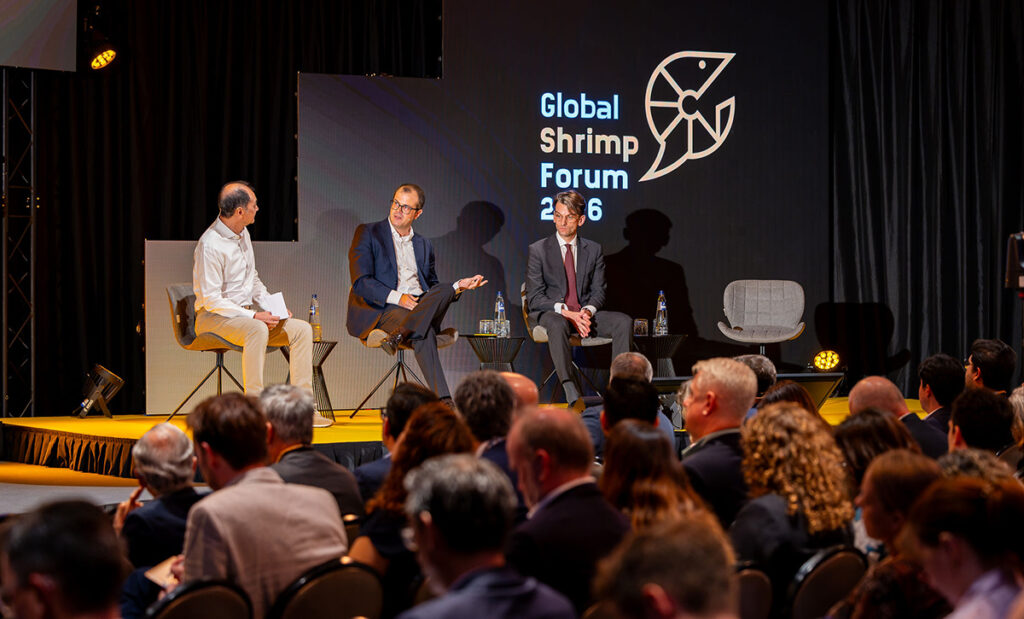
Speaking at this past September’s Global Shrimp Forum in Utrecht, the Netherlands, Arosemena said the industry’s development could be divided into three stages: recovery after disease shocks at the beginning of the century, technification and export expansion, and the current focus on efficiency, resilience and value capture.
Today, Ecuador has around 240,000 productive hectares (ha), but roughly 80 percent of production volume comes from only about 80,000 ha, he said. That leaves substantial scope to increase output through by lifting productivity across existing production areas rather than relying on higher densities.
“We don’t like high densities,” he said. “Low densities have worked for us. So, by continuing to expand the more productive hectares, we won’t need to expand the densities to keep growing.”

Arosemena highlighted advances in genetic selection, including the development of more than 70 genetic families adapted to different Ecuadorian production conditions, followed by family-based breeding, BLUP (best lineal unbiased prediction) and genomic selection.
BLUP, he explained, is a statistical breeding system where generic merit is given to the family. It strips out the variables within a family that could otherwise distort its apparent performance, isolating the specific quality of its reproduction.
“That way, you have an unbiased prediction,” he said. “This is an objective that we, as part of the shrimp production chain, have always worked for – taking harvests and production in general to a more predictive state, where we can actually speed up because we know what is probably or more likely to happen.”
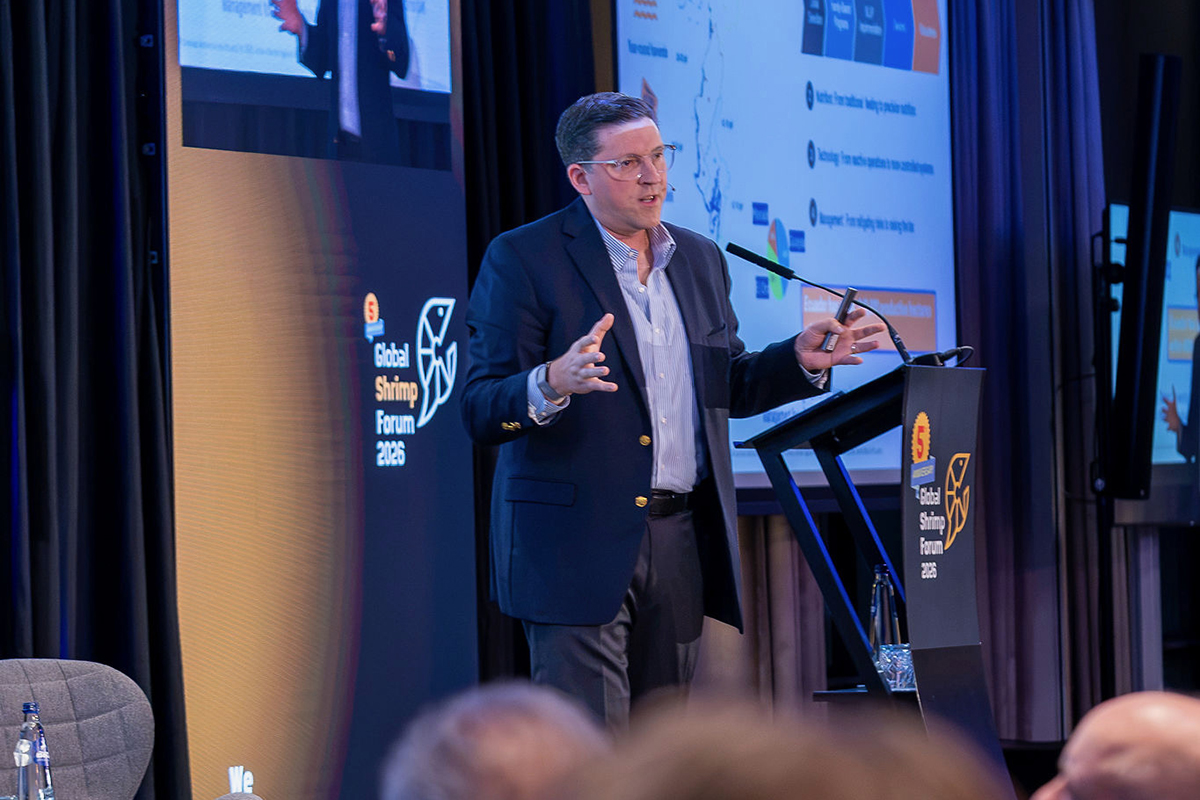
Arosemena continued: “And then, five or six years ago, we started working on a genomic level – trying to again improve the families, but now with a much more specific detail to get that precision.”
At this stage, he said, nutrition and genetics started to converge: “We started learning what type of nutrition can better match the genetics of each family, depending on what part of the country they are in. This has completely changed the game.”
Feed management has evolved alongside genetics and farming technology. Production has moved from three or four daily feedings to highly automated systems capable of delivering feed many times per hour, supported by acoustic and sonar-based monitoring. Feed specifications have changed with it, with parameters including water stability, sinking speed and controlled leaching becoming increasingly important.
Arosemena also noted that feed, traditionally accounting for around 70 percent of production costs, now represents 45 to 55 percent at some sites as precision in nutrition and feeding has improved.
“We’re becoming much more efficient in terms of that biomass transforming,” he said.
The next productivity gains, attendees of the forum heard, will depend on further genetic improvement, greater flexibility in feed formulation, continued farm technification, and critically, access to energy.
Arosemena identified electrification as a key constraint on further expansion, calling it Ecuador’s “Achilles heel.” Green-energy investment, he said, could allow more of Ecuador’s roughly 35,000 ponds to adopt advanced aeration, feeding and monitoring systems. But from a nutrition standpoint, he believes the next step for shrimp feeds is flexibility.
European indoor shrimp farming – investment vacuum or viable, high-end enterprise?
“We have to be able to play with what we’ve got. We’re going to have significant limitations in the next in the next few years with critical raw materials. We need to play with additives,” he said. “We need to learn how we can compensate the nutritional profile of each diet with alternate ingredients, because things are going to get tight. We have to keep investing and evolving in that regard to accompany the growth of the market.”
In general, Ecuador is a “very good environment” for investment, Arosemena told the conference. In aquaculture alone, nutrition companies have invested some U.S. $200 to $300 million over the past 10 years, with more expected.
“The government is super open and willing to attract investment in all areas, but specifically in aquaculture, because aquaculture is one of the insignias and trophies that Ecuador has right now and which it’s also carrying across the globe. It’s because we’re sustainable, we keep growing, and we’re feeding the planet.
“Historically, Ecuador was [in order of importance] oil, banana, cocoa and shrimp. Now shrimp has gone up to first place,” he said. “That is something that, as an industry, makes us proud. But also, as a country, it makes us proud because it’s a healthy protein, a clean business, and it hires hundreds of thousands of people.”
Capitalizing on the value factor
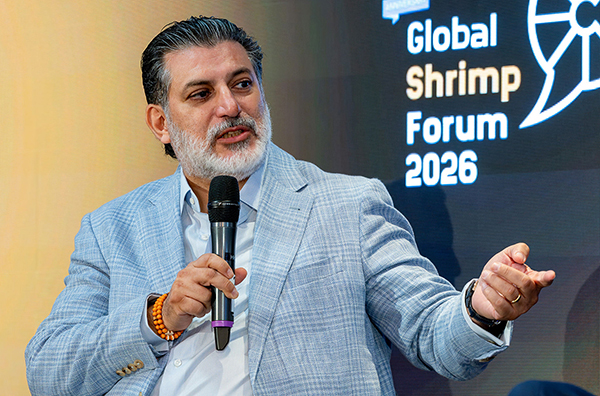
Ecuador’s appetite for new technology is what sets it apart from most other shrimp producing nations, according to Skretting CEO Maarten Bijl, who joined Arosemena on an investment-focused panel at the Utrecht event.
Technification, he said at the conference, has been playing “a major role” in the growth of Ecuador’s shrimp production growth.
The feed producer has been active in the country since 2013, and Bijl said one of the standout differences between Ecuador and a lot of other producers is its level of innovation adoption, and its openness to using technology and to drive productivity. He also pointed to continuous investment in local R&D and professionalization.
“For me, the producers, the level of professionalism, the consolidation that’s happened and is still happening is a major difference,” Bijl said. “Another thing is the Ecuadorian market is moving more and more towards the selling market, with a value focus. In some other regions, it’s continuously about cost, cost, cost and it almost doesn’t really matter what’s in the feed as long as it’s cheap, whereas [Ecuador’s] value focus, the productivity, functional ingredients, investments in technology, looking at the total return on investment versus just that sort of cash out of hand – that’s a major factor.”
On further opportunities for the sector, Bijl said it could take a cue from the salmon farming industry and incorporate different cooperation models and data integration across the value chain.
“That’s what we do see more in salmon, and that does allow you to go faster with innovation – to look beyond just your own optimization,” he said.
Digital transformation is an approach that Bijl said he’s “very passionate about.” He told the conference that while much of the world is in an AI piloting phase, Skretting is already deploying it at industrial scale.
In Ecuador, this includes its Skretting 360+ and Eruvaka feed technologies, as well as its AquaSim precision farming suite. Bijl estimated that these support more than 20,000 harvests a year, with over 45,000 hectares monitored through the platforms.
“I think what you see happening now is, through the developments in AI and the fact it becomes more accessible and easier to adopt, is that autonomous, agentic AI will lead to the next step of productivity – both for producers and for feed companies like ours,” said Bijl. “We’ll be moving from a state of monitoring, where we’re looking a little bit in the rear-view mirror, to being more forward-looking, and being able to connect multiple data sources that are also forward-looking.”
That will allow producers to take more real-time, dynamic decisions, he said, with the precision element enabling more changes in formulation to be implemented.
At the same time, Bijl expects AI to open up new capabilities when it comes to further diversifying the feed ingredient basket and accelerating formulation innovation, while bringing more transparency across the value chain – so that end-consumers in key markets can see what the Ecuadorian shrimp they’re buying has eaten throughout its whole lifecycle.
“At the moment, we can already tell on an individual ingredient basis, throughout the whole feeding cycle, what the feed plan has been,” Bijl said. “That’s what modeling enables. And by taking that step, we can start thinking about new value-added ways of creating insight and speeding that up.”
Returning to his view that shrimp will follow a similar course to salmon, he highlighted the feed partnership that Skretting signed with Mowi at the end of last year aimed at optimizing production, formulations and costs.
“That’s again the salmon industry taking the next step,” he said. “That partnership with Mowi, where we do full data sharing between all this research on a continuous basis – what we do at Skretting, with everything that’s happening on the farm side – has allowed both us and Mowi to accelerate, drive down costs, accelerate innovation, and that benefits the whole industry.”
Such cooperation models can also benefit Ecuadorian shrimp and the wider industry, Bijl said.
“But what I do still see today is a lot of individual optimization,” he said. “So, while AI enables all those individual things, you also need to bring that trust. You can guard the data. You can do all of those things, but you do need to take that leap forward, and you can only do that together.”
Targeting total disease resistance
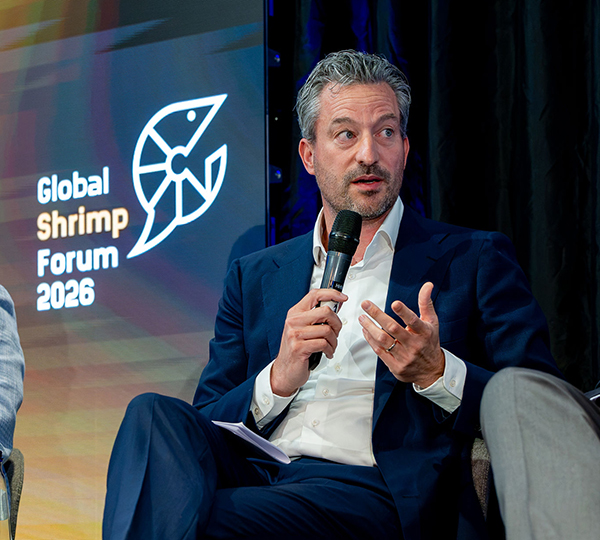
From a shrimp farming perspective, the genetics programs in place mean there’s effectively no limit to the improvements that can be made in growth, said Luis Burgos, CEO of Ecuadorian producer Camaronera Escalante S.A.
“When I started in the industry 30 years ago, the shrimp was growing 0.5 grams per week. Now it’s growing 0.5 grams per day,” Burgos said. “Just imagine what we can do through genomics and really going into the DNA – not modification, but the selection of families based on their DNA.”
Omarsa S.A. CEO Sandro Coglitore likewise sees no growth ceiling and suggested that through genetics it’s “easy” to think of an animal doubling its capacity to grow in the next few years.
“We’ve already seen it in a few families or individuals inside families,” he said.
Another aspect to genetics that Coglitore is “very positive about” is the ambition to go from a tolerant shrimp to a 100 percent resistant animal for White Spot Syndrome Virus (WSSV) or other diseases that have affected Ecuadorian production.
In the case of WSSV, he said, the company already has animals that are both resistant and tolerant. With these, it has a program working toward 100 percent resistance.
“I see a lot of potential in Ecuador for going down that path – not only for having a high-growth animal, but having a 100 percent resistant animal especially for White Spot, which is our main disease problem, as well as having that animal coping with exposure to all the other pathogens that we live with all the time,” he said. “I see a very bright future for genetics being part of the industry in Ecuador.”
Now that you've reached the end of the article ...
… please consider supporting GSA’s mission to advance responsible seafood practices through education, advocacy and third-party assurances. The Advocate aims to document the evolution of responsible seafood practices and share the expansive knowledge of our vast network of contributors.
By becoming a Global Seafood Alliance member, you’re ensuring that all of the pre-competitive work we do through member benefits, resources and events can continue. Individual membership costs just $50 a year.
Not a GSA member? Join us.
Author
-

Jason Holland is a London-based writer for the international seafood, aquaculture and fisheries sectors. Jason has accrued more than 25 years’ experience as a B2B journalist, editor and communications consultant – a career that has taken him all over the world. He believes he found his true professional calling in 2004 when he started documenting the many facets of the international seafood industry, and particularly those enterprises and individuals bringing change to it.
Related Posts
Intelligence
Growth, diversification and resilience dominate Global Shrimp Forum discussions
The global farmed shrimp sector is undergoing rapid growth while confronting increasingly complex market, biological and geopolitical challenges.
Intelligence
Carbon clarity and a call to action: Shrimp industry urged to start work on low-emissions future
New Shrimp Carbon Footprint Guide launches at Global Shrimp Forum, urging swift industry action and practical steps for a low-carbon future.
Intelligence
Can India sustain its farmed shrimp boom?
Long a global leader in farmed fish production, India has transitioned into an aquaculture powerhouse. Can its expanding shrimp sector keep the rapid pace?
Intelligence
Is the most valuable part of shrimp typically thrown away? How seafood byproducts offer new revenue streams
Shrimp byproducts may unlock new revenue streams as shells and heads are turned into feed ingredients and biomaterials.