


PCR-based diagnostic platform developed to evaluate aquafeed biosecurity risks

Study assesses the biosecurity risks of aquafeeds to shrimp farming, especially feed supplemented with shrimp meal
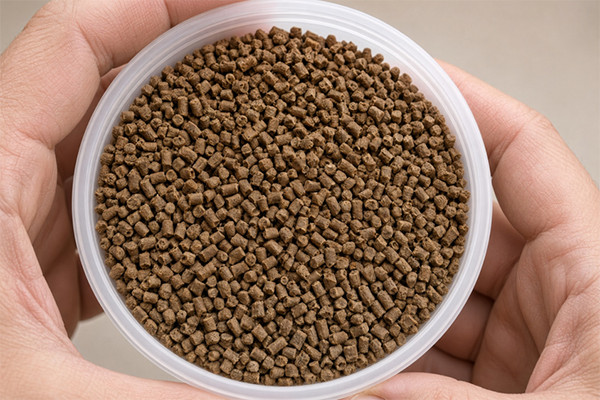
The rapid growth of shrimp aquaculture globally has been driven by access to Specific Pathogen Free (SPF) seed stocks, nutritionally complete formulated feeds and effective farm management practices, including biosecurity strategies. Formulated feeds could raise biosecurity concerns in the shrimp industry when formulated feeds test positive for shrimp disease by PCR-based assay.
In shrimp aquaculture, Polymerase Chain Reaction (PCR) – a lab method that makes many copies of a chosen piece of DNA – is the gold-standard for disease diagnosis and recommended by the World Organization for Animal Health (WOAH, Paris, France). However, PCR-positive results confirm only the presence of pathogen-associated DNA and do not ensure the presence viable pathogen in the feed. Additionally, to retain infectivity, a pathogen’s genome needs to remain intact.
The extrusion process used to make aquafeeds involves high temperature and breaks the genomic content (DNA or RNA) of a pathogen into small fragments. Therefore, formulated feeds may test positive by real-time PCR, which amplifies small fragments, but when large fragments of pathogen genome are targeted to amplify by conventional PCR, the result can be a false negative.
Typically, a pathogen can cause infection once its replication-involved genes are intact and functional. Thus, a PCR-based diagnostic can target to amplify a big fragment of the functional domain of a replicase gene to detect aquafeed contamination. The replicase gene typically exceeds 1 kb in size, which is significantly larger than the 100-150 bp amplicons (the piece of DNA that a PCR test copies over and over) usually produced by real-time PCR.

When an aquafeed or its ingredients test positive by real-time PCR but negative by conventional PCR for the replicase gene, it likely does not harbor an infectious pathogen and therefore presents no biosecurity threat. To test this idea, we used White Spot Syndrome Virus (WSSV)-spiked extruded feed as proof-of-concept.
Study setup
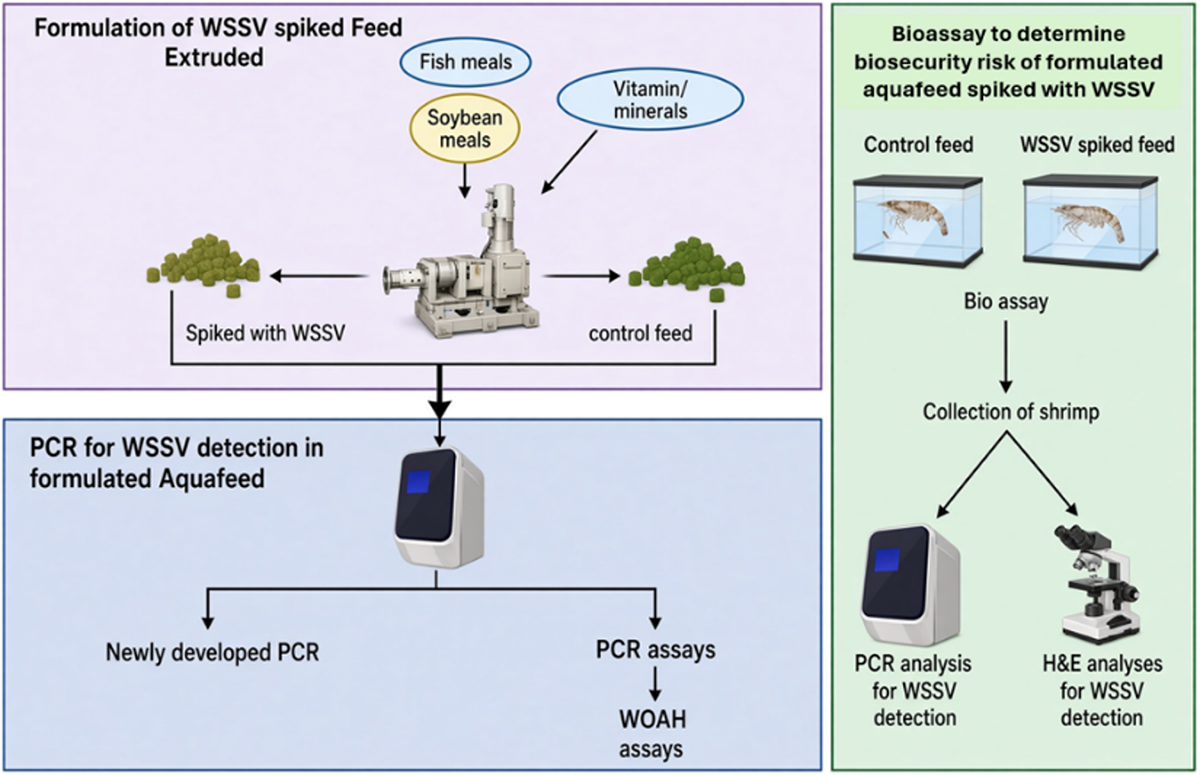
We determined the infectivity of WSSV-spiked feed as follows: We prepared extruded shrimp diets containing several concentrations of known WSSV-infected shrimp meal. These diets were tested using newly developed one-step conventional and real-time PCR assays targeting the WSSV DNA polymerase gene. Results were compared with WOAH-recommended nested and real-time PCR methods for WSSV detection. Additionally, WSSV-spiked shrimp meal was used to produce extruded feed, which was then fed to SPF Pacific white shrimp (Penaeus vannamei) to evaluate whether it causes white spot disease (WSD). Further details are available in the original publication.
Mai-Dhar, PCR, Table 1
| Primers/probe | Sets | Start | Stop | Length | Sequence (5'-3') | %GC | Tm | Amplicon size (bp) | |
|---|---|---|---|---|---|---|---|---|---|
| ws-pol-F1 | 1 | 296,346 | 296,365 | 20 | ATCTCCAGCTCCATCACCCT | 55 | 60 | 980 | |
| ws-pol-R1 | 297,325 | 297,306 | 20 | CTGAAGAATGGGGGCATGGT | 55 | 60 | |||
| ws-pol-F2 | 2 | 298,336 | 298,356 | 21 | AGCGAGCTATAGGGCAGCACA | 57.1 | 63.7 | 341 | |
| ws-pol-R2 | 298,676 | 298,655 | 22 | CCACCCACTAATCACGTGAGGC | 59.1 | 63.2 | |||
| ws-pol-F3 | 3 | 298,487 | 298,507 | 21 | ACTGGTTGCACCTGGATCCGA | 57.1 | 63.8 | 334 | |
| ws-pol-R3 | 298,820 | 298,799 | 22 | TCCTCCTCCTCCTTCTGTTGCT | 54.5 | 62.5 | |||
| ws-pol-qF | 4 | 298,280 | 298,301 | 22 | TGCCATCATCTTTGAAAACGTT | 36.4 | 57.4 | 72 | |
| ws-pol-qR | 298,351 | 298,332 | 20 | TGCCCTATAGCTCGCTCCAT | 55 | 60.5 | |||
| WS-pol-probe | 298,305 | 298,329 | 25 | CACGATACGGCCATCTCTACGGACG | 60 | 66.6 |
Results and discussion: Analytical specificity and sensitivity
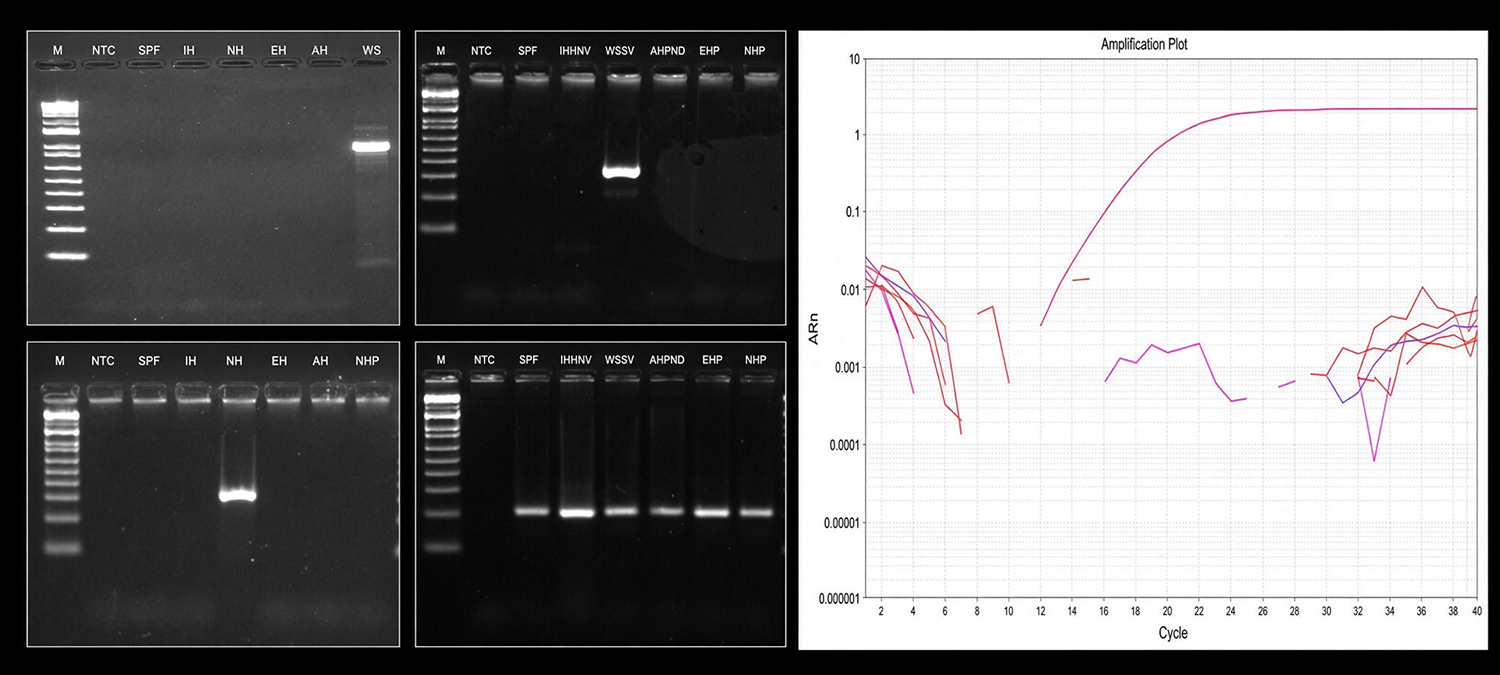
The DNA quality was determined using primers targeting the shrimp elongation factor EF-1α, a normal shrimp gene that is always “on.” The protein it makes (EF-1α) helps the cell build other proteins, and the gene is present at a fairly steady level. In a PCR or qPCR test, researchers use EF-1α as a control.
All four newly developed primer sets only amplified the WSSV sample, indicating their suitability for WSSV diagnostics. The limit of detection (LOD) values for the four newly developed primer sets, determined through three independent runs, were 100 copies/reaction for sets 1, 3 and 4 and 1,000 copies/reaction for set 2.
Results and discussion: Diagnostic performance
A total of 45 unknown samples were used to evaluate the diagnostic performance of newly developed primer sets and WOAH-recommended primers. Although both WOAH-recommended and new primers were used, they had the same diagnostic sensitivity (DSe) (97.79, CI=88.80-99.92); the new primers were superior to the WOAH-recommended primers regarding Diagnostic specificity (DSp%) (95.77 vs 89.69).
Mai-Dhar, PCR, Table 2
| Primer sets | Diagnostic specificity (Dsp)(%) | Diagnostic sensitivity (Dse) (%) |
|---|---|---|
| Set-1 | 95.77 (79.37-99.84) | 97.79 (88.80-99.92) |
| Set-2 | 95.77 (79.51-99.84) | 97.79 (88.88-99.92) |
| Set-3 | 95.76 (79.27-99.84) | 97.79 (88.76-99.92) |
| Set-4 | 95.72 (79.40-99.84) | 97.80 (88.75-99.92) |
| WOAH-nested PCR | 89.69 (69.52-98.45) | 97.77 (88.66-99.92) |
| WOAH-real-time PCR | 95.75 (79.28-99.84) | 97.79 (88.77-99.91) |
Results and discussion: PCR screening of extruded feed
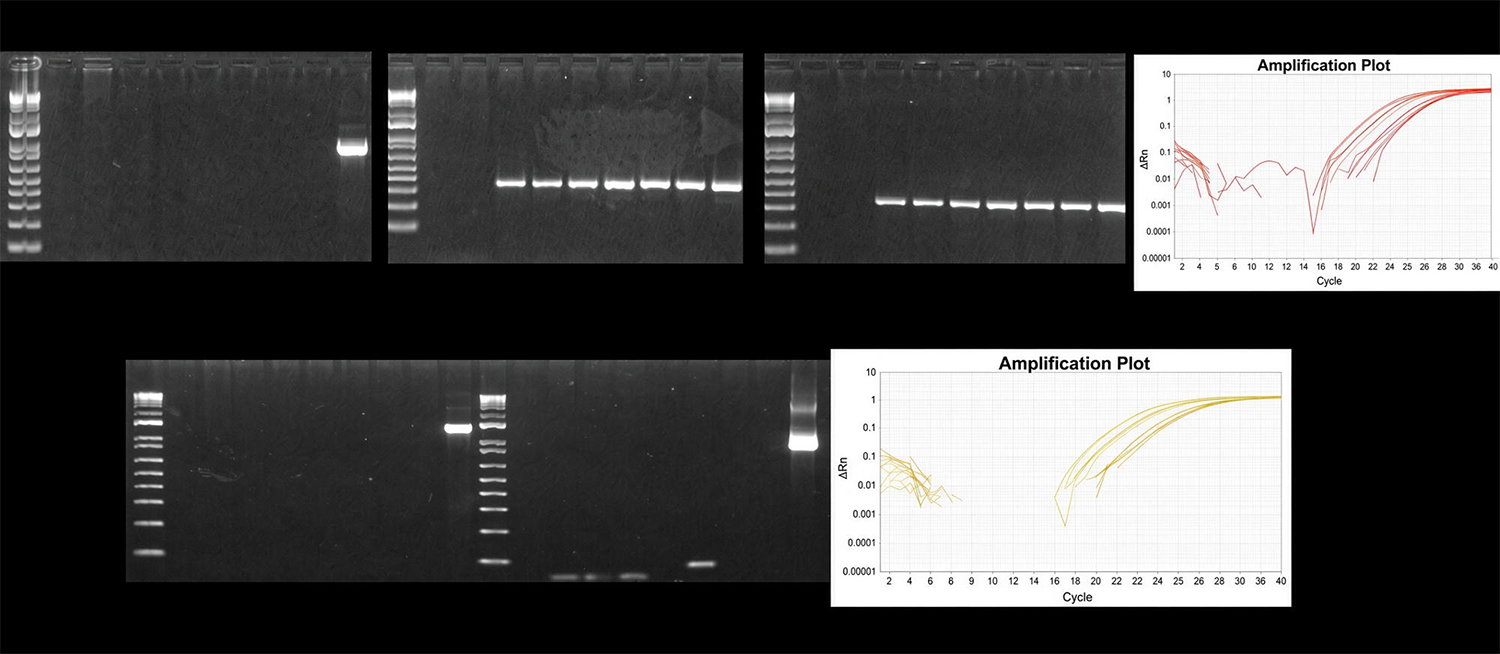
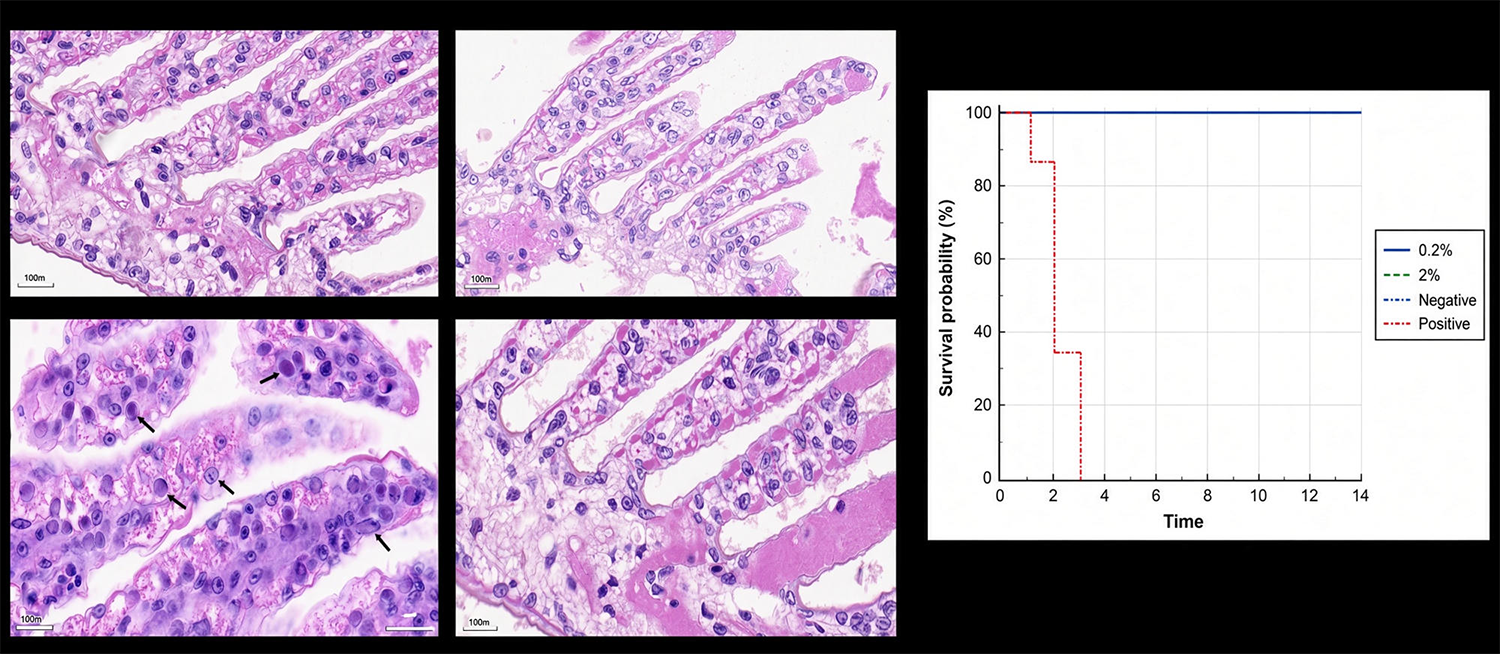
Only set 1 and WOAH-nested PCR did not show an amplification signal, while the others showed amplification (Fig. 3). In addition, no mortality or WSSV lesions were observed in shrimp fed WSSV-spiked diets (Fig. 4), which tested negative for WSSV. These results suggest that set-1 and WOAH-nested PCR are suitable for aquafeed screening because they target a longer fragment. However, set-1 is a one-step PCR and is less time-consuming than WOAH-nested PCR.
Perspectives
In summary, aquafeed may pose a biosecurity risk to shrimp farming, especially feed supplemented with shrimp meal. The diagnostic platform we developed combines real-time PCR and long-fragment conventional PCR to assess the biosecurity risk of formulated feed. Initially, feed may be screened for WSSV or other pathogens by real-time PCR. Positive samples will then be confirmed by conventional PCR targeting to amplify a bigger fragment of the pathogen replicase gene. If a sample does not yield a positive result in conventional PCR, it will be considered negative for the pathogen screened. If an aquafeed tests positive by both real-time and conventional PCR assays, it should be further tested using a bioassay to determine the potential biosecurity risk and provide final confirmation.
Now that you've reached the end of the article ...
… please consider supporting GSA’s mission to advance responsible seafood practices through education, advocacy and third-party assurances. The Advocate aims to document the evolution of responsible seafood practices and share the expansive knowledge of our vast network of contributors.
By becoming a Global Seafood Alliance member, you’re ensuring that all of the pre-competitive work we do through member benefits, resources and events can continue. Individual membership costs just $50 a year.
Not a GSA member? Join us.
Authors
-

Aquaculture Pathology Laboratory
The University of Arizona
Tucson, AZ 85721 USA -

Aquaculture Pathology Laboratory
The University of Arizona
Tucson, AZ 85721 USA -

USDA, ARS, Bozeman Fish Technology Center
Bozeman, Montana, USA -

Corresponding author
Aquaculture Pathology Laboratory
The University of Arizona
Tucson, AZ 85721 USA
Related Posts
Health & Welfare
AHPND is a chronic disease in Pacific white shrimp from Latin America
There is a new phase of infection for Acute Hepatopancreatic Necrosis Disease on Latin American shrimp farms, a contrast to observations in Southeast Asia.

Intelligence
Donald Lightner, influential figure in shrimp aquaculture, remembered
Donald Lightner, pre-eminent shrimp pathology researcher and longtime head of the University of Arizona Aquaculture Pathology Laboratory, has died.
Health & Welfare
A comprehensive look at the Proficiency Test for farmed shrimp
The University of Arizona Aquaculture Pathology Laboratory has carried out the Proficiency Test (PT) since 2005, with 300-plus diagnostic laboratories participating while improving their capabilities in the diagnosis of several shrimp pathogens.
Health & Welfare
Opinion: OIE, the World Organization for Animal Health, needs seafood industry’s input
Author argues the OIE should regard all fish and shrimp products as safe for trade, regardless of the exporting country’s pathogen status.