


New method could turn sea lice secretions into targets for vaccine development

New method allows researchers to analyze secretions from individual sea lice, potentially identifying proteins that could be targeted in future vaccines
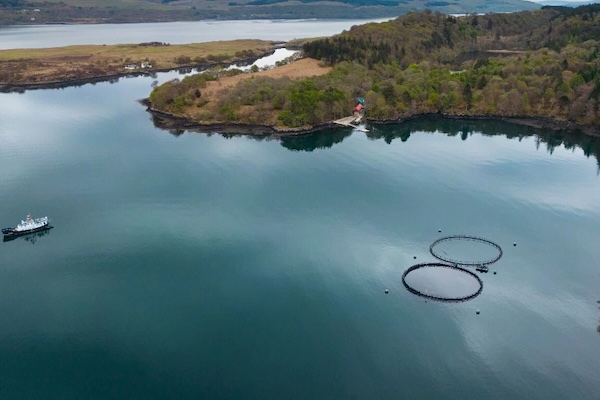
Researchers at the University of Stirling have developed a method to analyze secretions from individual sea lice that could help identify new targets for vaccines and other parasite control strategies.
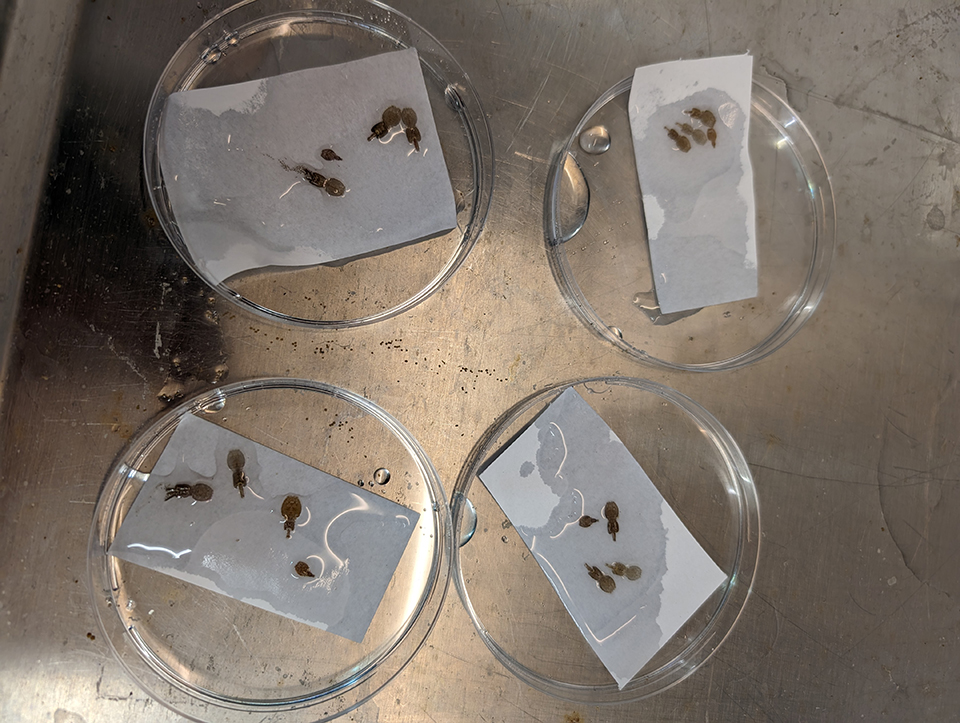
The method allows researchers to collect and analyze secretory and excretory products (SEPs) from a single sea louse. These substances include proteins released by the parasite that can help it feed or evade a fish’s immune system.
Previous methods relied on pooling secretions from multiple sea lice, which could obscure differences between individual parasites. The new approach allows researchers to examine those variations while also reducing the potential for contamination from louse feces.
“Salmon lice cause hundreds of millions of pounds of damage annually to the global salmon aquaculture industry through mortality, lost production and the implementation of control measures,” said Alexander Dindial, lead researcher. “Understanding these secretions is an important step towards understanding louse biology and developing new, safe, and effective strategies for control.”
![Ad for [BSP]](https://www.globalseafood.org/wp-content/uploads/2025/07/BSP_B2B_2025_1050x125.jpg)
To collect the secretions, researchers placed a small drop of solution over the mouth of an individual salmon louse, allowing the parasite to release proteins into the solution. Next, they used liquid chromatography tandem mass spectrometry to determine the protein composition of the samples.
The researchers identified 148 secretory proteins in total, including 64 detected across each of the tested conditions. The researchers said some of the proteins could represent potential targets for vaccine development.
The protein profiles also varied widely among individual lice in both the number and diversity of proteins detected, a pattern the researchers said is consistent with other ectoparasites, including ticks and mosquitoes.
“This work has the potential to expand our knowledge of salmon louse biology and to provide insight into louse proteins that could be exploited to help fish mount an immune response against infection,” said Dindial.
The researchers said the method could make it easier to investigate sea louse secretions and examine how treatments affect the parasite’s secretory activity. However, the findings do not establish that the identified proteins will result in an effective vaccine or other treatment.
Mind the gap: Smart cameras are pushing aquaculture performance into a new phase
“The novel methodology developed here has the potential to directly facilitate further research into salmon louse secretory biology,” said Dindial. “It allows for the reproducible, reliable, and efficient extraction of high concentrations of salmon louse secretions, all while minimizing fecal contamination.”
“As well as improving the study of these secretions, the protocol could be used to investigate how drug or therapeutic treatments might alter louse secretory activity, ultimately advancing efforts to control this parasite,” said Dindial.
Salmon lice feed on the skin, mucus and blood of fish, causing wounds that can increase the risk of secondary infections. The parasite also imposes substantial costs on the Atlantic salmon farming industry through treatment, mortality and lost production.
Now that you've reached the end of the article ...
… please consider supporting GSA’s mission to advance responsible seafood practices through education, advocacy and third-party assurances. The Advocate aims to document the evolution of responsible seafood practices and share the expansive knowledge of our vast network of contributors.
By becoming a Global Seafood Alliance member, you’re ensuring that all of the pre-competitive work we do through member benefits, resources and events can continue. Individual membership costs just $50 a year.
Not a GSA member? Join us.
Author

Related Posts
Intelligence
Do salmon lice from submerged cages produce larvae that swim deeper?
Is the depth preference for salmon lice larvae influenced by their environment? Management strategies may trigger evolutionary responses.

Health & Welfare
A shocking innovation: Electric fences show promise in sea lice prevention
Electric fence technology could block sea lice at the infectious stage, boosting fish welfare and cutting costs for salmon farms.
Health & Welfare
Cermaq Canada completes first salmon cycle with zero sea lice treatments
Cermaq Canada credits Ahousaht partnership after first salmon cycle with zero sea lice treatments and record-low lice levels.
Health & Welfare
2024 marked most challenging sea lice season in more than a decade for Norway, report finds
Norway’s salmon farms faced the worst sea lice season in over a decade in 2024, with infestations up 30 percent amid ocean warming.