


Mapping seafood workforce’s hidden gender gap: The challenge that ‘isn’t always visible’

Maine’s seafood industry is growing, but a demographic data gap, including gender, leaves many women’s roles poorly defined
The United Nations declared 2026 the International Year of the Woman Farmer (IYWF 2026). The year will spotlight the essential roles women play across agrifood systems, from production to trade, while often going unrecognized. Women farmers are central to food security, nutrition and economic resilience. The International Year of the Woman Farmer will raise awareness and promote actions to close the gender gaps and improve women’s livelihoods worldwide.
When Natalie Lord began studying Maine’s aquaculture workforce, she expected to find statistics showing where women worked throughout the seafood supply chain.
Instead, she found almost nothing.
Lease records didn’t include gender. Federal agencies collected limited demographic information. Beyond the dock, data on processing, distribution and marketing workers was sparse. For an industry increasingly promoted as part of Maine’s economic future, one basic question remained difficult to answer: Who exactly was participating?

“I started examining the workforce to understand where women were in the aquaculture value chain, but found almost no information,” Lord told the Advocate. “This revealed a demographic data gap, as lease records didn’t include gender or sex, making it difficult for me to identify participants without relying on assumptions based on names. This highlighted both a clear data gap and how difficult it was to identify women farmers.”
Lord, a graduate student at the University of New Hampshire’s Department of Natural Resources, came into aquaculture after spending a season fishing for salmon off Washington State’s Lummi Island. Confronted with declining salmon catches, she began asking how the world could be fed more effectively through aquaculture, a path that led her to study gender roles and dynamics within the seafood workforce.
Maine’s aquaculture and fisheries sectors have expanded rapidly in recent years, creating jobs across harvesting, farming, processing and distribution. Over the past decade, the sectors have increased in value, production and workforce size. In 2019, an estimated 12,700 people were employed in seafood production as fishers and fish farmers, with a further 23,846 working across processing, retail, wholesale and logistics.
But as the industry grows, questions about who benefits, and who is represented, are becoming increasingly urgent. Despite growing awareness of equity issues, efforts to address this in Maine are still constrained by a lack of basic demographic data on industry participants – particularly when it comes to consistent and reliable gender data across the sector.
The National Oceanic and Atmospheric Administration (NOAA), which oversees U.S. fisheries and aquaculture, does not systematically collect demographic data, such as gender or race/ethnicity. While some information, like age, is recorded through licensing, it’s limited and tied mainly to license identification. Once fish reach shore, there is very little data on workers in processing, marketing and distribution, leaving gaping holes in understanding the people behind these parts of the seafood system.
These gaps are not unique to Maine. Globally, sex-disaggregated data across seafood systems is limited, said Lord, often due to longstanding assumptions that women are not active contributors to the industry. In regions with more restrictive gender roles, women are even more likely to be concentrated in shore-based sectors, like seafood processing, rather than more visible roles in business ownership and on vessels.
At the same time, strict privacy policies at NOAA create additional barriers to collecting detailed demographic and identification data. Without clear data on who makes up the workforce, advancing social equity remains difficult.
To address this, Lord designed a survey to better understand the sector and the barriers faced by women, while identifying opportunities to improve gender equity.
“Women are most often in onshore roles like processing, marketing, and office work in family-run operations,” she said. “But in places like the Northeast, more women are becoming aquaculture business owners. Compared to traditional fisheries, which have high barriers to entry, aquaculture can be more accessible, attracting new participants.”
Many women are choosing to run their own operations, managing everything from farming to sales and processing, often to maintain control and avoid gender-based barriers. Survey data compiled by the Maine Aquaculture Association in 2023 suggests that women make up around 19 percent of the sector, compared to 61 percent men, with others choosing not to disclose their gender, said Lord. While still a minority, this marks progress both in participation and data collection.
However, significant challenges remain for women seeking to scale their businesses and resources. Access to capital is a major constraint, as many women lack the assets required for loans. Standard farm models taught in training programs can also be costly, requiring expensive vessels or large-scale infrastructure. As a result, most women farmers operate smaller, 400-square-foot Limited Purpose Aquaculture (LPA) sites that they can manage independently.
Larger leases – up to 100 acres over 20 years – offer greater growth potential but are less accessible due to high costs and complex application processes. Even managing multiple LPAs can be financially difficult, especially as lease prices rise, making it harder for women to fully invest in and grow their farms.
Financial hurdles are only part of the challenge. Other barriers include gender stereotypes, harassment on farm sites, poorly fitting gear and equipment, and knowledge-transfer systems that tend to favor men.
In response, women across the sector have been building strong peer networks to share knowledge, resources and support. Lord pointed to the 2024 Strong Bodies, Strong Minds series, a training program that began in Maine in 2013 in conjunction with Aquaculture in Shared Waters.
“It has created a space where women can exchange practical knowledge – from farm design such as affordable bottom seeding methods to maritime skills like navigation, knot-tying and driving trailers – all taught by women instructors,” said Lord, adding that the program also addresses workplace challenges, including safety, harassment and difficult conversations.
Alongside this, the Maine Women in Non-Binary Network – now with more than 70 members – provides a “vital support system for those working on often isolated farms, allowing participants to share experiences, advice and challenges.”
Participants say these networks are critical. Many newcomers, including those without prior marine experience, are gaining the skills needed to start farms. Some are forming co-ops to share boats, cold storage and other shoreside infrastructure, while others are developing business skills. Research also suggests that women are more likely to seek support from peer networks than from larger, male-dominated institutions.
“Many just continue doing what they’ve always done,” said Lord. “But as a researcher looking through a gender lens, it’s clear that there are systemic challenges that aren’t always visible.”
Improving gender equity will require ongoing effort and better data. Establishing baseline information is essential to track progress and ensure future programs are inclusive and effective. This includes addressing gaps not only on the water, but across processing and distribution, particularly in hubs like Portland, where seafood handling, cold storage and transport are concentrated.
Further research into social networks, regional differences and species-specific dynamics will also be key to understanding workforce challenges more fully.
“Aquaculture in the U.S. is still emerging,” said Lord. “Despite having one of the largest Exclusive Economic Zones, more than 60 percent of seafood is imported. There is huge potential for growth, especially offshore, but permitting needs to be streamlined. As the industry expands, questions around equity – who benefits and whether local communities gain – will only become more important.”
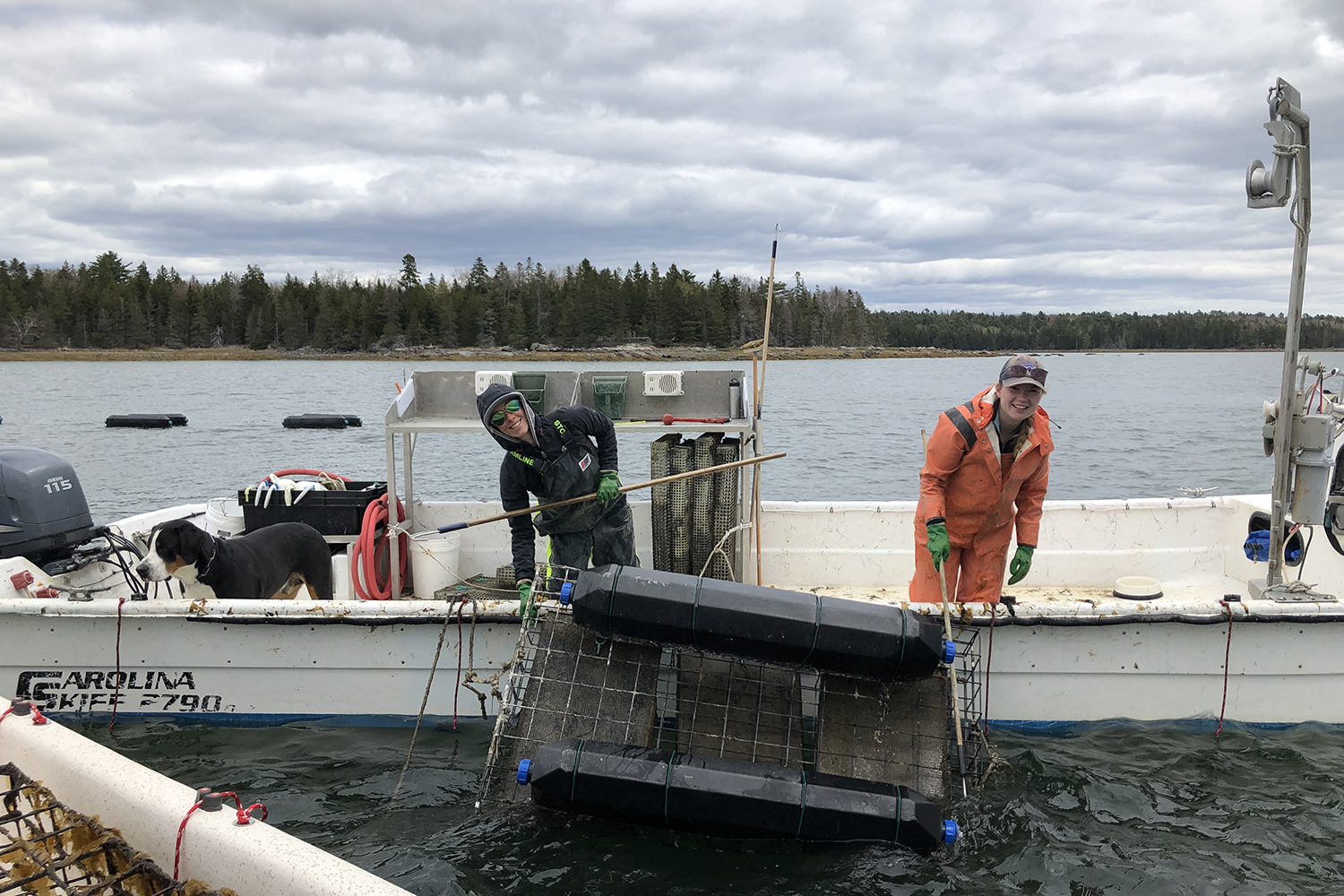
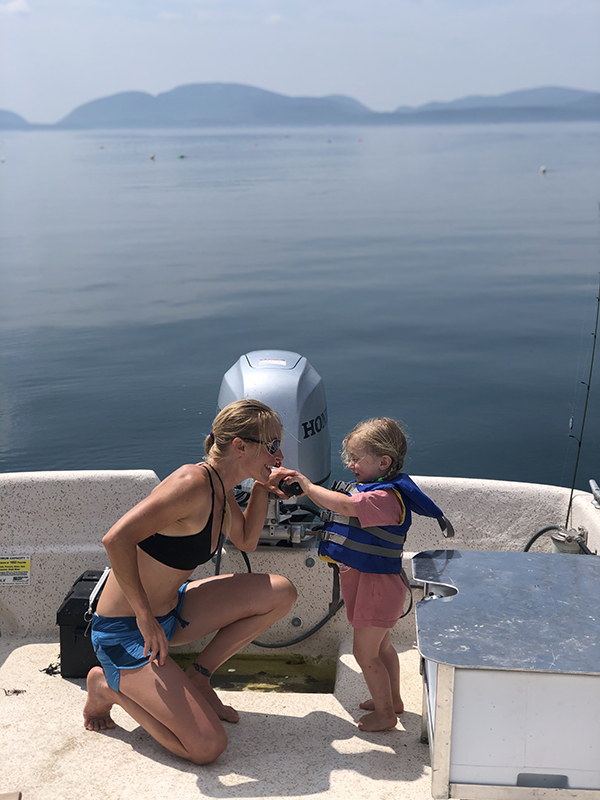
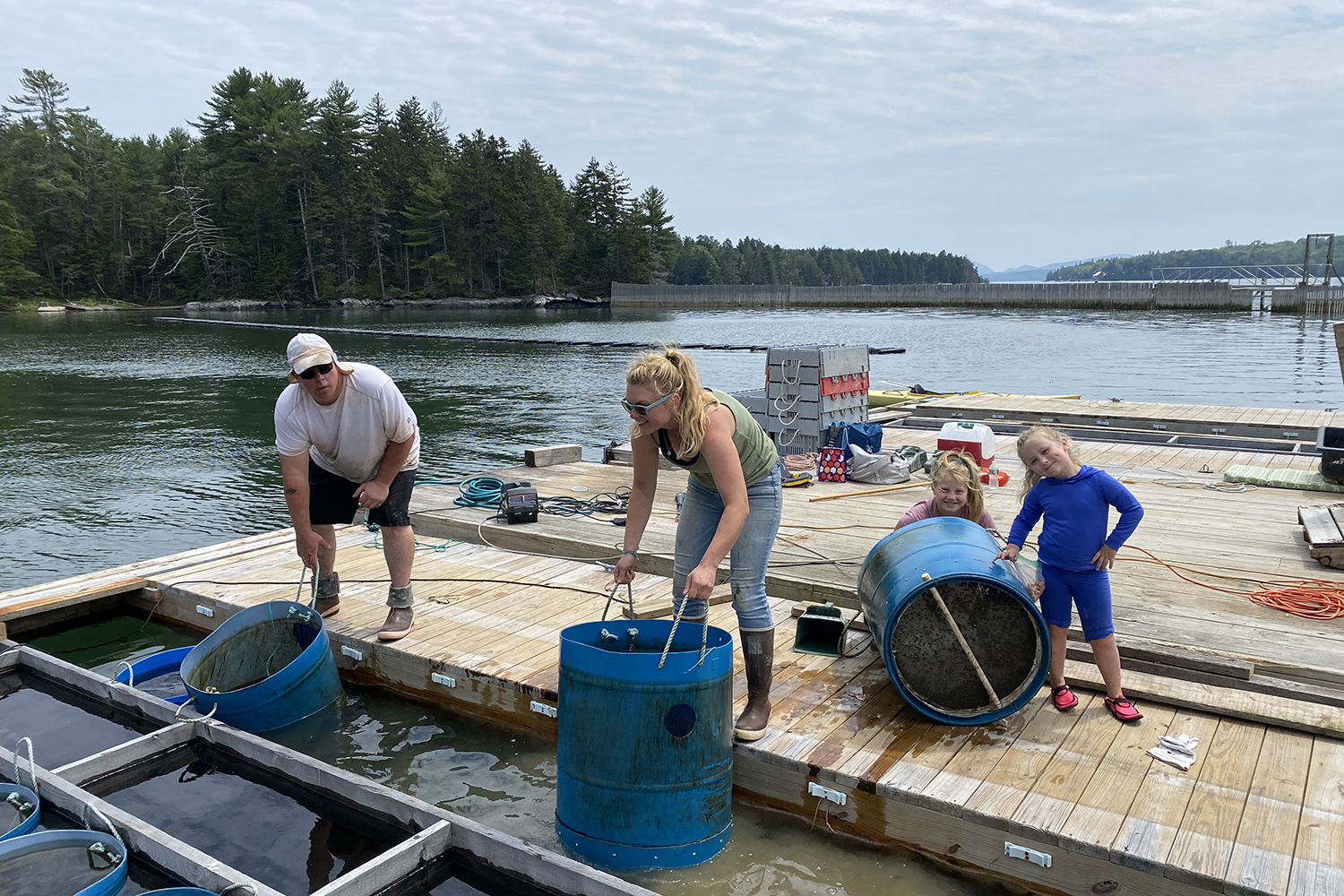
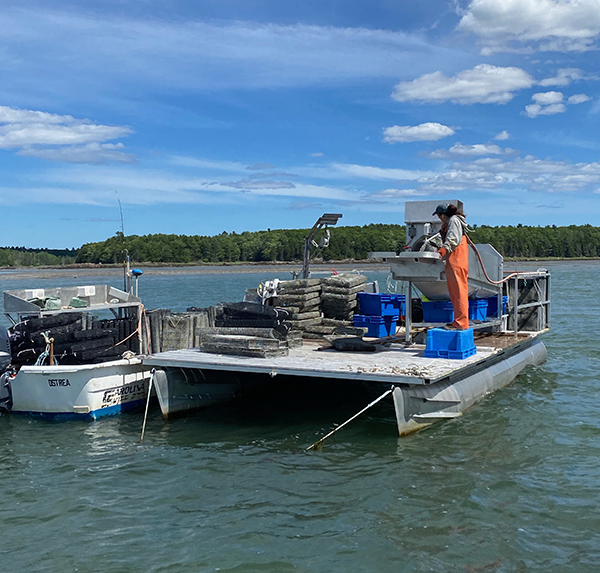
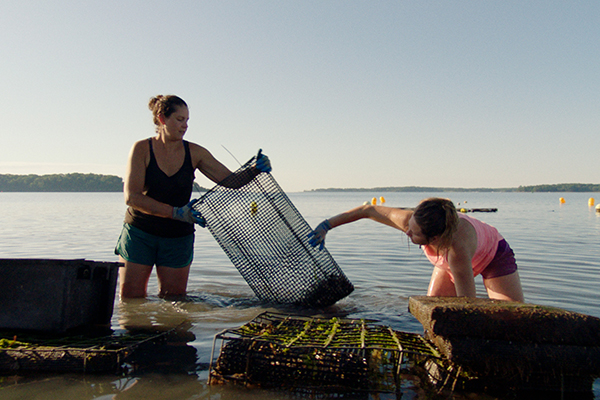
About the photos: In addition to the work featured in this article, Lord also carried out a photo voice research project to capture more personal perspectives on women’s experiences in the Maine seafood industry. In this project, participants shared first-person accounts of their work through photographs and written reflections. By combining images, narratives, interviews and a focus group, the project documented their experiences and amplified voices that are often underrepresented.
“The photo voice research method is a participatory approach where interviewees take the lead in data collection and determine the story they want to share with their communities,” said Lord. “I was very impressed with their photos documenting their work on the water and the narratives they provided. Ultimately, the project did exactly as intended, to provide a voice to those often invisible, and a space to collaborate and share knowledge.”
The United Nations declared 2026 the International Year of the Woman Farmer (IYWF 2026). The year will spotlight the essential roles women play across agrifood systems, from production to trade, while often going unrecognized. Women farmers are central to food security, nutrition and economic resilience. The International Year of the Woman Farmer will raise awareness and promote actions to close the gender gaps and improve women’s livelihoods worldwide.
Now that you've reached the end of the article ...
… please consider supporting GSA’s mission to advance responsible seafood practices through education, advocacy and third-party assurances. The Advocate aims to document the evolution of responsible seafood practices and share the expansive knowledge of our vast network of contributors.
By becoming a Global Seafood Alliance member, you’re ensuring that all of the pre-competitive work we do through member benefits, resources and events can continue. Individual membership costs just $50 a year.
Not a GSA member? Join us.
Author
-
Senior Writer Bonnie Waycott became interested in marine life after learning to snorkel on the Sea of Japan coast near her mother’s hometown. She specializes in aquaculture and fisheries with a particular focus on Japan, and has a keen interest in Tohoku’s aquaculture recovery following the 2011 Great East Japan Earthquake and Tsunami.
Related Posts
Responsibility
A wider view: At GOAL, focus steers to fisheries, food systems and the future
During the virtual event, researchers discussed the importance of aquatic foods, which billions worldwide rely on for protein and micronutrients.
Intelligence
Back on stage: GOAL returns to tackle a wide range of seafood subjects
GOAL: The Responsible Seafood Conference in Seattle features a diverse range of speakers with varied backgrounds and areas of expertise.
Fisheries
Is technology creating gender inequality in the fisheries industry?
A new study indicates that women in fisheries are undervalued and underpaid as technology transforms the industry.
Responsibility
Sustainable Fisheries Partnership and SAGE partner to promote gender equality in seafood
Sustainable Fisheries Partnership and SAGE will promote gender equality in seafood, helping industry leaders create more inclusive workplaces.