


Research evaluates macroalgae types for integrated multi-trophic aquaculture systems

U.S. and Caribbean seaweeds can effectively turn fish farm waste into valuable products, offering a practical path for more sustainable marine aquaculture
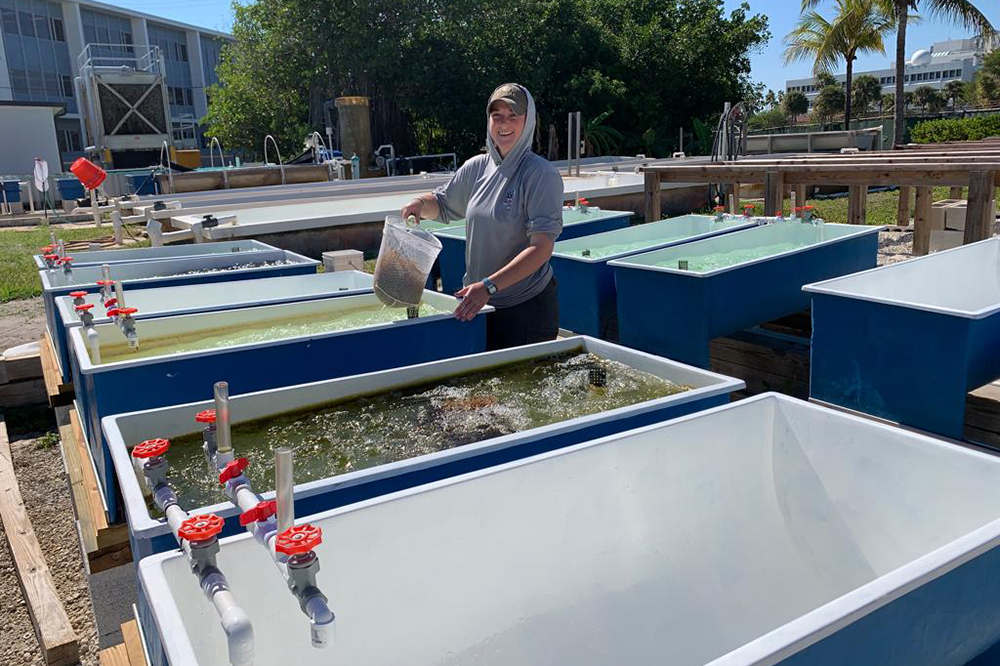
Integrated multi-trophic aquaculture (IMTA) systems require the right combination of finfish or shellfish species to grow in tandem with sea plants like sugar kelp. A new resource tailor made for IMTA operations can help with the important species-selection process.
Scientists from the Rosenstiel School of Marine, Atmospheric and Earth Science of the University of Miami (Miami, Fla., USA) have offered valuable new insights that can strengthen both the economic and environmental sustainability of existing and future marine finfish aquaculture operations throughout two focus regions: the Southeast United States and Caribbean. Their insights also provide producers with data needed to make well-informed decisions when selecting the most suitable macroalgae species for marine IMTA systems.
The study – authored by Haley L. Lasco, Hilary G. Close, Ronald H. Hoenig, Phillip R. Gillette, Daniel D. Benetti and John D. Stieglitz – discussed the comparative performance of candidate marine macroalgae species under IMTA conditions using a system stocked with yellowtail snapper at commercial-scale biomass density.
Nutrient-rich effluent from the marine finfish culture tank was directed into replicated raceways containing four native macroalgae species from the Southeast United States and Caribbean regions. The results offer practical, industry-relevant insights and clear guidance for implementing IMTA in marine aquaculture across the Southeast United Staters, Caribbean and Gulf of Mexico, including specific macroalgae biomass levels and hydraulic retention times (HRT) that successfully reduce total ammonia nitrogen (TAN) in fish effluent to below detectable levels.
![Ad for [BSP]](https://www.globalseafood.org/wp-content/uploads/2025/07/BSP_B2B_2025_1050x125.jpg)
“With the significant interest in the development of marine aquaculture throughout the Southeast U.S. and Caribbean, these findings can be used to guide the selection of extractive macroalgae species in operations culturing marine finfish. Our findings support more sustainable aquaculture operations and help producers make smarter choices about macroalgae for IMTA,” study lead author Haley L. Lasco – a marine biology graduate student at the Rosenstiel School and currently a scientist at the South Carolina Department of Natural Resources – told the Advocate.
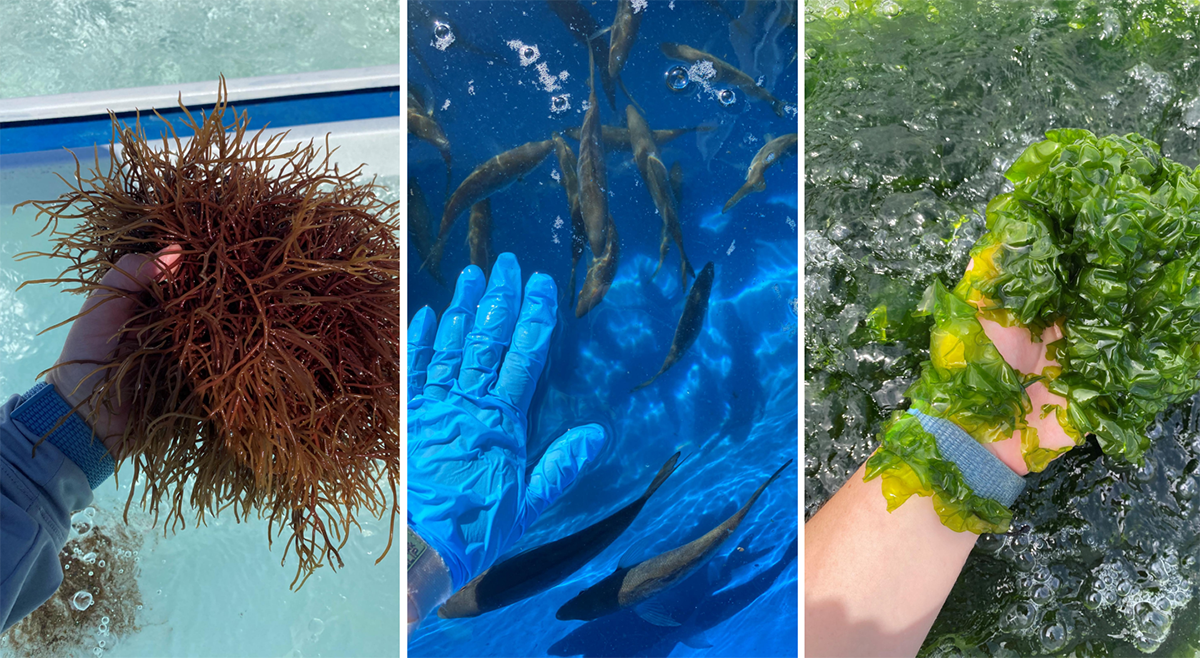
The core issue many aquafarmers face is nutrient-rich effluent – ammonia and phosphate that can trigger compliance problems and harm local ecosystems. IMTA offers a proven way to turn that waste into opportunity by growing extractive species like macroalgae downstream, creating a second revenue stream while cleaning the water. What makes this work stand out is its focus on native Western Atlantic Ocean and Caribbean species rather than exotic or cold-water imports that often fail in the warm, variable conditions of the study area.
The researchers built a clean flow-through pilot system at the University of Miami Experimental Hatchery. They stocked a 1 cubic meter tank with yellowtail snapper (Ocyurus chrysurus) at a realistic 26 kg per cubic meter density and fed a standard commercial diet. Effluent then flowed into 12 replicated 180-liter raceways seeded with one of four local macroalgae: the reds Agardhiella subulata and Gracilaria caudata, and the greens Caulerpa racemosa and Ulva lactuca. Hydraulic retention time was kept at a practical 54–60 minutes, mimicking conditions at a working farm.
Data was tracked for 14 days, including daily water quality (temperature, DO, salinity, pH, alkalinity, total ammonia nitrogen (TAN), phosphate and calculated carbon dioxide) and harvested biomass for full lab analysis – proximate composition, fatty acids, amino acids, minerals, heavy metals and stable C/N isotopes.
The performance numbers are clear and immediately actionable. A. subulata was the nitrogen-removal top performer: Once it reached a biomass of 6.73 kg per cubic meter, it drove incoming TAN (averaging 0.04 mg per liter) down to undetectable levels (<0.01 mg per liter), for 100 percent removal in just 8 days. This builds directly on earlier South Florida work showing the same species’ strong bioextractive capacity. U. lactuca came in a close second, achieving complete TAN removal at only 1.83 kg per cubic meter and showing explosive growth – up to 721 percent biomass increase in a single stretch. G. caudata delivered a solid 82 percent TAN reduction at 2.29 kg per cubic meter, while C. racemosa lagged on ammonia uptake but produced the highest protein content at 25.49 percent, making it ideal for aquafeed or niche human-food markets.
Nutritionally, all four species stayed well within safe heavy-metal limits, which is critical for market acceptance. C. racemosa offered the best omega-3 profile, and U. lactuca excelled at carbon sequestration, lowering dissolved carbon dioxide while naturally raising pH. Stable-isotope data confirmed the algae were actively incorporating fish-farm nutrients rather than just growing on background seawater.
How climate change-induced temperature increases impact crustacean aquaculture
These outcomes align with broader tropical IMTA research showing macroalgae can cut inorganic nutrient loads dramatically. The short HRT and simple raceway setup mean the results translate well to commercial land-based or nearshore systems without massive infrastructure changes. But a limitation of the study was its short duration of 14 days, and longer trials will be needed for epiphyte control, seasonal performance, and full economic modeling. Nevertheless, this work is a practical foundation for site-specific trials.
Overall, this research strengthens both the economic and environmental case for IMTA in the study region. It shows native macroalgae can measurably improve effluent quality while generating extra revenue streams – exactly what regulators, investors, and consumers are asking for. For aquaculture operations targeting snapper, cobia, grouper, or other marine finfish farms in Florida, the Gulf, or Caribbean islands, the results of this study provide the numbers to start budgeting raceway space, choosing species and talking confidently with permitting agencies.
“This work shows how integrating macroalgae into marine finfish aquaculture systems can reduce waste while producing a valuable secondary crop. It provides a practical framework for selecting species based on specific production goals, improving environmental performance while creating opportunities for better production economics and more diversified products using an IMTA approach,” concluded co-author John D. Stieglitz, Ph.D. – a Research Associate Professor in the Department of Marine Biology and Ecology, who led the project as principal investigator.
Now that you've reached the end of the article ...
… please consider supporting GSA’s mission to advance responsible seafood practices through education, advocacy and third-party assurances. The Advocate aims to document the evolution of responsible seafood practices and share the expansive knowledge of our vast network of contributors.
By becoming a Global Seafood Alliance member, you’re ensuring that all of the pre-competitive work we do through member benefits, resources and events can continue. Individual membership costs just $50 a year.
Not a GSA member? Join us.
Author
-

Editor Emeritus
Related Posts
Fisheries
Structure and dynamics of southern Gulf of Mexico yellowtail snapper stocks
Growth rate, life span, mortality and otolith shape differences show how yellowtail snapper populations in the study area are impacted by fishing.
Responsibility
Nutrient retention efficiencies in integrated multi-trophic aquaculture
First quantitative estimates for nutrient retention in IMTA systems show a large fraction of released nutrients retained by extractive species and harvested.
Intelligence
Thierry Chopin, longtime IMTA advocate and UNB professor, has died
Thierry Chopin, a University of New Brunswick professor and advocate for Integrated Multitrophic Aquaculture, died July 18, his family announced.
Responsibility
Conscious coupling: Can IMTA gain a foothold in Europe?
Integrated multitrophic aquaculture (IMTA) isn’t widely practiced in Europe but new findings indicate that farming multiple species on one site can work.