


Are salmon lice most vulnerable in their earliest stage?

Study shows larval salmon lice produce unique secretions that may help them evade immune defenses – offering new targets for parasite control strategies
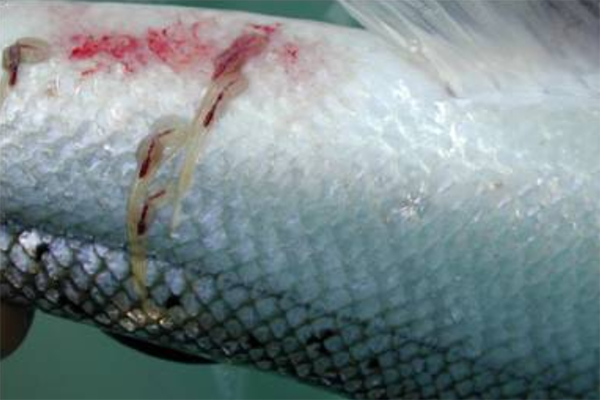
Salmon lice have long posed a major challenge for the aquaculture industry, but new research suggests their earliest life stage may hold important clues for improving control.
A first-of-its-kind study from the University of Stirling has identified significant differences in the secretions produced by larval sea lice – findings that could help inform more targeted and effective parasite management strategies.
The researchers found clear differences in the proteins produced at each life stage, offering new insight into how salmon lice establish early infections on susceptible hosts such as Atlantic salmon. The parasites feed on the skin, mucus and blood of their host, creating open wounds that can lead to infection, reduce market value and increase vulnerability to secondary diseases.
Although a range of treatments has been developed to manage sea lice infestations – costing the aquaculture industry more than £1 billion (U.S. $1.3 billion) annually – these approaches can be expensive, inconsistent in effectiveness and carry environmental and animal welfare concerns.

In total, the study identified 143 secretory proteins in larval (copepodid) lice that were absent in adults. Many of these, including serpins – previously identified in terrestrial ectoparasites – are known to suppress host immune responses, potentially helping the parasite establish infection at its earliest.
“Because this is the very first stage of this parasite’s life cycle, it represents a vital linchpin in control strategies for this species,” said Alexander Dindial, Ph.D. candidate and lead researcher. “This work better helps us understand salmon louse biology and could play a vital role in informing future research into control of this parasite, such as through the identification of vaccine targets, which ultimately promote the sustainable production of healthy salmon and enhance global food security.”
To examine these differences, the researchers incubated larval salmon lice – at concentrations of more than 100 copepodids per milliliter – in either filtered seawater or a solution containing isophorone, a compound found in Atlantic salmon mucus that attracts the parasite.
The resulting solutions were then concentrated and analyzed to identify the proteins released by the larvae.
Protein composition was analyzed using liquid chromatography tandem mass spectrometry, a technique that separates sample components, breaks them into fragments and measures their mass to determine their structure.
The data were then filtered to identify individual proteins, determine which were secreted and compare results across samples.
“This data provides key candidates for vaccines in the future,” said Dr. Sean Monaghan, co-supervisor of the study. “We are currently exploring the genes of these secreted proteins as part of a large BBSRC-funded project, GeNoLice, to determine if they are influenced by interactions with the host.”
Now that you've reached the end of the article ...
… please consider supporting GSA’s mission to advance responsible seafood practices through education, advocacy and third-party assurances. The Advocate aims to document the evolution of responsible seafood practices and share the expansive knowledge of our vast network of contributors.
By becoming a Global Seafood Alliance member, you’re ensuring that all of the pre-competitive work we do through member benefits, resources and events can continue. Individual membership costs just $50 a year.
Not a GSA member? Join us.
Author

Related Posts
Intelligence
Do salmon lice from submerged cages produce larvae that swim deeper?
Is the depth preference for salmon lice larvae influenced by their environment? Management strategies may trigger evolutionary responses.
Health & Welfare
Cermaq Canada completes first salmon cycle with zero sea lice treatments
Cermaq Canada credits Ahousaht partnership after first salmon cycle with zero sea lice treatments and record-low lice levels.
Health & Welfare
2024 marked most challenging sea lice season in more than a decade for Norway, report finds
Norway’s salmon farms faced the worst sea lice season in over a decade in 2024, with infestations up 30 percent amid ocean warming.
Health & Welfare
Early immune response key to sea lice resistance in Pacific salmon, study finds
Study links Pacific salmon’s rapid immune response to sea lice resistance – insights that could benefit Atlantic salmon farming.