


Are ocean warming and heavy fishing shrinking meals for fish in UK waters?

Ocean warming and intensive commercial fishing are forcing fish in UK waters to eat smaller meals with less energy
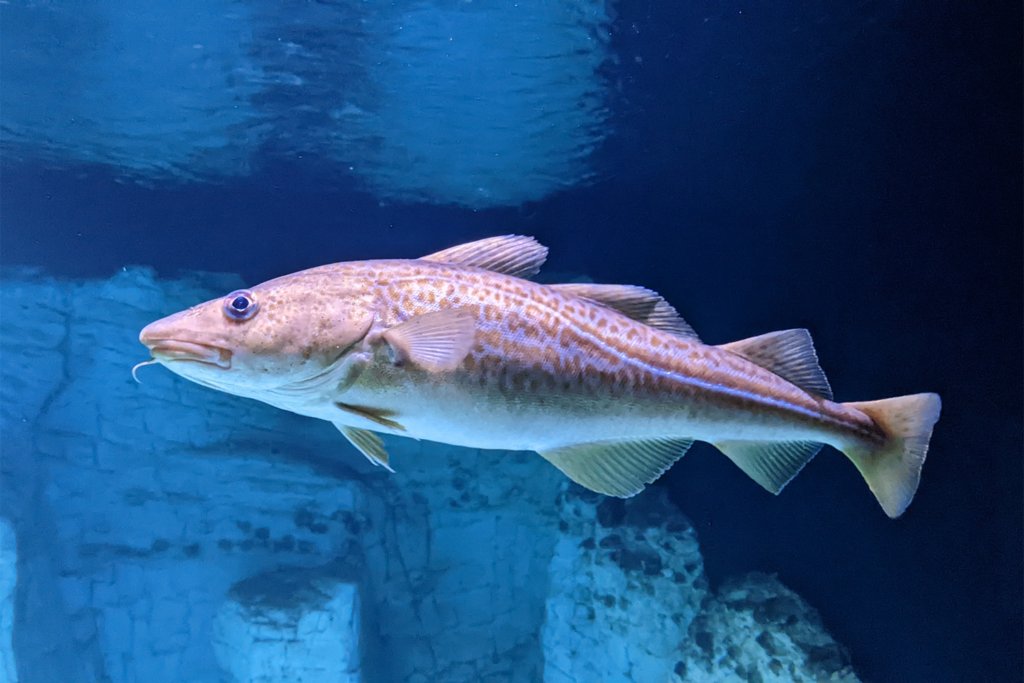
Fish across Britain’s seas face ever-smaller meals as ocean warming and fishing squeeze ocean food webs, a recent study suggests.
The study, carried out by the University of Essex and the UK government’s Centre for Environment, Fisheries and Aquaculture Science (CEFAS), found that warmer and more heavily fished areas of the Northeast Atlantic show signs of strain, leaving predatory species such as cod, haddock and thorny skate with reduced energy intake from their prey.
The researchers analyzed stomach content data from more than 50,000 marine predators collected over 35 years from the North Sea, the English Channel and the Norwegian Sea. The data showed that in warmer waters, predators were more likely to feed on smaller prey, such as sprat, krill and crabs.
Smaller prey provide less energy, which can weaken predators and increase the vulnerability of marine ecosystems. The effect was strongest in heavily fished areas, where larger prey species are typically depleted, further reducing the average size of available food and intensifying the impacts of rising sea temperatures.
![Ad for [BSP]](https://www.globalseafood.org/wp-content/uploads/2025/07/BSP_B2B_2025_1050x125.jpg)
Amy Shurety, the study’s lead author from the School of Life Sciences, said the findings highlight the need to consider the combined effects of climate change and commercial fishing when managing and protecting ocean ecosystems.
“Sustainable fishing and eating a more diverse range of seafood at home, can help protect marine ecosystems as the climate changes,” said Shurety.
The findings, published in Nature, indicate that prey species are shrinking not because larger species are disappearing, but because individual animals within the same species are becoming smaller. Warmer water speeds up metabolism, holds less oxygen and favors smaller body sizes that are easier to sustain.
As prey size declines, predators adjust by feeding on a wider range of species and targeting the largest prey still available. The study found that for every 1-degree Celsius (1.8 degrees Fahrenheit) rise in temperature, the average size of prey consumed by predators decreases by about 1.8 percent.
Ocean temperatures hit record highs in 2025, underscoring need for climate action
Relying more heavily on smaller prey lower in the food chain can reduce the efficiency of energy transfer, potentially leaving top predators with less energy to survive and reproduce. The researchers warn that these combined pressures could weaken marine ecosystems over time unless fisheries management shifts toward a broader, food-web-based approach rather than focusing on individual species alone.
“Marine ecosystems are often hit by multiple pressures at the same time and looking at these pressures one by one can hide what’s really happening,” said Shurety. “Our findings show that in oceans that are both warmer and heavily fished, predators must eat smaller prey to survive. This combined effect would be missed if the dynamics of climate change and commercial fishing were considered separately. Which suggests that to protect marine food webs, it’s essential that climate change and fisheries are managed together, not in isolation.”
Now that you've reached the end of the article ...
… please consider supporting GSA’s mission to advance responsible seafood practices through education, advocacy and third-party assurances. The Advocate aims to document the evolution of responsible seafood practices and share the expansive knowledge of our vast network of contributors.
By becoming a Global Seafood Alliance member, you’re ensuring that all of the pre-competitive work we do through member benefits, resources and events can continue. Individual membership costs just $50 a year.
Not a GSA member? Join us.
Author

Related Posts

Fisheries
The ocean is getting darker. What could that mean for global fisheries?
As a darkening ocean threatens to reshape marine ecosystems, scientists explore risks for fisheries and how rewilding with restorative aquaculture could help.
Fisheries
‘Who will win and who will lose?’ How climate change is shifting the ocean food chain – and potentially global fisheries
Climate change is shifting the foundation of the ocean food chain, potentially but not definitively causing a poleward migration of fisheries.

Fisheries
Researchers point to ocean oxygen as key to improving fisheries management
Focusing on ocean oxygen as a dynamic, limited resource may improve fisheries management, according to Newcastle University researchers.
Fisheries
Tuna fisheries most at risk from climate change, new research suggests
A global study warns tuna and other migratory fisheries face the greatest climate risks as warming seas shift stocks and strain management.