


New tool aims to standardize food traceability across global supply chains

IFT’s Global Food Traceability Center launches open-source traceability tool to streamline compliance and data sharing

The Global Food Traceability Center, part of the Institute of Food Technologists (IFT), has launched an open-source tool to improve data sharing across the food value chain. Called the Traceability Driver, it’s designed to help existing software systems convert data into standardized formats, supporting sustainability and supply chain integrity.
The tool automates data conversion, includes a pre-built API for efficient exchange and is deployed locally, allowing organizations to maintain control of their information. By lowering the cost and effort of meeting data standards, it enables companies to stay aligned with global requirements while focusing on core operations.
As an open-source module, the Traceability Driver can be installed within existing software to share traceability data in a standardized way.
“By designing traceability regulations around common global standards, governments can unlock the use of scalable, open-source tools like the Traceability Driver,” said Blake Harris, managing director of IFT’s Global Food Traceability Center. “This kind of solution not only makes it easier for industry and their technology partners to comply but also supports harmonization with other regulations and industry practices, enhancing interoperable, end-to-end traceability that strengthens the integrity of global supply chains.”

As part of the Traceability Driver’s development and testing, agritech company Koltiva integrated the tool into its system to complete the Global Dialogue on Seafood Traceability’s (GDST) First Mile Aquaculture Capability Test. Before using the tool, Koltiva faced the challenge of aligning its data with GDST and Electronic Product Code Information Services (EPCIS), the GS1 standard for recording supply chain events.
Seafood tracking companies unite to simplify data sharing, improve seafood traceability standards
According to a case study, installing the Traceability Driver was quick and straightforward, enabling Koltiva to complete the compliance process in about one month. The company reported a 60 percent reduction in development time compared with the three to four months it had expected to build APIs and reformat data.
“The Traceability Driver’s potential extends far beyond the seafood industry, as it is designed to be adaptable and scalable for other commodities that follow EPCIS-based standards, making it a versatile solution for diverse traceability challenges across multiple supply chains,” added Harris.
To learn more about IFT’s Global Food Traceability Center, go to www.ift.org/gftc.
Now that you've reached the end of the article ...
… please consider supporting GSA’s mission to advance responsible seafood practices through education, advocacy and third-party assurances. The Advocate aims to document the evolution of responsible seafood practices and share the expansive knowledge of our vast network of contributors.
By becoming a Global Seafood Alliance member, you’re ensuring that all of the pre-competitive work we do through member benefits, resources and events can continue. Individual membership costs just $50 a year.
Not a GSA member? Join us.
Author

Related Posts

Intelligence
‘Traceability matters’: FAIRR on seafood, sustainability and the Blue Food Innovation Summit
FAIRR’s Laure Boissat discusses seafood traceability, sustainability and investor impact ahead of her panel at the Blue Food Innovation Summit.

Intelligence
Using DNA multi-marker metabarcoding to authenticate processed seafood
Next Generation Sequencing techniques can support routine food industry activities and official control programs to combat fraudulent practices.
Intelligence
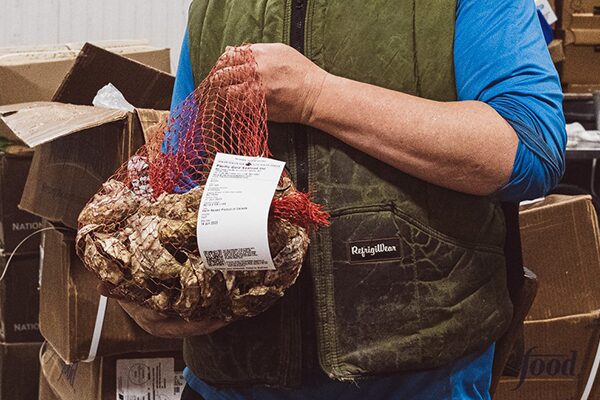
BlueTrace clients have printed more than 5 million shellfish traceability tags
BlueTrace's 430 clients across North America have collectively printed more than 5 million seafood traceability tags to date.
Intelligence
New tool helps implement global industry standards on seafood traceability
A new tool from GDST is designed to help assess progress in implementing seafood traceability standards across the supply chain.