


Study: Warming Arctic rivers threaten Chinook salmon and food security for Indigenous communities

Study finds warming Arctic rivers threaten Chinook salmon, endangering food security and culture of Indigenous communities
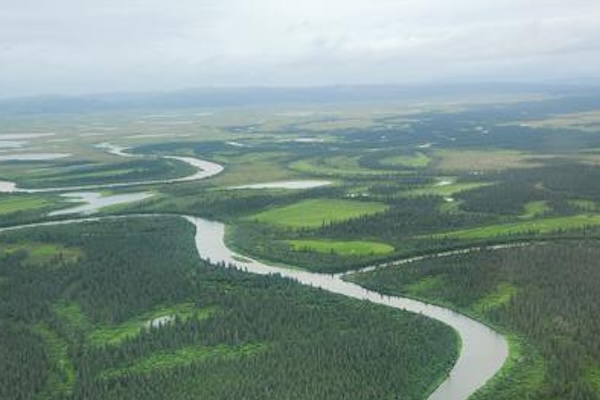
As Arctic rivers warm, Chinook salmon are struggling to survive, threatening Indigenous communities that have long depended on them, a University of Colorado Boulder study concludes.
For thousands of years, Indigenous communities in Alaska and Canada’s Yukon Territory have relied on Chinook salmon. The fish, known for their size and high fat content, have long provided a vital source of nutrition in the Arctic and played a central role in cultural traditions.
“The fish are really important for maintaining the culture and language of Indigenous communities,” said Peyton Thomas, a research associate at the Institute of Arctic and Alpine Research at the University of Colorado Boulder.
In recent decades, Chinook salmon numbers have declined sharply, leaving many communities unable to fish for them. A study published in Scientific Reports suggests that warming river temperatures driven by climate change may further stunt salmon growth, adding new pressure to already diminished populations.

In partnership with local communities, researchers are working to anticipate and prepare for the changes ahead. The urgency is clear: over the past half-century, the Arctic has warmed nearly four times faster than the global average. Melting sea ice, thawing permafrost and collapsing coastlines have already transformed the region, reshaping the environment that Indigenous peoples have depended on for generations.
Warmer rivers present a more specific challenge. Studies show that fish adapted to cold water are vulnerable when temperatures rise, and Chinook salmon are no exception. In Alaska’s Yukon River, the state’s largest, Chinook populations fell by more than 57 percent between 2003 and 2010, underscoring how quickly the species can decline.
To understand what lies ahead, Thomas and her colleagues worked with Indigenous communities across Alaska to model climate impacts on fish in seven river basins spanning Alaska and the Yukon. After consulting with tribal members, the team focused on two key subsistence species: Chinook salmon and Dolly Varden, a type of trout.
Computer simulations projected that by mid-century, summer river temperatures could rise by about 1.3 degrees Celsius (2.3 degrees Fahrenheit) compared with 1990 to 2021 averages. When paired with fish growth models, the results suggested that in the warmest years, four of the seven basins could reach temperatures beyond what juvenile Chinook can survive.
Dolly Varden, however, are more tolerant of warmer water. The models indicated that their growth could nearly double in many rivers under future conditions.
“It is good news that not all species are going to decline under warming,” Thomas said. “But communities have different preferences about fishing Dolly Varden. We’re trying to show that maybe in warm years, Dolly Varden could be an alternative.”
This study comes just a year after Alaska and Canadian authorities agreed to pause Chinook salmon fishing, both commercial and subsistence, for seven years in a bid to allow their populations to recover.
“The coolest part of this work is just being able to see how we’re all trying to connect with each other,” Thomas said. “We learned so much from history and people’s daily lived experiences in these places. Everyone should be a part of all of this work, because we can’t do it just by modeling.”
Now that you've reached the end of the article ...
… please consider supporting GSA’s mission to advance responsible seafood practices through education, advocacy and third-party assurances. The Advocate aims to document the evolution of responsible seafood practices and share the expansive knowledge of our vast network of contributors.
By becoming a Global Seafood Alliance member, you’re ensuring that all of the pre-competitive work we do through member benefits, resources and events can continue. Individual membership costs just $50 a year.
Not a GSA member? Join us.
Author

Related Posts
Fisheries
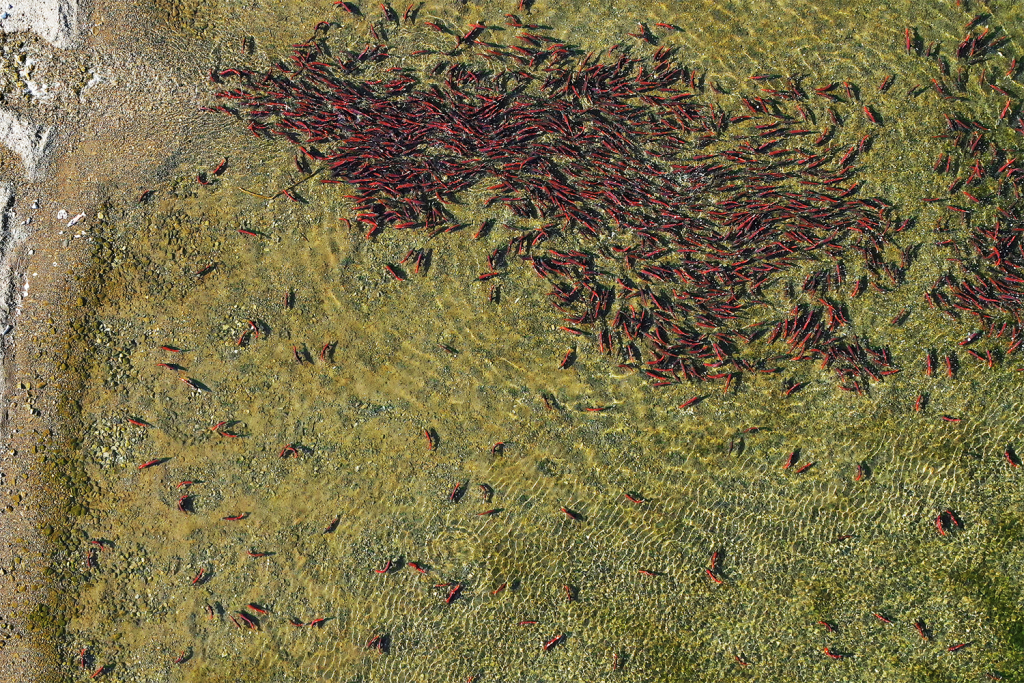
As Yukon Chinook salmon populations decline, researchers turn to technology for answers
Using drones, researchers seek to better understand where, along an almost 2,000-mile migratory route, things go wrong for Chinook salmon.
Fisheries
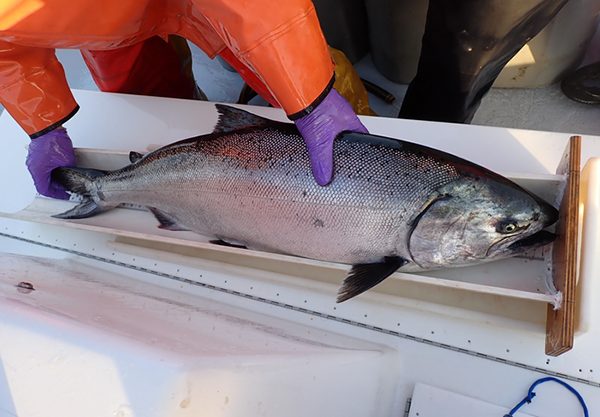
Study: Hatchery and fisheries management changes could help stabilize California’s Chinook salmon
NOAA-UC Santa Cruz: Changes at hatcheries and in fishery management could help restore the age structure of the state's Chinook salmon population.
Fisheries
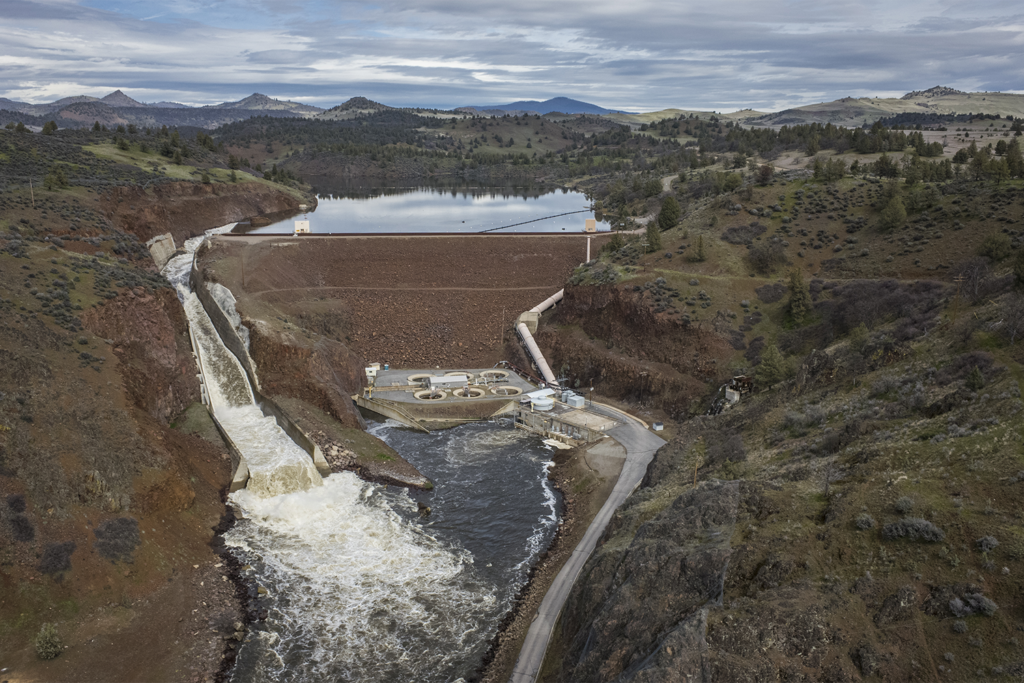
Can dam removal actually restore fish populations in U.S. rivers?
Dams have helped build nations but fish – and river health – have paid a steep price. Dam removal can have restorative effects on ecosystems.
Fisheries
The hidden benefits and risks of partial protection for coral reef fisheries
Partial protection of coral reef fisheries can boost production, ease fishers’ efforts and ultimately alter the composition of their yields.