


Responsible Seafood Innovation Award finalist: How FAU’s mobile hatcheries could save the Caribbean queen conch – one trailer at a time

FAU’s mobile hatcheries help restore threatened queen conch, support fisheries and create marine science jobs across Caribbean communities
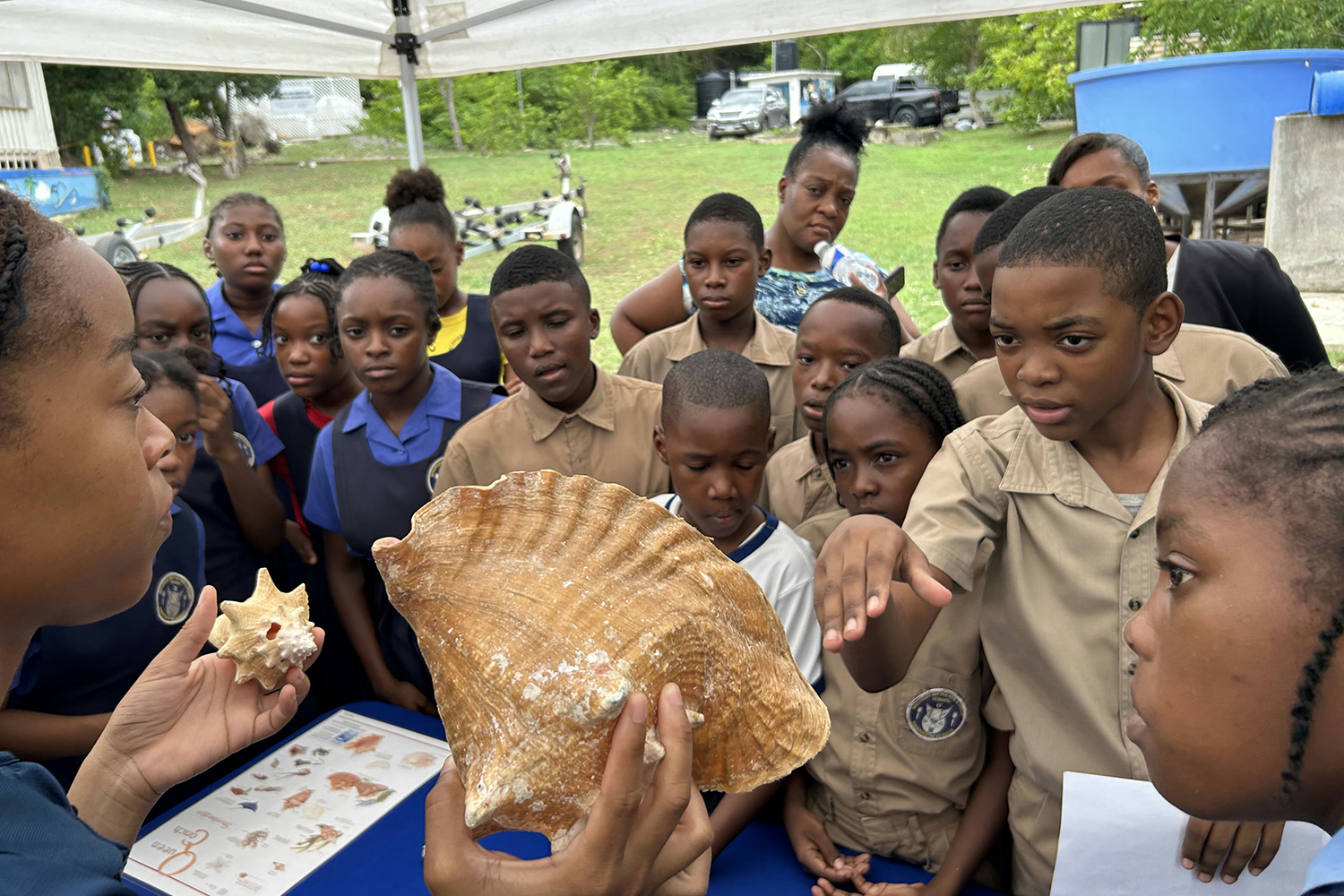
The queen conch, a cultural and culinary staple across the Caribbean, is in a struggle for survival. Once abundant, the species of marine snail has suffered steep declines from overfishing and habitat loss, prompting NOAA to list it as “Threatened” under the Endangered Species Act in 2024. Current surveys suggest that commercial fishing in The Bahamas could become unsustainable within 10 to 15 years.
At Florida Atlantic University’s (FAU) Harbor Branch Oceanographic Institute, research professor Dr. Megan Davis is working to reverse that trajectory through the Queen Conch Labs — an innovative community-based program that grows the species in mobile hatchery units. This year, her team has been named a finalist for the 2025 Responsible Seafood Innovation Award in aquaculture, recognized for bringing restoration science out of the lab and into Caribbean communities.
“It’s a plug-and-play lab that brings aquaculture to previously unconsidered areas of the Caribbean,” said Davis.
The idea for the mobile labs was born in 2020, when Davis and a colleague chatted about what it would take to “have a lab in a remote setting where there was no building and no infrastructure for a lab,” she recalled. Their solution was simple but novel: a laboratory inside a trailer, similar to a food truck or landscaping rig.
![Ad for [membership]](https://www.globalseafood.org/wp-content/uploads/2025/07/membership_web2025_1050x125.gif)
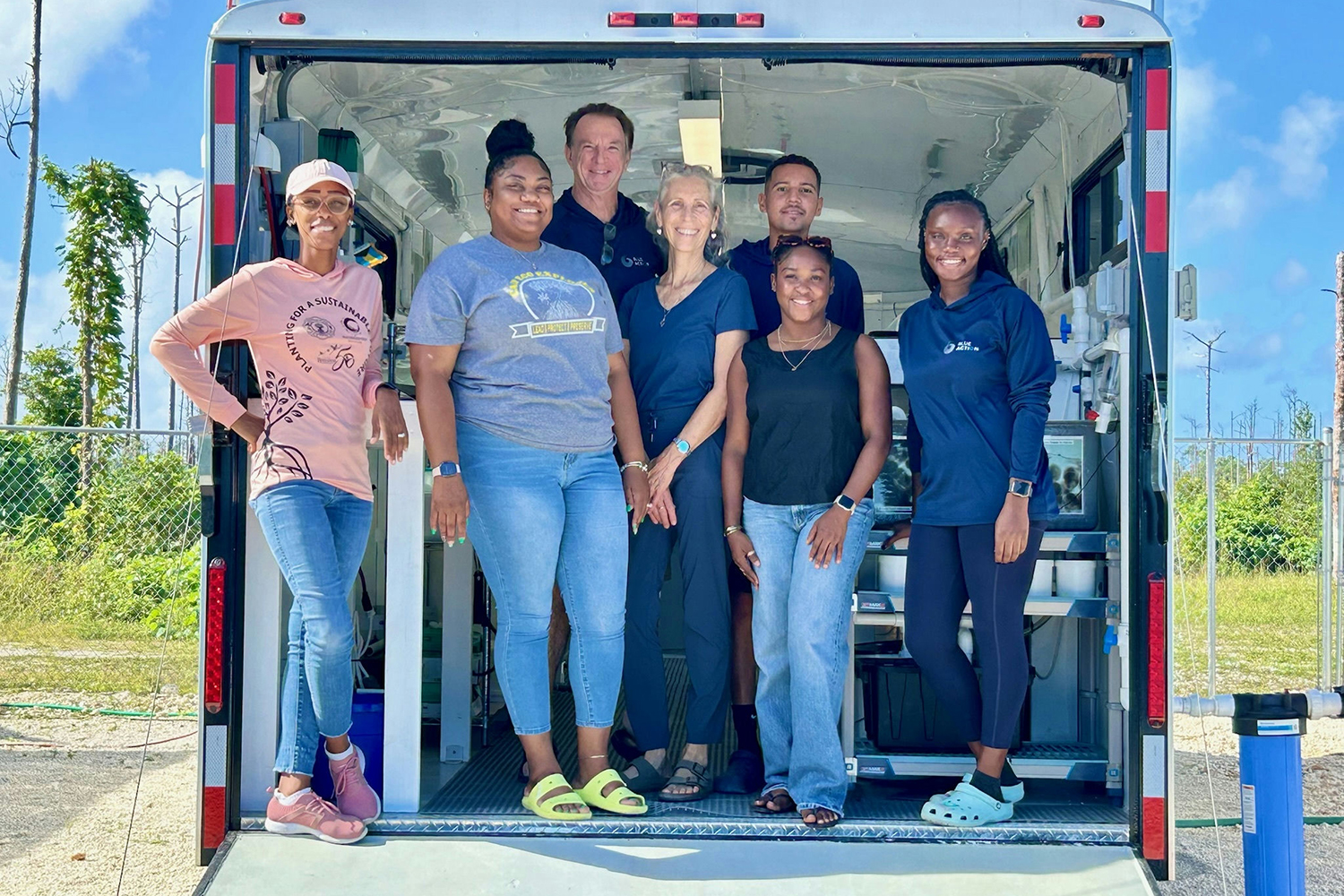
Conveniently, a trailer manufacturer operated just three miles from the FAU Harbor Branch Oceanographic Institute. By May 2022, the first trailer was shipped to Great Exuma in The Bahamas in May 2022. Since then, seven more have been built and deployed to Puerto Rico, The Bahamas, Jamaica and Florida. Orders are also underway from several countries, including Turks and Caicos and St. Vincent and the Grenadines.
Most of the trailers measure 20 by 8 feet, and cost between $150,000 to $180,000 to build and outfit, depending on the complexity of the lab equipment and the labor involved. Funding comes from a mix of sources, including philanthropies, foundations and – in Puerto Rico – the U.S. federal government.
Each unit is powered by a 900-watt solar system with an inverter, charger and battery bank, and supports both flow-through and recirculating saltwater systems with aeration for larvae and algae circulation. When a mobile lab reaches its destination, it’s connected to the local coastal seawater source, creating a self-contained hatchery on wheels.
Innovating for the sake of an important cultural, economic and nutritional food
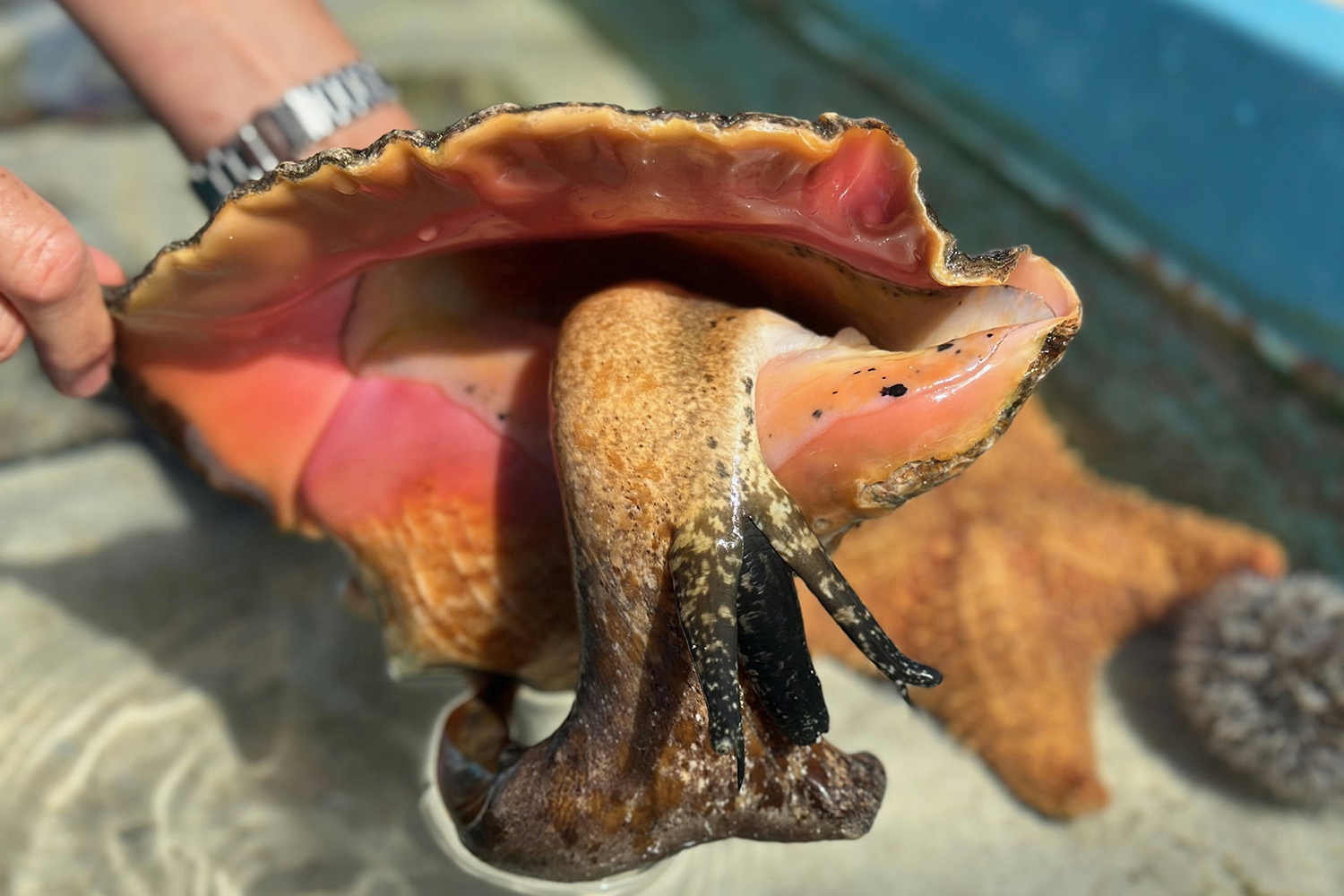
Although the mobile labs could be adapted for other species – Davis has fielded interest from aquaculture projects involving abalone, oysters and coral – FAU’s focus remains on the queen conch, both for its cultural significance and precarious status. Prized for its meat and large pink shell, the conch is central to nutrition and livelihoods across the Caribbean and underpins one of the region’s most important fisheries. Between 1980 and 2020, approximately 31,000 tons of queen conch were harvested annually, worth $39 million per year.
Its role extends beyond the table and the marketplace. As grazers, the queen conch help maintain healthy seagrass beds, making them a key species for the ecosystems they inhabit.
“This is another aspect of the restoration of the species,” said Davis. “Our mission is to grow the queen conch for the sake of the species, seagrass ecosystem and for the people that depend on the fishery.”
FAU’s mobile labs are now growing queen conch for restoration, seafood and for future broodstock. The trailers are well-suited to the task: They are designed to fit an entire lab inside a compact space, but also can be moved with ease. When Hurricane Erin brushed by Great Exuma in The Bahamas last August, one unit was simply hitched to a truck and hauled to higher ground.
A lot can be done within their limited space. Despite their size, a single trailer can raise up to 2,000 queen conch annually from egg to juvenile.
Local projects, local impact
The mobile labs have become catalysts in the communities where they operate, advancing restoration, science careers, community engagement and sustainable seafood. Rather than dropping off a trailer and wishing the community good luck, FAU builds partnerships with local organizations and stakeholders who want to collaborate on these projects.
“We’ve got partners in each of these places that do the day-to-day operations, and we have a community in each place very welcoming of the project there,” said Davis, adding that the partners are wide-ranging. In Puerto Rico, for example, they include the Villa Pesquera de Naguabo, the island’s commercial fishing association, along with a local conservation organization, Conservación ConCiencia. In Grand Bahama, it’s Blue Action Lab, a non-profit.
This system works, Davis said, because it combines strategic partnerships, community trust and “our expertise blended with the expertise on the ground.” That includes fishermen, who Davis said don’t see the hatcheries as competition or a threat to their livelihoods.
“We very much respect and admire the fishing community because they have so much to share with us in regard to what they see in the ocean and day-to-day,” said Davis.
The labs are designed to be easy to use, so that they can be operated by people without formal training in aquaculture. At the same time, they can also provide much needed employment opportunities for those with advanced degrees.
“People have gone to school, come back to their country and [found] the opportunities to work in marine science are pretty narrow,” Davis said. The mobile labs create jobs for them, she added, while also building “the future leadership in marine science on these islands.”
“It’s a really powerful aspect of the work,” Davis said.
GSA’s Responsible Seafood Innovation Awards – sponsored by the U.S. Soybean Export Council – for the aquaculture and fisheries categories will be awarded at the Responsible Seafood Summit in Cartagena, Colombia, on September 30, 2025. The winner will be decided by an audience poll. Learn more about the Summit here.
Now that you've reached the end of the article ...
… please consider supporting GSA’s mission to advance responsible seafood practices through education, advocacy and third-party assurances. The Advocate aims to document the evolution of responsible seafood practices and share the expansive knowledge of our vast network of contributors.
By becoming a Global Seafood Alliance member, you’re ensuring that all of the pre-competitive work we do through member benefits, resources and events can continue. Individual membership costs just $50 a year.
Not a GSA member? Join us.
Author
-
Jen A. Miller is a New Jersey-based writer whose work has appeared in everything from The New York Times to Engineering News Record.
Related Posts
Responsibility
Eat the whole fish: A discussion of culture, economics and food waste solutions
The Big Fish Series explored the logistical and cultural challenges in front of greater whole-fish consumption and how much seafood is being wasted.
Innovation & Investment
‘Plug-and-play’ shrimp farm inventor out to prove that Shrimpbox is more than just a neat idea
Is Atarraya’s AI-enabled, biofloc-based Shrimpbox, one of TIME Magazine’s top inventions of 2022, a game-changer for urban shrimp aquaculture?
Intelligence
‘We’re doing a lot of things that aren’t being done,’ says Los Angeles shrimp farm founder
Steve Sutton, CEO of TransparentSea Farm, joins the Advocate and Aquademia to talk shrimp and the carbon-capture technology investors should look at.
Innovation & Investment
20,000 lettuces under the sea: Could underwater agriculture be the future of farming?
Preliminary research suggests that emerging mariculture methods could provide alternatives to land-based agriculture and within recirculating systems.