
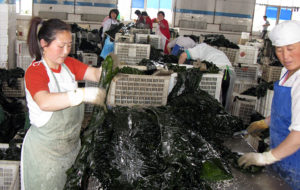
Turning to the sea: Can seaweed help us raise more food more efficiently?
Discussion of aquaculture development should consider trophic levels. Seaweed culture, for example, could possibly double plant food production by farming less than 1 percent of the ocean’s surface.
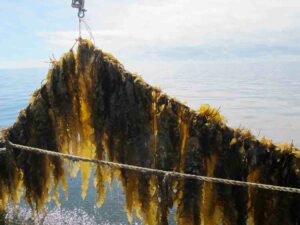
Pilot project cultivating kelp on shellfish leases demonstrates ‘extraordinary’ first year growth
A pilot project led by the Aquaculture Association of Nova Scotia has shown first-year success for cultivating kelp on shellfish leases in Nova Scotia.

Adding flavor complexity to farmed barramundi
Organoleptic attributes such as flavor and aroma are among the most important factors that influence consumer acceptability and demand for fish products. Consumers have identified farmed fish as less complex and lacking “sealike” or “sea-fresh” flavors and aromas.
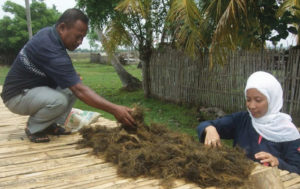
Value chain analysis helps overcome gender barriers in aquaculture
The AquaFish Innovation Lab has conducted research using value chain analysis as a tool to increase income and nutrition for small-scale fish farmers through improved market participation and efficiency.
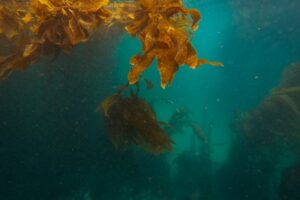
U.S. launches program to advance deep-water seaweed farming
U.S. invests $25M to advance deep-water seaweed farming to fuel energy markets, grow U.S. industries and boost ocean tech leadership.
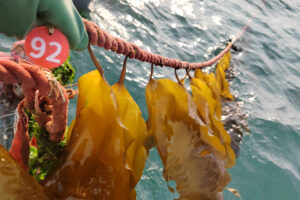
Could triploid kelp cultivars expand seaweed farming in the face of climate change?
Seaweed farming research reveals triploid breeding that creates heat-tolerant, fast-growing kelp, boosting yields and cutting ecological risk.
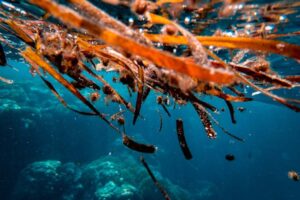
Seaweed species face widespread local extinction by 2100, landmark report warns
A new report warns seaweed species face local extinction by 2100 and calls for global action to protect these vital marine habitats.
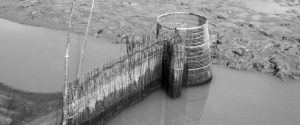
Coastal aquaculture supports varied systems in Haiphong
Haiphong province is one of the main shrimp culture areas in northern Vietnam. Its climate is influenced by two monsoon regimes.

Regenerative seaweed company secures investment to scale Southeast Asia smallholder farming
Coast 4C is expanding smallholder seaweed farming in Southeast Asia to improve production, traceability and supply chains.

Seaweed polyculture: Potential bioremediation of hatchery effluents
Authors are developing a freshwater hatchery effluent bioremediation system that uses seaweed polyculture to decrease discharge levels and reduce remediation costs.
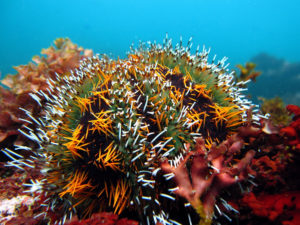
Evaluating seaweed, formulated diet on growth, gonad quality of sea urchins
An evaluation of the effects of fresh seaweed diets and manufactured feeds on growth and gonad quality of adult, wild collector sea urchins.
‘Everyone is going to need a lot of seaweed’: Maine-based seaweed polymer innovator wants fisheries and aquaculture to quit plastics
Viable Gear Founder Katie Weiler joined the Advocate and Aquademia to discuss making lobster bait bags and other products with a seaweed polymer.

Regenerative ocean farming is trending, but can it be a successful business model?
There are environmental benefits from regenerative ocean farming but its success hinges on establishing community-driven business models.
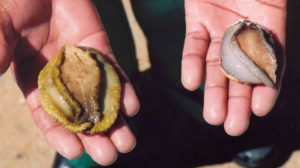
Integrated systems incorporate seaweed in South African abalone culture
South African abalone culture is growing and many of the land-based tank production systems use wild-harvested kelp to feed the animals.
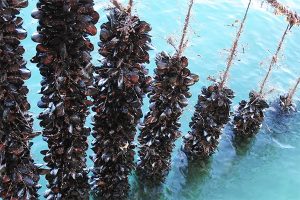
IFT examines the future of aquatic food systems and supply chains
Aquatic foods can contribute to a healthier population and a more resilient food system by bringing together research and sustainable seafood supply chains.
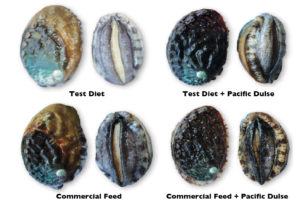
Diets affect abalone meat quality, shell color
A preliminary study investigated the effects of diet on the meat quality and shell color of Pacific abalone. A test diet and a commercial abalone feed resulted in lower meat protein content compared to that achieved with a diet of Pacific dulse seaweed. The artificial diets also caused the abalone to have yellow or orange shells. The seaweed diet alone resulted in abalone with dark-brown shells. However, a combination of seaweed and either artificial diet improved abalone growth, meat quality and shell color.
Beefing up seaweed production to green up beef
Josh Goldman is on a mission to reproduce asparagopsis, a tropical seaweed that could have a significant impact on global greenhouse gas emissions.

Project seeks to ‘fill knowledge gaps’ about potential toxins in kelp and seaweed
Nofima scientists aim to expand knowledge of potentially toxic elements in cultivated sugar kelp and wild-harvested kelp and seaweed.