


Severe U.S. drought linked to major Gulf fisheries decline decades ago, study finds

Reduced river flow triggered major declines in Gulf of Mexico fisheries and raised food security concerns
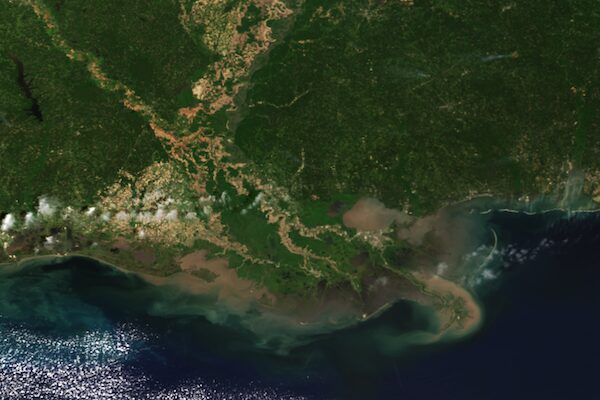
A prolonged U.S. drought in the late 1980s played a central role in one of the largest fisheries declines ever recorded in the Gulf of Mexico, according to a study led by scientists at the University of Haifa.
The research, published in Nature Communications, found that drought-driven reductions in Mississippi River flow sharply limited the delivery of nutrients to coastal waters. That disruption weakened the base of the marine food web, triggering cascading impacts across commercially important fisheries and raising broader concerns about food security in a changing climate.
“Our findings show that the fisheries collapse was not driven by fishing pressure alone,” said Igal Berenshtein, head of the Marine Ecology and Ocean Health Laboratory at the University of Haifa, and the study’s lead author. “The prolonged drought reduced river discharge and nutrient input to the Gulf, weakening phytoplankton production and primary productivity at the base of the food web. That disruption cascaded through the ecosystem, ultimately reducing fish biomass and fisheries yields.”
The study documented a roughly 42 percent decline in total fish biomass and a 34 percent drop in fisheries catch following the drought period, with nearly 90 percent of species groups showing decreases.
![Ad for [Aquademia]](https://www.globalseafood.org/wp-content/uploads/2025/07/aquademia_web2025_1050x125.gif)
The Gulf ecosystem depends heavily on nutrients delivered by the Mississippi River to sustain productivity and support commercially important species. Among the hardest hit was Gulf menhaden, a key forage fish that underpins the region’s largest fishery by landings and serves as a primary food source for predators, including mackerel, tuna, sharks, marine mammals and seabirds.
“Our results demonstrate how climate extremes on land can directly affect marine food production,” said Ben Kirtman, co-author a climate scientist at the University of Miami Rosenstiel School of Marine, Atmospheric and Earth Science. “As droughts become more frequent and intense under climate change, the risks to seafood supply and coastal economies increase.”
Catch & Culture Review: How climate change may alter the trajectory of North Sea demersal fisheries
Using a Gulf-wide ecosystem model, the researchers projected that under high greenhouse gas emission scenarios, fisheries biomass could decline by about 60 percent by mid-century and more than 70 percent by the end of the century if severe drought conditions persist.
The findings underscore growing food security concerns. The Gulf supports one of the United States’ most productive fisheries, supplying seafood to both domestic and international markets.
“Managing fisheries in a changing climate will require accounting for shifts in temperature, rainfall, river flow, nutrient delivery, and ecosystem productivity,” Kirtman added. “Adaptive strategies that incorporate climate variability will be essential to sustaining fisheries over the long term.”
Now that you've reached the end of the article ...
… please consider supporting GSA’s mission to advance responsible seafood practices through education, advocacy and third-party assurances. The Advocate aims to document the evolution of responsible seafood practices and share the expansive knowledge of our vast network of contributors.
By becoming a Global Seafood Alliance member, you’re ensuring that all of the pre-competitive work we do through member benefits, resources and events can continue. Individual membership costs just $50 a year.
Not a GSA member? Join us.
Author

Related Posts
Fisheries
NOAA scientists track massive marine heatwave affecting U.S. West Coast waters
NOAA scientists track a massive marine heatwave off the U.S. West Coast that could affect fisheries, species shifts and harmful algal blooms.

Fisheries
Fish are getting smaller as global food webs quietly reorganize, study finds
Study finds global fish food webs are shifting toward smaller species and fewer top predators, even where species counts stay stable.

Responsibility
Ocean temperatures hit record highs in 2025, underscoring need for climate action
Ocean temperatures hit record highs in 2025, signaling accelerating climate change and its growing influence on weather worldwide.
Fisheries
Tuna fisheries most at risk from climate change, new research suggests
A global study warns tuna and other migratory fisheries face the greatest climate risks as warming seas shift stocks and strain management.