


Rabobank: Global shrimp industry faces tariffs, large inventories and a wildcard performer

Shrimp industry enters 2026 ‘cautiously optimistic’ as Ecuador’s resilience and India tariff relief offset U.S. inventories
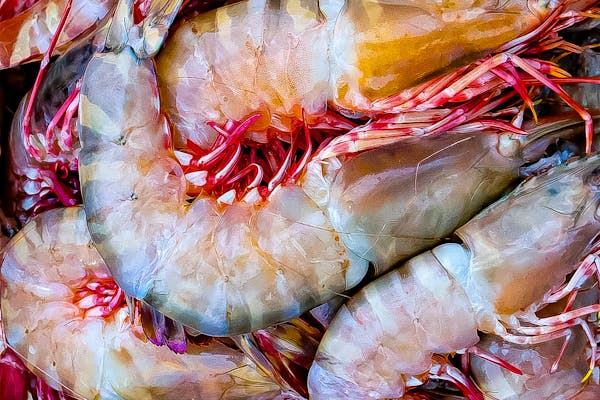
After entering 2025 braced for disruption from tariffs, inflation and weak Chinese demand, the global shrimp sector delivered a year that few had expected. Strong European demand, an uptick in U.S. imports and a renewed growth surge from Ecuador combined to support both prices and volumes, according to the latest report from RaboResearch.
“Going into 2025, we thought it would be a very challenging year,” said Gorjan Nikolik, senior seafood analyst at RaboResearch. “Instead, it turned out to be quite a good one.”
A year that defied expectations
Concerns entering 2025 centered on two risks: higher U.S. tariffs and a lukewarm Chinese market that had yet to regain momentum. While those headwinds remained real, outcomes ultimately proved more favorable.
Europe emerged as a standout market, posting uncommon double-digit shrimp import growth at solid price levels. At the same time, the U.S. imported large volumes of shrimp through much of the year, though not all of that demand reflected true consumption.
![Ad for [BSP]](https://www.globalseafood.org/wp-content/uploads/2025/07/BSP_B2B_2025_1050x125.jpg)
“A lot of that shrimp was brought in simply to avoid tariffs,” said Nikolik. “That created demand that wasn’t entirely real.”
Still, the buying surge encouraged producers, particularly in Asia, to increase production early in the year – a move that helped lift overall volumes even as structural uncertainty persisted.
Ecuador’s momentum accelerates
Perhaps the biggest plot twist of 2025, however, came from Ecuador. After what experts viewed as a pause year in 2024, Ecuador’s shrimp sector was widely expected to see slow growth as it matured. Instead, Ecuador delivered roughly 15 percent growth for the full year.
“In 2024, we were thinking Ecuador was finally maturing,” Nikolik said. “Instead, it surprised everyone.”
Ecuador’s strength, he explained, stems from an accumulation of advantages that few competitors can match. Producers benefit from favorable climate conditions that allow multiple annual production cycles, large-scale and well-capitalized farming operations and a structural edge from owning their land rather than leasing it.
On top of that, Ecuador has invested aggressively in value-added processing, increasing flexibility across markets. And now, the country has a tariff advantage as well.
“All of those advantages really pile up,” Nikolik said. “2025 ended with solid prices and a lot of volume growth, which is quite amazing and defied expectations.”
Inventories cloud the start of 2026, but a tariff twist changes the game
Despite the strong finish to 2025, Nikolik anticipates that 2026 will begin on a more cautious note. Elevated inventories in the U.S., built during last year’s tariff-avoidance buying, are likely to weigh on near-term import demand.
“Companies managed to sell a lot of inventory without paying tariffs because it was built up before,” Nikolik said.
That inventory overhang initially led analysts to project a tougher 2026, with tariffs finally “biting” and reducing profitability for major suppliers. But their outlook shifted abruptly following a new trade agreement between the U.S. and India. Under the deal, tariffs on Indian shrimp exports to the U.S. fall sharply from a potential 58 percent to around 18 percent.
“For the largest supplier to the U.S., that’s a huge drop,” Nikolik said. “It’s a big breakthrough.”
The impact was immediate, with shrimp prices in India rising quickly, optimism improving and producers gaining confidence to start seeding early in the year. The new tariff rate puts India on roughly equal footing with Ecuador in the U.S. market.
“India is now basically on par with Ecuador,” Nikolik said.
Inflation, income and the K-shaped consumer
Macroeconomic pressure remains a wildcard. Persistent inflation continues to erode disposable income for many consumers. While higher-income consumers tend to support premium seafood in a K-shaped economy, the benefit is clearer for salmon than for shrimp, where demand can be more mixed.
Still, Nikolik said the K-shaped U.S. economy offers an important buffer and could result in “a pretty good year,” despite ongoing uncertainty.
“The wealthiest group in the U.S. still represents the biggest portion of seafood consumption,” he said. “Seafood consumption correlates strongly with income, urbanization and education.”
As a result, Nikolik expects global supply growth to soften somewhat in 2026, but sees current pricing levels as fundamentally supported.
“Prices at the moment are certainly good,” Nikolik said.
China remains ‘a question mark’
The largest unresolved variable is China. After several years of declining shrimp imports, the market stabilized through most of 2025 – a modest but meaningful improvement.
Chinese policymakers have increasingly emphasized consumption-focused reforms, including possibly higher minimum wages, improved pensions and measures aimed at boosting the yuan’s strength. The long-term goal, Nikolik speculates, is to shift the economy from an export-driven model toward domestic consumption.
“So far, that transition hasn’t really succeeded, but they are moving gradually,” Nikolik said. “At some point, I think Chinese shrimp consumption will eventually return to growth. We just don’t know when.”
A ‘cautiously optimistic’ outlook
For now, Nikolik characterizes the shrimp market outlook as “cautiously optimistic.” Inventories in the U.S. may need time to normalize, and global trade dynamics remain in flux. But tariff relief for India, Ecuador’s resilience and stable demand in Europe have materially improved the near-term picture.
“It’s still early,” Nikolik said. “But compared to where we were, the outlook has improved.”
Read our coverage of past Rabobank reports.
Now that you've reached the end of the article ...
… please consider supporting GSA’s mission to advance responsible seafood practices through education, advocacy and third-party assurances. The Advocate aims to document the evolution of responsible seafood practices and share the expansive knowledge of our vast network of contributors.
By becoming a Global Seafood Alliance member, you’re ensuring that all of the pre-competitive work we do through member benefits, resources and events can continue. Individual membership costs just $50 a year.
Not a GSA member? Join us.
Author
-

Lisa Jackson is a writer based in Hamilton, Canada, who covers a range of food, finance, and environmental issues. Her work has been featured in Al Jazeera News, The Globe & Mail and The Toronto Star.
Related Posts
Intelligence
Rabobank: Seafood industry faces ‘prolonged instability’ as tariffs, tensions reshape trade
RaboResearch analysts warn tariffs and tensions are disrupting the seafood trade, squeezing producers, raising prices and fueling instability.
Intelligence
Rabobank: Production growth for key aquaculture species in 2025; modest gains for salmon and shrimp
Global aquaculture is set for growth in 2025, led by finfish production, but trade and market risks remain a concern, according to Rabobank.

Intelligence
Aquaculture sector enters second half of 2024 with growing demand and normalizing costs: Rabobank
Rabobank predicts improved demand and cost stabilization for aquaculture, despite market uncertainty and ongoing biological challenges.
Intelligence
After a turbulent 2023, ‘signs of optimism’ ahead for global seafood production
Rabobank's annual seafood production report suggests a more optimistic production outlook for 2024 compared to 2023.