


Is the most valuable part of shrimp typically thrown away? How seafood byproducts offer new revenue streams

Once treated as waste, seafood byproducts like shrimp shells and heads are becoming valuable resources for aquafeeds, agriculture and biomaterials
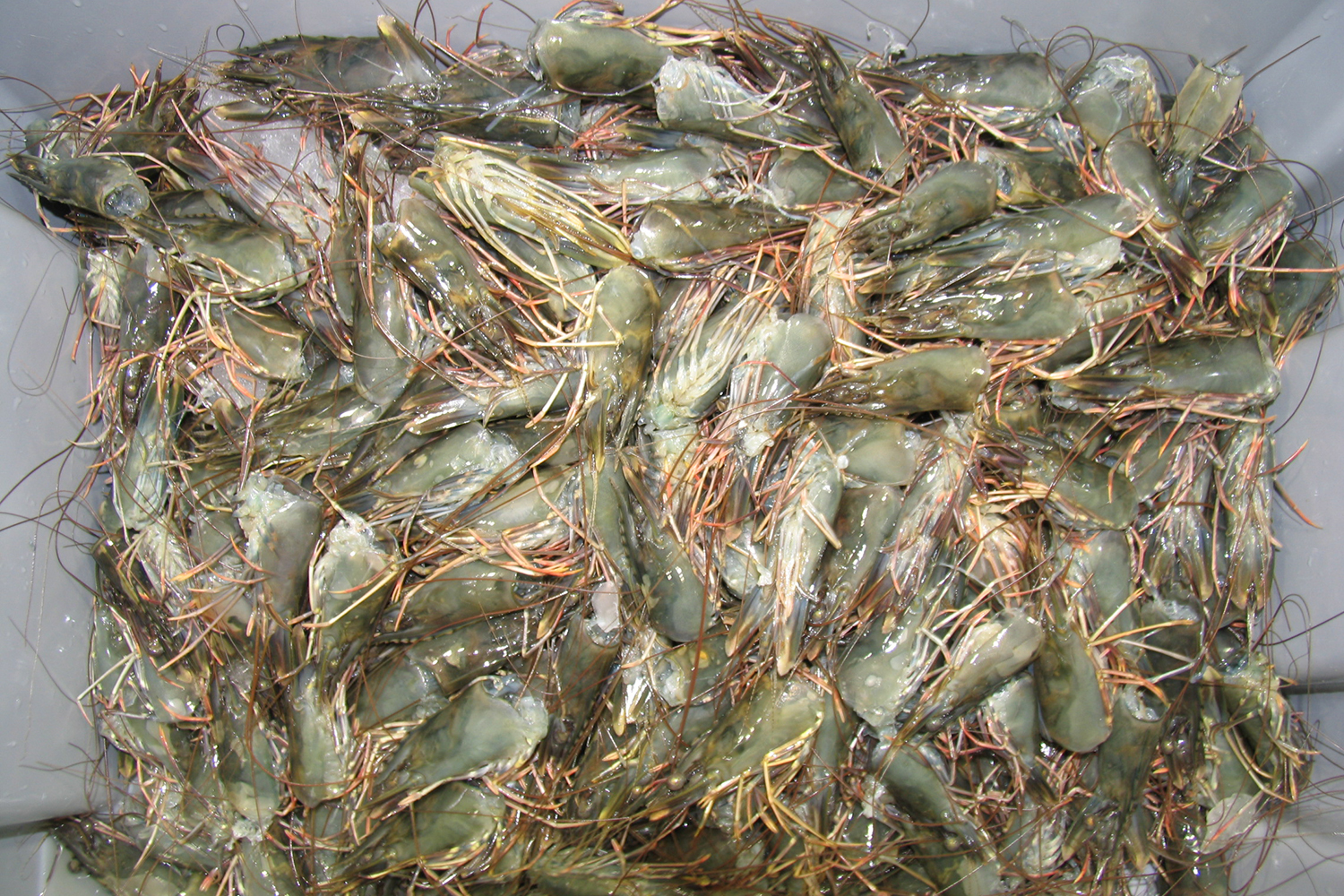
Given that the aquaculture industry prides itself on its sustainability metrics, it’s perhaps no surprise that one of the less impressive statistics – that roughly half of every farmed shrimp harvested never makes it to the consumer’s plate – is left out of most industry presentations.
It’s an undesirable statistic, given that the “residue” from shrimp processing – mainly heads and shells – is typically sold cheaply for fertiliser, sent to landfill or incinerated. Thankfully, this dynamic is poised for change, thanks to the gradual realization that these byproducts contain not only hugely valuable nutrients but also compounds that can be used in applications from wastewater treatment, to biopesticides, to life-saving medical devices.
For Melanie Siggs, lead author of a recent Global Shrimp Forum Foundation report on transforming shrimp byproducts into valuable materials, the situation needs to change, not only to stop the loss of this valuable material for ethical and environmental reasons, but sound economic ones too.
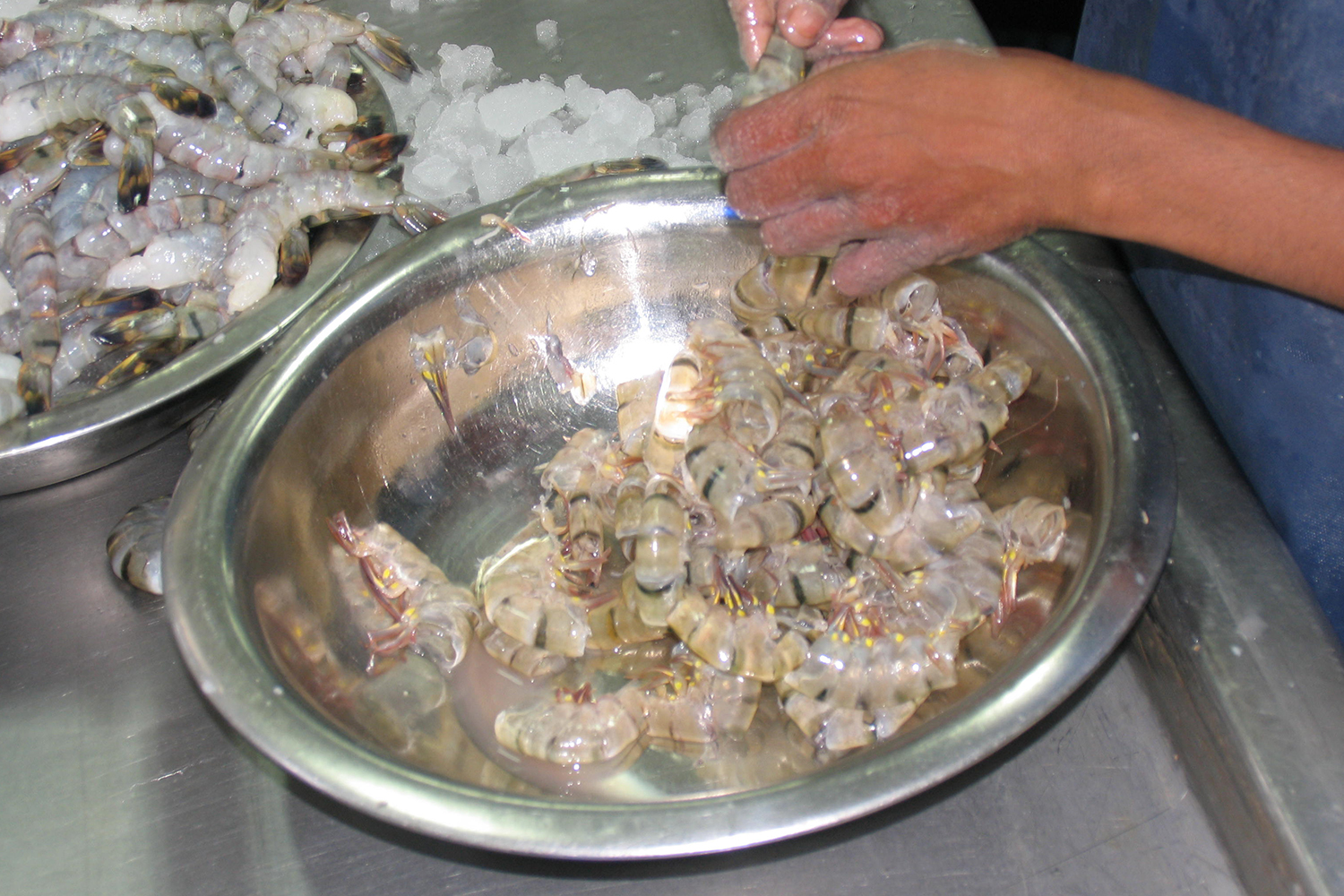
“You take the whole shrimp to the processor, who often have to remove half of that shrimp to meet market requirements and classify that half as waste,” Siggs told the Advocate. “Historically that has either been a cost to the bottom line or neutral, if you’re lucky.”
![Ad for [Aquademia]](https://www.globalseafood.org/wp-content/uploads/2025/07/aquademia_web2025_1050x125.gif)
In some countries, she noted, these heads and shells are burned or dumped. “From an economic and business perspective, [that’s] insane. And ethically you’d have to say that is very wrong.”
While the concept of reducing post-harvest food waste is not new – and has met with success in other parts of the seafood sector – Siggs argued that market volatility, sustainability pressures and new applications are now aligning to make action on farmed shrimp byproducts especially timely.
The most achievable starting point, she explained, is converting shrimp heads and tails into shrimp meal – a valuable aquafeed ingredient. By processing these byproducts into a stable ingredient, processors can turn what was once waste into a marketable product.
“There are good markets for shrimp meal,” she said, “but if you have a higher-quality shrimp meal, you improve your market opportunity and the value. Further development from there, into hydrolysate, for example, is where things get really interesting. But it can be taken a step at a time.”
An emerging example
One shrimp producer who agrees with Siggs about the upcycling opportunity is Juan Carlos Javier, CEO of Grupo Granjas Marinas (GGM), in Honduras, which produces around 55 million pounds of shrimp annually from 7,000 hectares of ponds.
As Javier explained, shrimp heads can’t legally be disposed of by burning, burying or dumping in Honduras. Instead, GGM is obliged to send them – at a current cost of more than $260,000 per year – to the country’s sole approved shrimp head processor.
Javier also admits that he was uneasy relying on a waste processing company that effectively held an monopoly, which meant the processor “could increase our cost anytime they wanted to, and we couldn’t do much about it.”
As a result, Javier persuaded GGM’s board to invest roughly $1.9 million in establishing a plant that could convert waste into shrimp meal and – Javier expects – costs into profits.
GGM plans to sell its shrimp meal at “competitive prices” and has already secured a crucial letter of intent from a European buyer to purchase the plant’s entire output – provided it meets protein and humidity specifications.
For Javier, lining up the market first was critical: “If you don’t have somebody who’s going to buy it, then you’re going to be accumulating shrimp head meal really fast,” he explained.
The build itself was not without setbacks. Early production trials revealed excessive moisture levels – shrimp heads arrive packed in ice and water, making drying capacity essential. Rather than overstretch equipment, GGM modified the processing line and added machinery to remove more moisture while preserving protein. Target protein levels range from 56 to 59 percent, with moisture tightly controlled to stabilise the product for storage and export.
From an operational perspective, Javier has been impressed by the plant’s efficiency – the footprint is small, it’s located next door to one of GGM’s existing facilities and can be run by a handful of staff, supported by the company’s in-house engineering team.
“Once you get this thing running, it actually only requires about seven or eight people to operate,” Javier said.
Looking ahead, GGM expects to recoup its investment in less than five years. The company is also considering the potential to expand their capacity to process the waste as its own shrimp production grows. Other shrimp producers may also decide to reroute their waste to GGM.
For now, however, Javier remains focused on the more immediate future – notably the second week of April when the plant is expected to be producing at full capacity, rather than on a pilot scale, for the first time.
Seafood’s best friend: Once wasted fish byproducts are now a bounty for cats and dogs
Value-added options
While shrimp meal may be the most immediate outlet for byproducts, some are already eyeing more sophisticated products, such as shrimp hydrolysate. Produced through enzymatic processing, hydrolysates have been shown to have strong potential in both the human and animal health sectors.
“There’s really great evidence around shrimp hydrolysate’s bioavailability,” Siggs said, citing improved disease resistance and immunity across a range of species. Demand is strong not only in aquaculture, but also in the ever-expanding pet food sector. “The pet food industry is huge,” she adds, “and they love shrimp hydrolysate.”
Further up the value chain lies chitosan, a biopolymer derived from crustacean shells, insect exoskeletons and certain fungi.
According to Michel Lockhart, CEO of Canadian chitosan manufacturer ChitoLytic, it is “the second most abundant biopolymer on our planet, second only to cellulose,” positioning it as one of the most structurally important natural materials available for industrial innovation.
While cellulose forms the backbone of plant cell walls, chitin performs a similar structural function in marine and insect life. Through a chemical or enzymatic conversion process, chitin is transformed into chitosan – a versatile, biodegradable polymer with unique functional properties.
As governments and consumers push back on microplastics and “forever chemicals,” corporations are increasingly seeking sustainable alternatives. Chitosan is emerging as a viable substitute for certain plastics and synthetic polymers, according to Lockhart.
The global chitosan market is already substantial – Lockhart cites estimates ranging from anywhere between $8 billion to $13 billion, with double-digit annual growth, and notes that the market is broadly divided into three segments: industrial grade, food grade and medical grade.
The price differentials across these grades illustrate the value ladder. While shrimp may sell for $7–8 per kilogram, industrial chitosan might fetch $20–30 per kilogram. Food-grade material can command $100–600 per kilogram, and medical-grade chitosan can fetch up to $20,000 a kilogram, according to Lockhart.
Applications reflect this versatility. In agriculture, the U.S. Environmental Protection Agency has designated chitosan a minimal-risk biopesticide. Its positively charged molecular structure allows chitosan to bind to negatively charged pathogen cell membranes, disrupting them naturally, while also stimulating plant health and growth.
In medicine, chitosan’s bio-adhesive properties are being harnessed in advanced wound-care and surgical products. Inspired by barnacles’ ability to cling to wet surfaces, researchers at Harvard University developed hydrogel tapes using chitosan that can seal perforated blood vessels in seconds – an example of biomimicry translating marine chemistry into life-saving technology.
One of the key members of the Harvard research team, Hyunwoo Yuk, went on to found SanaHeal, based on this breakthrough.
“The types of devices we are developing are bleeding control in trauma and surgical injuries, tissue adhesive devices for repair of various tissues including hernia and nerves,” he explained.
For the shrimp industry, the rise in high-value applications for chitosan should inspire a shift in how processors view byproducts. As Lockhart argues, processors are often “throwing away the largest value of the product that they’re harvesting.”
Despite the high value of medical-grade chitosan, Lockhart – like Siggs – advises a gradual approach to valorization. Processors can begin by extracting and hydrolyzing protein from shrimp heads – material Lockhart describes as “arguably the most diverse and more nutritionally powerful marine protein there is.” The remaining shells and tails can then be processed into chitin and ultimately chitosan, enabling full utilization of the waste stream.
However, like Javier, Lockhart cautions against building facilities without first securing markets. “We never encourage any processor to just build it and expect them to come,” he said.
Instead, he argued that shrimp processors should identify target markets first – whether local agricultural biopesticides or export-oriented medical applications – and align capital expenditure, technology and quality systems accordingly.
ChitoLytic often transfers technology and know-how rather than constructing plants abroad, helping processors upgrade their waste handling, implement quality controls and navigate regulatory requirements. As Lockhart noted, the challenge is not only technical but also cultural: Seafood processors are accustomed to rapid sales cycles, whereas chitosan development – especially for medical uses – can involve long regulatory timelines and customer qualification processes.
Integrated utilization of microalgae grown in aquaculture wastewater
Success with other seafood byproducts
Other parts of the seafood sector offer compelling examples of what can be achieved with byproducts. In Iceland, as Siggs observed, decades of “whole-fish” thinking have spawned a thriving ecosystem of companies turning offcuts into products for cosmetic, nutraceutical and medical uses.
One such company, Kerecis, produces wound dressings from cod skins, a high-grade pharmaceutical product licensed in the United States. Founded in 2009, the company was sold for around $1.2 billion in 2023.
Kerecis currently utilizes less than 1 percent of the available fish skin in Iceland and points out that the catch from a single fishing trawler could supply enough material to meet roughly one quarter of the entire U.S. skin substitute market over the course of a year.
Similar examples are emerging from the farmed salmon sector, where companies like Hofseth BioCare extract valuable proteins and bioactive compounds from processing trimmings.
As well as these individual successes, Siggs points to the success spawned by the creation of clusters to cocreate full-utilization opportunities. She notes that the Iceland Ocean Cluster is a good example of a for-profit model that brought together entrepreneurs and businesses to use all material from local fisheries. Meanwhile, the Namibia Ocean Cluster is a nonprofit model where six vertically integrated hake fishing/processing companies are working together in a formal and legal structure.
Shrimp, Siggs believes, could follow either path – or both. But success depends on mindset and planning.
“Right from the start, you’ve got to be looking at the markets for your end product,” she warned. Projects fail when investment in technology and development of an end product take place without researching market opportunities and securing buyers for the specific product or grades of material they plan to produce.
Despite the challenges, Siggs remains optimistic: “If you are going to start on this journey, getting experts in to objectively look at your business and your opportunity is your starting point.”
Ultimately, the growing use of materials such as chitosan demonstrates the shrimp industry’s potential to move up the value chain – transforming what was once landfill or incinerator feedstock into premium feed ingredients or high-margin, high-impact biomaterials for agriculture, medicine and beyond. Whether it’s shrimp producers, processors, or startups from outside the sector that end up as the main beneficiaries remains to be seen, but what is not in doubt is the true value of the material that shrimp processors have historically viewed as waste.
Now that you've reached the end of the article ...
… please consider supporting GSA’s mission to advance responsible seafood practices through education, advocacy and third-party assurances. The Advocate aims to document the evolution of responsible seafood practices and share the expansive knowledge of our vast network of contributors.
By becoming a Global Seafood Alliance member, you’re ensuring that all of the pre-competitive work we do through member benefits, resources and events can continue. Individual membership costs just $50 a year.
Not a GSA member? Join us.
Author
-

Rob Fletcher has been covering the international aquaculture industry since 2010, as editor of Fish Farmer, Fish Farming Expert and The Fish Site. Since the start of 2026 he has returned to freelance feature writing, editing and consulting. He has masters degrees in both history and aquaculture and lives off-grid on the west coast of Scotland.
Related Posts
Aquafeeds
It all starts with whisky: Scottish company ramping up microalgae biomass production for aquaculture and pet foods
With a decentralized circular economy approach to microalgae production, MiAlgae is positioned to contribute to the growing basket of alternative feed ingredients.
Innovation & Investment
Aquaculture Innovation Award Finalist: Seaqure labs’ aquafeed ingredient made from fungi and food waste
Sweden-based startup Seaqure labs is addressing global protein needs by exploiting the benefits of a mycoprotein powder made from fungi.
Fisheries
‘Regulation is pushing toward greenifying materials’: How one innovator is upcycling seafood waste into biodegradable packaging foam
GOAL 22: Cruz Foam’s biodegradable packaging foam made with shrimp shells is a finalist for GSA’s inaugural Global Fisheries Innovation Award.
Innovation & Investment
Exit stage right: Fish 2.0 offers final set of winning innovators
Nearly 40 entrepreneurs took the stage to pitch their seafood industry-changing innovations in front of a room full of discriminating investors.