


ILO survey finds forced labor risks persist in Southeast Asian fisheries

Regional study estimates 13 percent of migrant workers face forced labor, with risks highest aboard distant-water fishing vessels
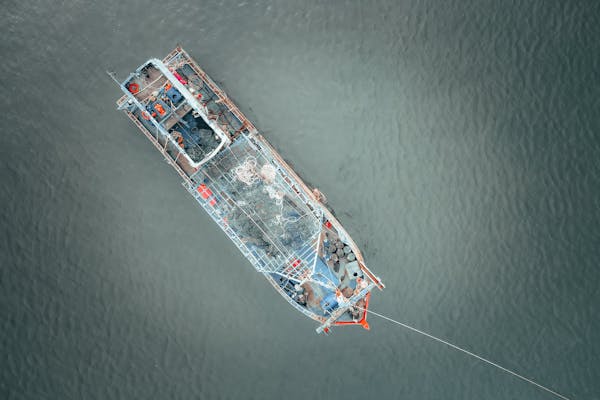
A recent regional survey by the International Labour Organization (ILO) finds that migrant workers in Southeast Asia’s fishing and seafood processing industries continue to face serious gaps in working and living conditions, highlighting persistent weaknesses in labor protections across the region’s blue economy.
The report, produced under the EU-funded ILO Ship to Shore Rights Southeast Asia program and described as the largest of its kind to date, provides new data on recruitment practices, workplace conditions and forced labor in major countries of origin — Cambodia, Indonesia, Myanmar and Vietnam — and key destinations, including China, Japan, the Republic of Korea, Taiwan (China) and Thailand.
The findings reveal widespread challenges, including high recruitment costs, weak wage protections, long working hours and serious occupational injuries. Workers also reported barriers to freedom of association, limited access to social protection and ongoing risks of forced labor.
Applying the ILO’s methodology, the study estimates that 13 percent of migrant workers in the fishing and seafood processing sectors were employed in situations of forced labor — meaning they were working against their will and unable to leave their jobs. The risk was far higher among migrant fishers, where 20 percent were estimated to be in forced labor, compared with 0.4 percent among seafood processing workers.
![Ad for [Aquademia]](https://www.globalseafood.org/wp-content/uploads/2025/07/aquademia_web2025_1050x125.gif)
Abuse was found to be more frequent on distant-water tuna vessels, where long work hours and extended periods at sea increase vulnerability to coercive labor practices. These vessels often operate in remote areas of the high seas, where oversight and enforcement are limited.
Although working conditions were comparatively better in seafood processing than in fishing, the report concludes that stronger labor protections are needed throughout the fish and seafood supply chain. It also notes the heavy reliance on women migrant workers in seafood processing, where many are concentrated in low-paid, precarious and informal jobs that receive limited policy attention.
How can the fishing industry address forced labor, with the scope more in focus?
“Important advances have been achieved in increasing adherence to international labour standards in the fishing and seafood processing industries in recent years,” said Luisa Ragher, Ambassador of the European Union (EU) to the Kingdom of Thailand. “However, as the findings of this report clearly show, ensuring decent work for migrant workers is a regional challenge and much more needs to be done.”
The report calls on countries to ratify and fully implement international labor standards on recruitment, work in fishing and forced labor to establish binding minimum protections. It also urges that migrant workers be guaranteed the right to form trade unions and bargain collectively for improved wages and working conditions.
“Decent work deficits in the fishing and seafood processing sector reflect structural weaknesses in how labour and migration are governed across the region,” said Tuomo Poutiainen, ILO deputy regional director for Asia and the Pacific. “Addressing these challenges requires coordinated action by governments, employers and workers to ensure accountability throughout the supply chain.”
Now that you've reached the end of the article ...
… please consider supporting GSA’s mission to advance responsible seafood practices through education, advocacy and third-party assurances. The Advocate aims to document the evolution of responsible seafood practices and share the expansive knowledge of our vast network of contributors.
By becoming a Global Seafood Alliance member, you’re ensuring that all of the pre-competitive work we do through member benefits, resources and events can continue. Individual membership costs just $50 a year.
Not a GSA member? Join us.
Author

Related Posts
Fisheries
FAO: ‘Major advances’ to curb IUU fishing in the Mediterranean, Black Sea made in 10 years
Digital tools, policy reforms and regional coordination are helping close IUU fishing enforcement gaps in the Mediterranean and Black Sea regions.
Fisheries
Climate change will increase labor risks in fisheries, study warns
Authors of a new Marine Policy paper call for integrated policy responses across climate, industrial fisheries and labor systems.
Responsibility
ILO: Seeking Decent Work for Thailand’s fishing and seafood industry
The new Global Estimates of Modern Slavery report released by the International Labour Organization indicates that 24.9 million workers at any given time in 2016 were in modern slavery. One in 10 of those workers around the world was working in the fishing and agriculture industries.

Responsibility
Intelligence, integrity in the fight against forced labor in seafood
In previewing the SeaWeb Seafood Summit, the Advocate examines human rights in the supply chain and the people who advance solutions in rooting out worker abuses. In part one of a three-part series, Environmental Justice Foundation co-founder Steve Trent talks about linking environmental security with human rights.