


IFT examines the future of aquatic food systems and supply chains

Journal of Food Science articles highlight scientific advances needed to support aquatic foods as central to global nutrition and sustainability
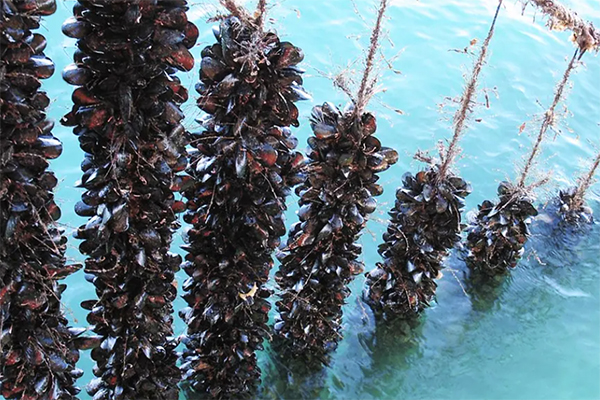
A special issue on aquatic foods in the Journal of Food Science examines the future of sustainable supply chain and the scientific advances needed to support the transition of aquatic foods to become central to global nutrition and sustainability.
The issue shows how aquatic foods can contribute to a healthier population and a more resilient food system by bringing together various research topics and responsible marine resources use.
The Institute of Food Technologists (IFT), which advocates for science, technology and research to address the world’s greatest food challenges through its Journal of Food Science (JFS), recently published a special issue on Health, Safety and Sustainability of Aquatic Foods.
Developed by IFT’s Aquatic Food Products Division, this issue presents a series of critical reviews and explores the multifaceted aspects of aquatic food and their role in a sustainable future. The special issue discusses various topics – including production, processing, safety, nutrition, shelf life and emerging technologies – and addresses key concerns in the aquatic food industry, such as monitoring for environmental toxins, pathogens and ensuring product authentication and labeling integrity.
![Ad for [BSP]](https://www.globalseafood.org/wp-content/uploads/2025/07/BSP_B2B_2025_1050x125.jpg)
“Aquatic foods are becoming central to global nutrition and sustainability, and this special issue highlights the scientific advances needed to support that transition. By bringing together research on safety, quality, processing innovations and the responsible use of marine resources, we aim to show how aquatic foods can contribute to a healthier population and a more resilient food system,” Dr. Qinchun Rao, Betty M. Watts Endowed Professor of Food Science at Florida State University, and a member of the IFT Aquatic Food Products Division, told the Advocate.
The issue also highlights innovations in processing methods as well as the efficient utilization of processing byproducts to minimize environmental impact and add value to the processing chain.
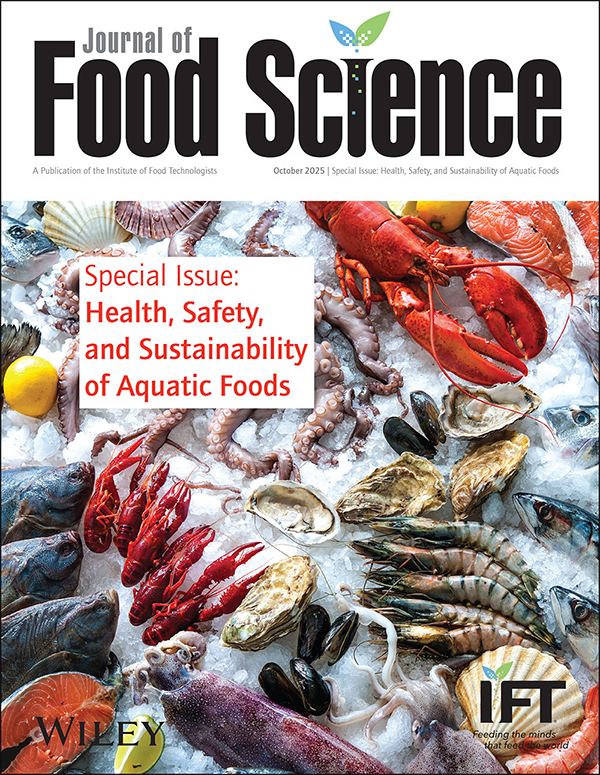
The articles in this collection cover various research advances including safety, quality, processing innovation, marine-driven proteins and analytical authentication:
Qian Hua and Dan Li (National University of Singapore, Singapore) demonstrated that microencapsulated Lactiplantibacillus plantarum 299 V showed enhanced stability and can bioaccumulate in oysters to improve microbial quality and safety. Because of the antimicrobial effect of probiotic metabolites and chitosan coating of the microcapsules, the spoilage-causing and pathogenic bacteria in the oysters were notably suppressed during refrigeration storage.
The research team of Chuanyan Pan and Linyuan Jiang (Guangxi Academy of Fishery Science, China) examined how processing methods drive protein oxidation and thereby influence the quality attributes of aquatic products. Their research primarily explored the effects of protein changes under different processing methods on aquatic product quality and human health, as well as techniques for controlling protein oxidation. It aims to provide a theoretical basis for selecting appropriate processing methods, improving aquatic product quality, and controlling protein oxidation in aquatic products, and to offer scientific guidance for practical production.
Soottawat Benjakul et al. (Prince of Songkla University, Thailand) reported that ethanolic cashew leaf extract (ECLE) has promise as a natural food preservative with potent antifungal properties to extend the shelf life of dried salted food products, especially seafood and other seafood.
Bing Cui et al. (Hubei University of Technology, China) reviewed the effects and mechanisms by which different food biomacromolecules modulate thermal-induced gel properties of surimi, informing texture design and processing control. With the development of new complexed surimi products and the increasing types of exogenous substances, the traditional surimi gel theory may face many challenges in explaining the gel mechanism of compound surimi system, which restricts the basic theory and technical innovation of surimi product processing. Therefore, in future research, some advanced equipment and technical strength should be used to further explore the influence and mechanism of different exogenous components on the characteristics of surimi gel, and new theories of surimi compound gel should be innovated and developed, so as to provide theoretical guidance for promoting the healthy development of aquatic processing industry.
In another contribution, Soottawat Benjakul et al. (Prince of Songkla University, Thailand) characterize trypsin from the digestive tract of Harpiosquillid mantis shrimp and show inhibition by chitooligosaccharide and its catechin conjugate, with implications for controlling proteolysis during processing. A consequence of this research is that the quality loss associated with the protein degradation mediated bytrypsin from the digestive tract can be resolved.
Sakhi Ghelichi and Charlotte Jacobsen (National Food Institute, Denmark) examined the nutritional, functional, and bioactive properties of proteins and peptides derived from seaweed as well as extraction methods used to extract them, advancing the development of sustainable marine-derived protein ingredients. Future perspectives are discussed, including the potential of bottom-up approaches, the integration of seaweed-derived proteins and peptides into food systems, and the importance of understanding their interactions with other biomolecules, which may influence their functional and nutritional properties.
Rosalee Hellberg et al. (Chapman University, USA) compared polymerase chain reaction (PCR)-based methods for detecting species in canned tuna, strengthening seafood authentication and labeling integrity. Their results recommend that real-time PCR is used as a rapid screening method in concert with CR mini-barcoding to provide sequencing-based species confirmation. Also, that further optimization of CR mini-barcoding should be conducted to improve sequencing-based species identification rates in commercially canned tuna. The use of alternative genetic markers and/or sequencing approaches should also be considered.
Finally, Qinchun Rao et al. (Florida State University, USA) highlighted how seaweed fermentation can enhance sensory properties and improve consumer acceptance of seaweed-based foods. Their research emphasized the transformative potential of fermentation in seaweed processing and recommends future research focusing on standardization, sensory analytics, and pilot-scale production to support the integration of fermented seaweed into mainstream food applications.
“Seaweed holds tremendous potential as a sustainable food ingredient, but its strong marine flavor and texture remain major barriers for consumers, especially in the United States, where seaweed is not a traditional part of the diet. Our work shows that microbial fermentation can naturally soften these sensory challenges, reducing off-odors, boosting umami, and creating more appealing aromatic profiles. Fermentation offers a clean-label, scalable path with strong potential to make seaweed-based foods more enjoyable and widely accepted in the U.S. market,” Dr. Rao told the Advocate regarding his seaweed research.
“With the continuous increase in global population, aquatic foods – including fish, shellfish, seaweed, and microalgae – have become vital sources of nutrition,” he added. “These foods offer high-quality proteins, essential omega-3 fatty acids, vitamins, minerals, and bioactive compounds crucial for human health. Promoting aquatic foods can potentially reduce the consumption of red meat and poultry, which are associated with high carbon footprints, and bolster food security for vulnerable populations.”
Now that you've reached the end of the article ...
… please consider supporting GSA’s mission to advance responsible seafood practices through education, advocacy and third-party assurances. The Advocate aims to document the evolution of responsible seafood practices and share the expansive knowledge of our vast network of contributors.
By becoming a Global Seafood Alliance member, you’re ensuring that all of the pre-competitive work we do through member benefits, resources and events can continue. Individual membership costs just $50 a year.
Not a GSA member? Join us.
Author
-

Editor Emeritus
Related Posts
Health & Welfare
10 paths to low productivity and profitability with tilapia in sub-Saharan Africa
Tilapia culture in sub-Saharan Africa suffers from low productivity and profitability. A comprehensive management approach is needed to address the root causes.
Responsibility
A helping hand to lend: UK aquaculture seeks to broaden its horizons
Aquaculture is an essential contributor to the world food security challenge, and every stakeholder has a role to play in the sector’s evolution, delegates were told at the recent Aquaculture’s Global Outlook: Embracing Internationality seminar in Edinburgh, Scotland.
Responsibility
A wider view: It’s blue food’s time
There is urgency to conversations about the role of blue food in mitigating climate change, increasing momentum toward some specific goals.

Responsibility
‘More than a meal’: Can a new education toolkit for kids help strengthen support for aquaculture?
The Farmers of the Water program empowers young consumers to appreciate farmed fish and actively engage with the aquaculture industry.