
‘Boutique’ RAS for spotted sea trout
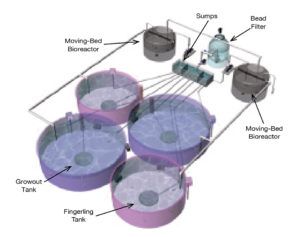
A boutique design project validated a land-based, recirculating production system capable of producing 50 metric tons of spotted sea trout per year.
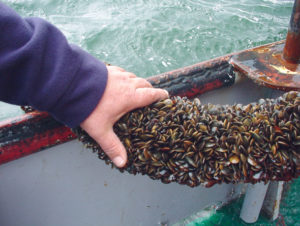
The main reason for recent declines in blue mussel yields in the Netherlands was lower availability of mussel seed. Mild winters have increased the number of predators, which can decimate mussel stocks.
A boutique design project validated a land-based, recirculating production system capable of producing 50 metric tons of spotted sea trout per year.
The growth and survival of red tilapia fry were not significantly affected by different photoperiods in three 30-day experiments. Results suggested that it is not necessary to maintain constant lighting or a constant light/dark circadian scheme.
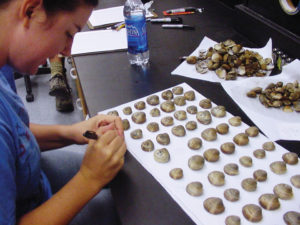
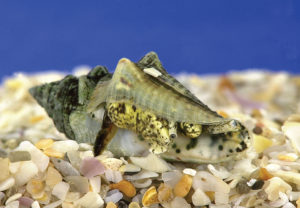
Induced triploidy could theoretically improve the survival of cultured hard clams because triploids divert energy from reproduction to somatic growth, resulting in larger and potentially hardier clams than diploids.
Researchers found juvenile queen conch fed diets containing added macroalgae had higher survival than a control given catfish feed only.
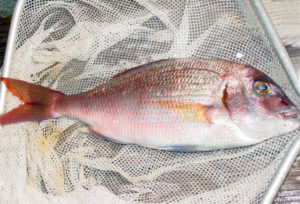
With high value in U.S. markets and its overfished status, red porgy appears to be a viable candidate for aquaculture in North America.
To avoid or control the impacts of disease, consistent observation and sampling of animals are essential. Sample size should be dictated by the goal of the sampling.
Ozone is a strong oxidizing agent that effectively removes colors, odors and turbidity from water, and kills bacteria, viruses and other microorganisms.
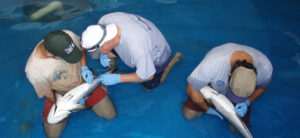
Selective-breeding coupled with advances in maturation systems, nutrition and management led to natural cobia spawnings at the University of Miami Experimental Hatchery.
Authors tested a commercial probiotic designed to lower stress prior to and during fish transport. Treatment at 10 ppm produced highest survival and growth.
Collaborative research in Florida is developing technologies for rearing marine fish in low-cost, low-salinity recirculating systems. Spawning and larval production studies have led to the mass production of juveniles.
Researchers at the Gondol Research Institute for Mariculture in Indonesia have studied the artificial propagation of groupers since 1995. In 2001, GRIM began successfully producing grouper seedstock at commercial-scale levels.
Sea bream fry are produced using the greenwater technique in which microalgae are added to larval-rearing tanks during the first 20 to 30 days after hatching.
In studies, sodium carbonate peroxyhydrate proved an effective alternative to formalin and hydrogen peroxide as a treatment for controlling fungal infections of catfish eggs and improving hatch rates.
The continued application of genome research to aquaculture will provide unprecedented accuracy for genetic selection of performance and production traits.
Although researchers have studied the roles of lipid-soluble vitamins in larger fish, limited information exists on the functions and dietary requirements of these nutrients in marine fish larvae.