


Catch & Culture Review: Is the shrimp disease AHPND spread by an airborne pathogen?

The airborne spread of the AHPND-causing pathogen was demonstrated in shrimp aquaculture
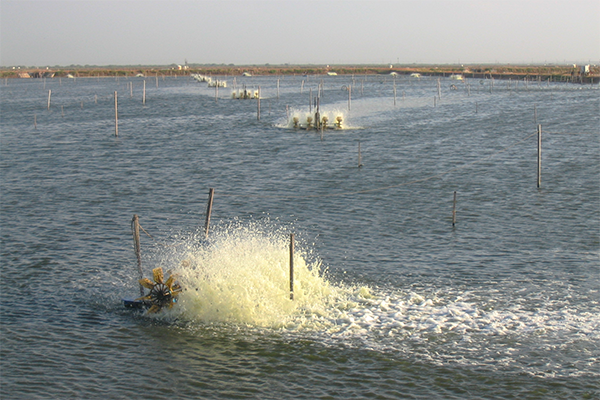
A study by A.P. Shinn and colleagues has provided the first empirical evidence that toxigenic Vibrio parahaemolyticus (VpAHPND) – the causative agent of acute hepatopancreatic necrosis disease (AHPND) – can be aerosolized from contaminated shrimp ponds and transmitted over distances via wind, posing a significant biosecurity risk for shrimp producers.
AHPND, caused by V. parahaemolyticus strains carrying toxin genes, leads to rapid hepatopancreas necrosis and high mortality in Pacific white shrimp (Penaeus vannamei). Known as Early Mortality Syndrome before the causative agent of the disease was identified, the pathogen was responsible for the loss of tens of billions of dollars from 2010 to 2016.
The authors conducted four controlled experimental trials using aeration to simulate pond conditions. In these setups, donor tanks were inoculated with VpAHPND, and aerosols were generated via paddlewheel aerators. Viable bacteria were captured on sentinel thiosulfate-citrate-bile salts-sucrose (TCBS) plates placed at increasing distances (up to 20 meters) and directions relative to the wind.
Results showed that VpAHPND-laden aerosols remained viable while airborne and could disseminate to receiver areas up to 20 meters directly, with extrapolation suggesting potential spread to ~73 meters. A 1.5-meter tarpaulin barrier reduced but did not prevent transmission, as colonies were detected up to 5.5 meters beyond it.
![Ad for [BSP]](https://www.globalseafood.org/wp-content/uploads/2025/07/BSP_B2B_2025_1050x125.jpg)
To test mitigation, the study evaluated protective measures: combining screens with two layers of 85 percent shade netting reduced bacterial spread by 20- to 30-fold compared to unprotected controls. Field validation on a commercial shrimp farm confirmed VpAHPND-laden aerosols around a positively infected pond using strategically placed TCBS plates.
The mechanical aerators play a key role in generating bioaerosols. The airborne transmission likely contributes to rapid disease spread between ponds, especially in open, wind-exposed systems. The results also highlight the limitations of current biosecurity practices and calls for improved airflow management and insect control in indoor or semi-enclosed shrimp culture systems.
Relevance of research findings to the industry
The global shrimp aquaculture industry produces more than 6 million tons of P. vannamei annually, and yet, continues to face massive economic losses from AHPND and other Vibrio-related diseases. Airborne transmission explains why outbreaks often occur synchronously across farms despite strict water and feed biosecurity, particularly in the high-density, open-pond systems prevalent in Asia and Latin America.
For farmers and operators, the study underscores the need to reevaluate farm layout and design: Place ponds farther apart, using windbreaks, or shift to indoor recirculating systems with controlled airflow to reduce cross-contamination risks. The demonstrated effectiveness of shade netting and screens offers practical, low-cost interventions that could potentially lower infection rates without major infrastructure changes.
The confirmation of aerosol spread also has implications for regulatory bodies and certification programs, which may need to incorporate airborne pathogen monitoring into biosecurity standards. Hatcheries and nurseries, where shrimp postlarvae are highly susceptible, stand to benefit most, as preventing early infections could improve survival rates. Overall, these insights support a shift toward proactive, multi-layered biosecurity strategies, potentially saving millions in losses and enhancing sustainability amid rising antibiotic resistance in Vibrio strains.
Perspectives
This proof-of-concept study marks a significant advancement in understanding VpAHPND epidemiology by confirming a previously under-appreciated transmission route. Future research should quantify real-world aerosol loads under varying wind speeds, humidity, and temperatures, and explore longer-distance spread or seasonal patterns. Integrating molecular tools (e.g., qPCR for toxin genes in aerosols) could enable rapid monitoring.
From a management perspective, authors suggest the industry should prioritize hybrid approaches: combining physical barriers with probiotics, bacteriophages or microbiome modulation to suppress Vibrio in source ponds. Indoor or covered systems may become more attractive in high-risk areas, though cost-benefit analyses are needed. Regulatory harmonization for aerosol-inclusive biosecurity guidelines could accelerate adoption.
Ultimately, recognizing airborne transmission as a key risk factor strengthens the case for integrated disease management, reducing reliance on antibiotics and supporting resilient, eco-friendly shrimp production. With climate change potentially increasing wind-driven spread, these findings urge timely innovation to safeguard global shrimp farming.
A review of the advantages and obstacles of internet of things (IoT) applications in aquaculture
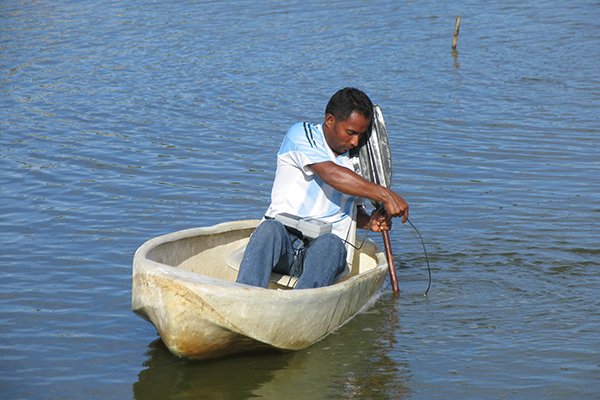
A systematic literature review by María Claudia Bonfante Rodríguez et al. analyzes 38 peer-reviewed articles from the Dimensions database to assess the role of the internet of things (IoT; it describes physical objects that are embedded with sensors, processing ability, software and other technologies that connect and exchange data with other online systems, devices and communication networks in the aquaculture value chain.
The study used a phased methodology: defining research questions on Industry 4.0 contributions (describing rapid technological advances in the 21st century); IoT architectures for water quality monitoring, and implementation challenges; searching with keywords; applying inclusion/exclusion criteria; evaluating quality; and synthesizing findings.
The results indicate that traditional manual monitoring of water quality is often inefficient, labor-intensive and prone to error, frequently leading to high mortality and environmental risks. IoT can address these issues by connecting sensors, networks and cloud platforms for real-time data collection and decision-making.
Various key IoT applications can focus on water quality monitoring (dissolved oxygen, temperature, pH, turbidity, salinity, nitrite), and a common four-layer IoT architecture can incorporate various layers:
- Perception layer – sensors and controllers with actuators like aerators, feeders and pumps.
- Network layer – wireless protocols (Wi-Fi, others).
- Platform layer – cloud storage and machine learning for predictions.
- Application layer – tools for early warnings, disease management and traceability.
The authors note that integrations with artificial intelligence (AI), computer vision (e.g., underwater and aerial cameras) and blockchain can enhance automation, behavior analysis of the organisms cultured and supply chain transparency. Benefits include precise and timely interventions to reduce mortality, optimize feeding/growth/yield, lower costs, minimize environmental impact and improve reproducibility and competitiveness.
Challenges are categorized into technical and socio-economic issues: limited device access/design; poor connectivity/transmission; data storage/analysis constraints; high energy consumption; sensor calibration problems; low-quality data requiring preprocessing; wireless sensor network limitations (battery life, bandwidth); security/privacy risks; high deployment costs; integration complexity; cultural resistance; and lack of tailored business models, especially excluding small-scale producers.
Overall, results indicate that the IoT presents a significant opportunity for growth in the sector. Nevertheless, several challenges remain, including limited access to and design of devices, inadequate connectivity for data transmission, data storage constraints, high energy consumption, sensor calibration issues and poor-quality sensory data that can impede effective decision-making.
The study concludes that addressing this technological gap will require the development of low-cost, yet highly efficient, hardware and software solutions tailored to the specific needs of the aquaculture industry.
Relevance of research findings to the industry
The global aquaculture industry is valued at more than U.S. $300 billion and growing rapidly to meet rising seafood demand amid climate and overfishing pressures. By cataloging proven IoT architectures, the authors have provided blueprints for operators to implement real-time monitoring, reducing fish losses from poor water quality (often 20–50 percent in unmanaged systems) and cutting operational costs through automation (e.g., smart feeders and aerators).
For large-scale farms, IoT integration with machine learning can support predictive analytics for disease outbreaks and optimal feeding, enhancing yields and profitability. Small- and medium-scale producers in developing regions (e.g., Latin America, Southeast Asia) can benefit most from low-cost components, though challenges like connectivity and costs can slow technology adoption. And the emphasis on blockchain for traceability aligns with consumer demands for sustainable, certified products and regulatory requirements.
The identification of barriers urges industry stakeholders – farmers, suppliers, and governments –to prioritize affordable hardware, training programs, and incentives. Certification bodies could incorporate IoT standards for sustainability audits. Overall, the review supports a shift toward “Aquaculture 4.0,” enhancing resilience, resource efficiency, and competitiveness in a sector facing environmental scrutiny.
Perspectives
IoT could be a cornerstone tool for sustainable aquaculture growth, particularly in meeting future protein needs without depleting wild stocks. Future research should expand beyond the data used to include recent integration of artificial intelligence (AI) and IoT (e.g., 5G, edge computing) and real-world pilots in underrepresented regions like Latin America.
Ultimately, addressing the barriers to greater IoT usage can democratize access, fostering inclusive adoption that supports food security, poverty reduction, and environmental stewardship. With targeted investments, IoT could transform aquaculture into a more resilient, data-driven industry, contributing significantly to global sustainability goals by 2030 and beyond.
Microalgae are a sustainable and multifunctional ingredient for eco-friendly aquafeeds
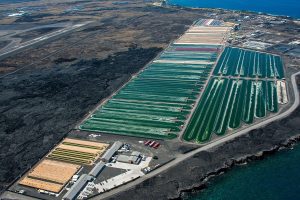
Vimala Balasubramaniam and colleagues recently examined the potential of microalgae as a sustainable, multifunctional ingredient in aquafeeds, synthesizing recent literature on microalgae’s nutritional profile, bioactive compounds, and practical applications across fish and shrimp farming, while addressing production and formulation challenges.
Microalgae (e.g., Spirulina, Chlorella, Nannochloropsis, Schizochytrium, Haematococcus) are excellent candidates for aquafeed ingredients due to their high protein content (30–70 percent), essential amino acids, lipids rich in omega-3 polyunsaturated fatty acids (PUFAs such as EPA and DHA), pigments (astaxanthin, lutein), vitamins, minerals and bioactive compounds (polysaccharides, antioxidants). These properties make them promising replacements or supplements for fishmeal, fish oil and various additives.
The review discusses several key applications, including:
- Protein source: Partial replacement of fishmeal (10–50 percent) in diets for species such as Atlantic salmon, rainbow trout, Nile tilapia, European seabass, and whiteleg shrimp, often with no negative impact on growth performance and sometimes improved feed conversion ratios (FCR).
- Lipid and omega-3 enrichment: Schizochytrium and Nannochloropsis increase fillet DHA/EPA content, enhancing the nutritional value of farmed seafood for human consumption.
- Pigmentation: Haematococcus pluvialis provides natural astaxanthin, improving skin and flesh color in salmonids and shrimp, often outperforming synthetic alternatives.
- Health benefits: Immunostimulatory effects (e.g., enhanced lysozyme activity, phagocytic capacity) and disease resistance are reported in multiple species when microalgae are included at 5–15 percent.
- Sustainability advantages: Microalgae can be cultivated using wastewater, CO₂ from industrial emissions, or on non-arable land, reducing pressure on wild fish stocks and arable land used for soy or terrestrial plant proteins.
Challenges include high production costs (currently U.S. $5–30 per kg for dry biomass), variable composition depending on strain and cultivation conditions, potential palatability issues at high inclusion levels (>20 percent), and the need for cell-wall disruption to improve nutrient bioavailability. The authors also note that drying and processing energy demands can offset some environmental benefits unless optimized (e.g., via solar drying or co-production of high-value extracts).
Relevance of research findings to the industry
With global aquaculture feed demand projected to exceed 70 million tons by 2030, microalgae offer a scalable, circular-economy solution.
For feed manufacturers, the review provides evidence-based inclusion levels and species-specific recommendations, enabling more precise formulation. Companies can market “microalgae-enriched” feeds as premium products with natural omega-3s, better pigmentation and health benefits, meeting consumer demand for sustainable and nutritious seafood.
For farmers, partial fishmeal replacement can stabilize feed costs over time as microalgae production scales and becomes cheaper. Shrimp and salmon producers, in particular, stand to gain from natural astaxanthin sources that improve market value without synthetic additives. The ability to grow microalgae using waste streams (e.g., aquaculture effluents) also opens opportunities for integrated multi-trophic aquaculture (IMTA) systems, reducing environmental footprints and generating additional revenue streams.
Overall, authors conclude that microalgae-based aquafeeds can be a transformative solution for aquafeeds, offering a nutrient-dense, sustainable, and versatile alternative that can help redefine the aquaculture landscape by reducing pressure on marine and terrestrial resources currently used, and contributing to a resilient global food system.
Study evaluates effects of dietary astaxanthin on farmed fish growth and feed utilization
Perspectives
Microalgae could become key to next-generation aquafeeds, but widespread adoption depends on overcoming economic and technical hurdles. Future research should focus on cost-reduction strategies (e.g., genetic engineering of high-yield strains, large-scale photobioreactors, or heterotrophic cultivation), standardization of biomass quality and long-term feeding trials at commercial scale.
Co-production models – extracting high-value compounds (astaxanthin, beta-carotene, phycocyanin) before using residual biomass as feed – could considerably improve economic viability. Integration with carbon capture and wastewater treatment systems may also attract other benefits, like policy support and carbon credits.
From an industry perspective, partnerships between microalgae producers, feed manufacturers, and aquaculture operators will be essential to scale supply chains. Authors speculate that if production costs can be reduced to $1–3/kg, microalgae could replace 20–40 percent of conventional marine ingredients by 2035, significantly lowering the ecological footprint of aquaculture and helping the sector meet sustainability targets. Their review underscores that microalgae are not just an alternative ingredient but a strategic asset for building a more resilient, climate-friendly and consumer-trusted aquaculture industry.
Now that you've reached the end of the article ...
… please consider supporting GSA’s mission to advance responsible seafood practices through education, advocacy and third-party assurances. The Advocate aims to document the evolution of responsible seafood practices and share the expansive knowledge of our vast network of contributors.
By becoming a Global Seafood Alliance member, you’re ensuring that all of the pre-competitive work we do through member benefits, resources and events can continue. Individual membership costs just $50 a year.
Not a GSA member? Join us.
Author
-

Editor Emeritus
Related Posts
Fisheries
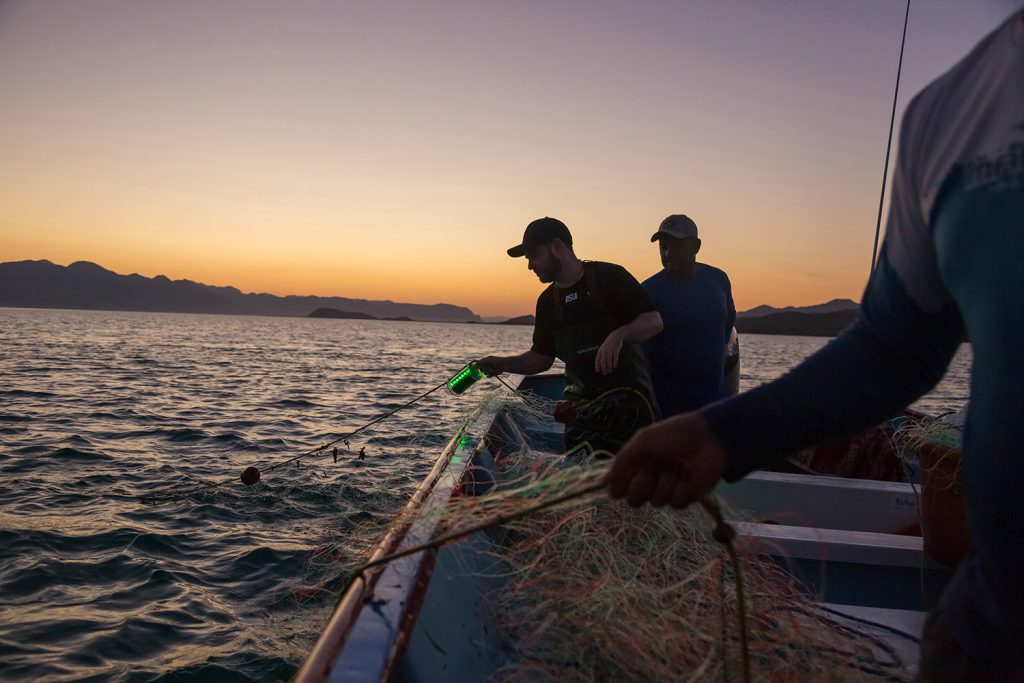
Can solar-powered net lights cut sea turtle bycatch without reducing target catch?
Solar-powered net lights cut sea turtle bycatch without reducing target catch, offering a practical, scalable fix for sustainable fisheries.
Intelligence
Do salmon lice from submerged cages produce larvae that swim deeper?
Is the depth preference for salmon lice larvae influenced by their environment? Management strategies may trigger evolutionary responses.
Intelligence
Can GIS-based proxy models estimate aquaculture production capacity?
GIS-based carrying-capacity evaluations can be dynamic decision-support tools providing insights for aquaculture spatial planning and management.
Fisheries
Study finds that acoustics are seldom considered when developing strategies to protect fish populations at risk from extinction
Can integrating fish sonifery, soundscapes and noise pollution considerations into policy improve management, conservation and recovery?