


Catch & Culture Review: Advancing climate-ready fishery management through near-term interventions

Study outlines actions to increase resilience and adaptability of fish stocks and fishing-dependent communities
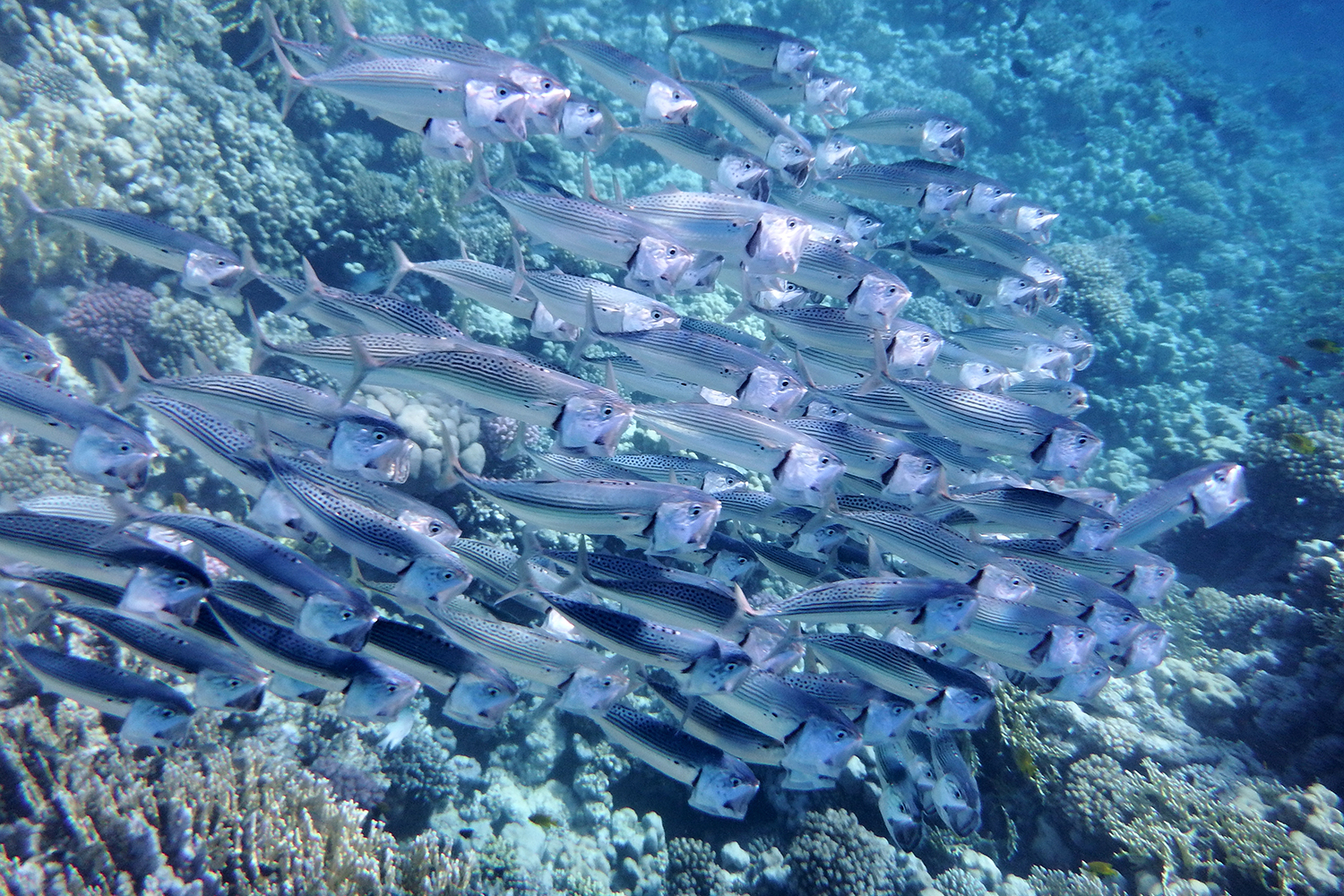
Climate change is profoundly affecting marine ecosystems, altering fish stock distributions, productivity, recruitment, and vulnerability through ocean warming, acidification, deoxygenation and shifting prey dynamics.
That is the conclusion of a policy and practice review by Michael Drexler and colleagues, who discuss how climate change demands that fishery managers simultaneously build long-term resilience in stocks and dependent communities while enhancing short-term management responsiveness to emerging conditions – all amid high uncertainty and the risk of maladaptation, or unintended negative outcomes from poorly designed responses.
The authors contend that acceleration of adaptation is essential, and near-term actions (implementable within 1–2 years) are critical even without complete data or advanced tools.
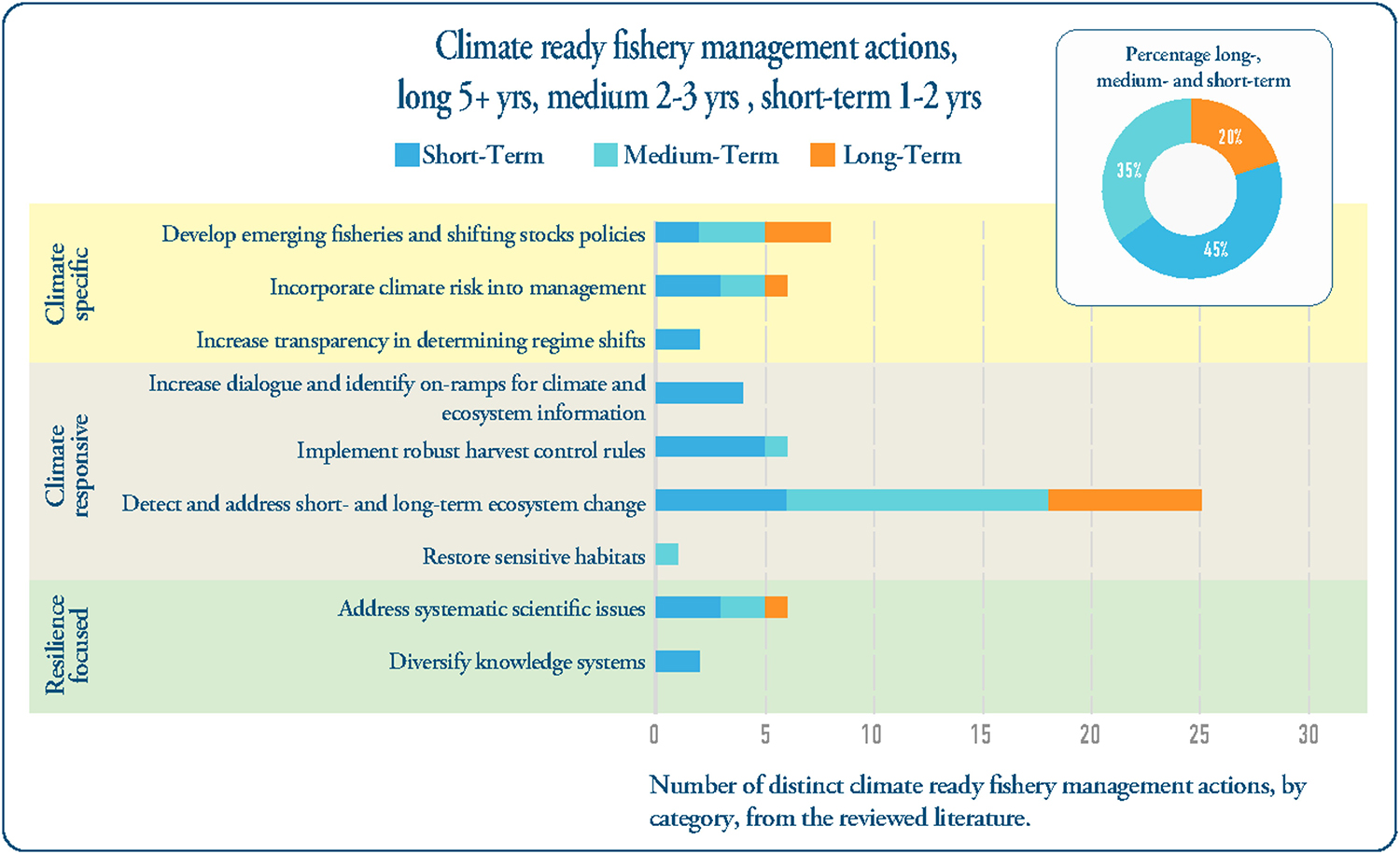
In this comprehensive review and synthesis of existing literature on climate-ready fishery management approaches, the authors compiled a portfolio of actions drawn from prior studies. From this synthesis, three main findings emerge:
![Ad for [BSP]](https://www.globalseafood.org/wp-content/uploads/2025/07/BSP_B2B_2025_1050x125.jpg)
- Approximately 45 percent of identified climate-ready management actions can be implemented in the short term (1–2 years).
- Nearly all such actions fit within existing fishery management and regulatory frameworks (no major legal overhauls required).
- While innovation is needed, managers should prioritize no- or low-maladaptation-risk options to avoid harm.
The paper structures priority near-term actions to increase resilience and adaptability of fish stocks and fishing-dependent communities. Key categories include:
- Enhancing monitoring and data integration (e.g., incorporating climate indicators into stock assessments, improving real-time environmental data collection).
- Adjusting reference points and harvest strategies (e.g., climate-informed biological reference points, precautionary buffers in catch limits).
- Promoting flexibility in management (e.g., dynamic area management, adaptive harvest control rules responsive to observed shifts).
- Building stakeholder capacity and governance (e.g., improved science-management-industry collaboration, scenario planning).
- Reducing non-climate stressors (e.g., minimizing bycatch, habitat impacts) to bolster overall resilience.
The review emphasizes proceeding cautiously to avoid maladaptation, such as overreliance on untested tools that could exacerbate inequities or stock declines. It highlights that many actions leverage current frameworks (e.g., U.S. Magnuson-Stevens Act or similar structures elsewhere) and can be piloted quickly, and stresses the value of incremental, low-risk steps to build momentum and evidence for longer-term transformations.
Relevance of research findings to the industry
The results are directly actionable for fishery managers, industry stakeholders, and policymakers in regions facing rapid climate-driven changes (e.g., poleward species shifts, productivity declines in temperate systems). By identifying that nearly half of climate-ready actions are feasible within 1-2 years using existing regulations, the paper reduces barriers to adoption – critical for industries like commercial fishing, where delayed responses can lead to overfishing, economic losses, or community disruptions. For example, integrating climate indicators into assessments or adopting precautionary buffers can help prevent stock collapses amid uncertainty, supporting sustainable quotas and maintaining market access (e.g., certifications).
The emphasis on low-maladaptation-risk approaches protects livelihoods by avoiding abrupt, high-risk changes that could harm fleets or processors. Overall, these near-term steps enhance operational resilience, align with ecosystem-based management goals, and position fisheries to better withstand ongoing climate pressures while sustaining economic contributions (e.g., food security, jobs in coastal areas).
Perspectives
This review underscores a pragmatic pathway for climate adaptation in fisheries: Prioritize feasible, low-risk actions now to build adaptive capacity rather than awaiting perfect models or data. It highlights the opportunity cost of inaction – delays could compound vulnerabilities as climate impacts accelerate – while cautioning against hasty innovations that risk maladaptation. Authors recommend that future efforts could focus on piloting these actions in diverse contexts (e.g., data-rich vs. data-poor fisheries, developed vs. developing regions) to generate empirical evidence and refine approaches.
Overall, this research promotes collaborative governance involving scientists, managers, industry, and communities to ensure equitable outcomes. As climate pressures intensify, such near-term harnessing of existing frameworks could serve as a model for other marine sectors (e.g., aquaculture, conservation), fostering a more responsive “climate-ready” paradigm that balances ecological sustainability with socioeconomic needs in an uncertain future.
Multi-decade trends in juvenile American lobster populations in nine Nova Scotia, Canada lobster fishing zones
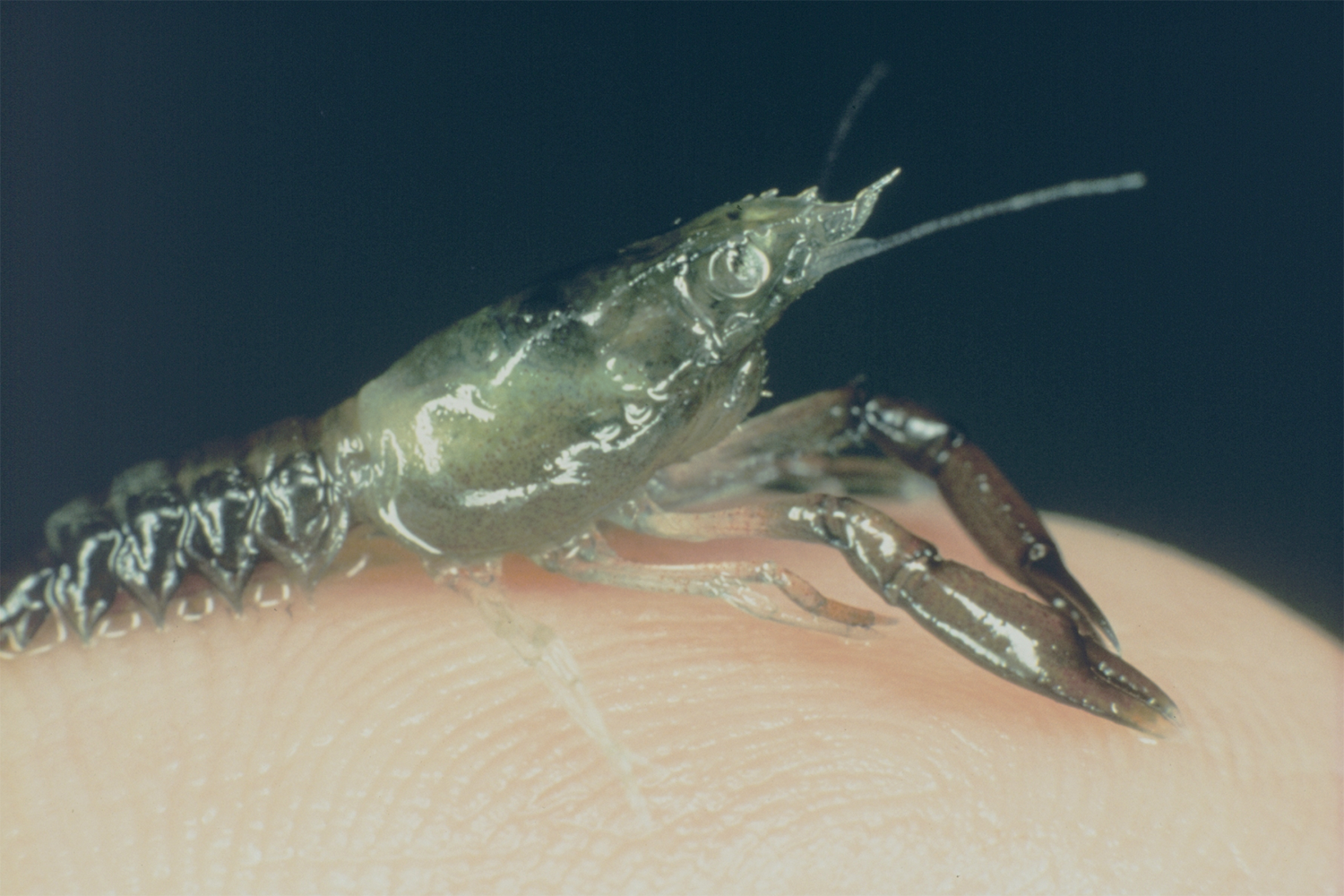
A recent study by Sitang Arkanit and colleagues presented a repeated cross-sectional analysis of fishery-independent data collected over approximately 20 years (2003–2023, with 2020 excluded due to COVID-19) to evaluate trends in juvenile American lobster (Homarus americanus) size distributions and abundance indicators across nine Lobster Fishing Areas in Nova Scotia.
This research draws on data from the Fishermen and Scientists Research Society (FSRS) Lobster Recruitment Project, where volunteer commercial fishermen deployed standardized ventless research traps at fixed coastal sites. These traps target sub-legal and early recruit-sized lobsters, providing a fishery-independent index less biased by commercial selectivity. Juvenile lobsters were defined as individuals with carapace length (CL) ≤60 mm, following established biological thresholds for pre-recruit stages. Analyses focused on lobsters >30 mm CL to account for potential escape through trap mesh.
The authors applied hierarchical mixed-effects modeling: linear mixed models for mean CL and generalized linear mixed models (logistic) for the probability of a lobster being juvenile. Fixed effects included year (as a continuous or categorical trend), month/season, LFA, depth category, sex and soak time, with random effects structured at multiple levels (vessel, segment-vessel, segment, sampling event, individual lobster) to handle clustering and repeated measures. Model diagnostics included residual checks, best linear unbiased predictors, and robust standard errors.
Key results showed an overall low juvenile proportion of 9.94 percent across 1,546,721 sampled lobsters (153,697 juveniles). The proportion declined markedly from ~14.62 percent in 2004 to ~7.14 percent in 2023, indicating a long-term reduction in recruitment signals. Trends varied substantially by LFA and were grouped by approximate mean sampling depth:
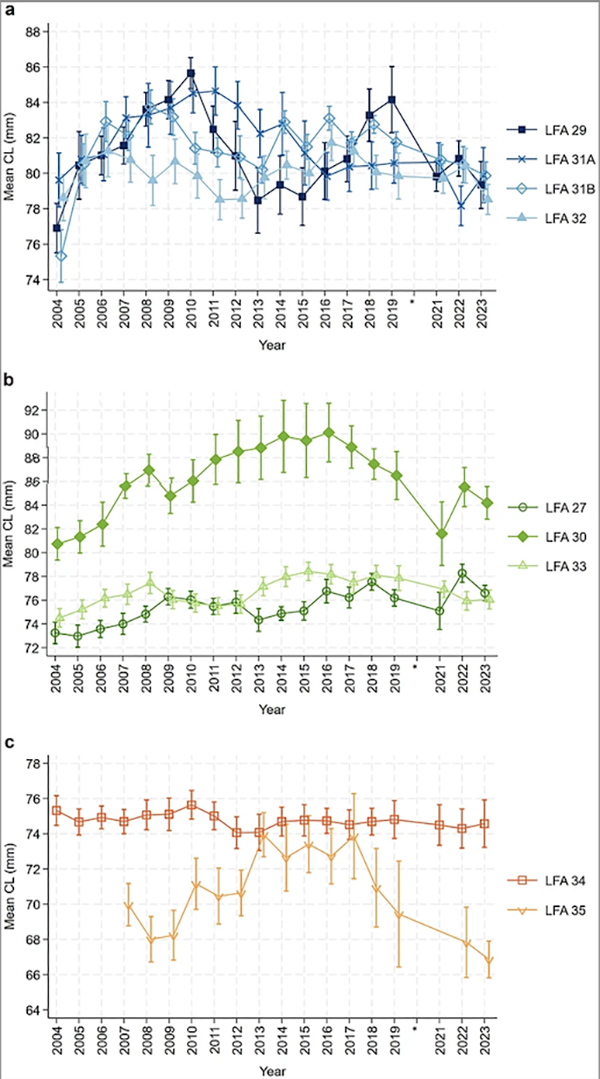
- Shallow LFAs (~6 meters: 29, 31A, 31B, 32) showed fluctuating mean CL and juvenile probabilities, suggesting relative stability or periodic recovery.
- Mid-depth LFAs (~8 meters: 27, 30, 33) exhibited increasing mean CL (fewer small individuals) alongside declining juvenile proportions, with pronounced drops in areas like Northeastern Cape Breton (LFAs 27, 30) and the South Shore (LFA 33).
- Deeper LFAs (~12 meters: 34, 35) were more stable overall; LFA 34 showed consistent patterns with limited decline, while LFA 35 displayed variability but recent upticks in juveniles since ~2018.
These spatial differences were visualized through heat maps of observation density and sampling effort, line plots of temporal trends with 95 percent confidence intervals, and model outputs highlighting significant LFA-by-year interactions.
Authors interpret declines in certain LFAs as potential signals of reduced recruitment driven by multiple stressors: intense fishing pressure reducing egg production (e.g., LFA 30 at only 2–7 percent of unfished levels), earlier maturity and size-at-maturity shifts linked to warming ocean temperatures, altered predation regimes following groundfish declines, habitat changes and possible density-dependent effects.
The stability in southwestern LFAs (especially LFA 34) is attributed to effective management measures (e.g., v-notching, minimum size compliance, trap limits), high historical recruitment and reduced groundfish predation pressure. Trap selectivity biases are acknowledged as potentially inflating mean CL estimates. In general, the study emphasizes that these pre-recruit trends provide an early warning complementing fishery-dependent assessments, highlighting the value of long-term volunteer-based monitoring.
Relevance of research findings to the industry
The Canadian lobster fishery, with Nova Scotia contributing a major share of landings (often >50 percent nationally) and generating billions in export value, depends heavily on sustained recruitment to maintain high catches seen in recent decades. The documented decline in juvenile proportions in several LFAs signals potential future risks to harvestable biomass if recruitment continues to weaken, possibly exacerbating vulnerability to overfishing or environmental shocks.
This supports calls for adaptive, area-specific management – such as enhanced V-notching enforcement, size-limit adjustments, or seasonal protections in declining areas – to protect spawning stock biomass and egg production. Conversely, relative stability in LFAs 34 and 35 validates current conservation tools (e.g., female releases, trap limits) and offers models for replication elsewhere. By providing pre-recruit indicators, the FSRS dataset reduces uncertainty in stock assessments, aiding DFO science advice and industry planning amid record landings and climate pressures.
Perspectives
Despite certain limitations and sources of uncertainty, this study presents a thorough examination of long-term patterns in mean carapace length (CL) and juvenile lobster population status spanning more than 20 years. Across the entire study period, the overall proportion of juvenile lobsters captured remained quite low at 9.94 percent, though this figure varied notably among the different Lobster Fishing Areas (LFAs), from a minimum of 3.21 percent to a maximum of 13.51 percent. When aggregated across all LFAs, the annual juvenile proportions showed a clear downward trajectory, dropping from 14.62 percent in 2004 to 7.14 percent in 2023, with the lowest recorded value of 5.65 percent occurring in 2022.
The results demonstrate that juvenile population dynamics exhibit greater dependence on individual LFAs than earlier studies had indicated. Since LFAs serve as the primary units for fisheries management, these findings underscore the resilience of juvenile populations in certain regions, implying that the implemented management strategies have proven successful there. At the same time, significant declines observed in other specific areas emphasize the importance of strengthening monitoring efforts to better evaluate the effectiveness of management practices and ensure consistent compliance with regulations.
Applying marine historical ecology for climate-resilient management of Alaska’s Pacific cod fishery
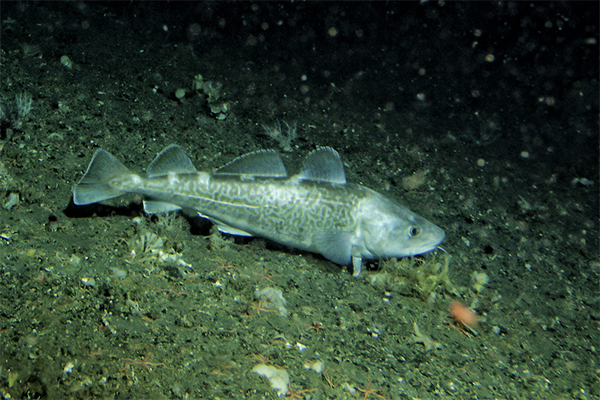
An interdisciplinary case study by Catherine F. West and colleagues proposed a marine historical ecology (MHE) framework to incorporate long-term ecological records into modern management of Alaska’s Pacific cod fishery, enhancing “climate readiness” amid rapid environmental change.
Pacific cod (Gadus macrocephalus) in the Gulf of Alaska and Bering Sea have experienced major recent shifts, including dramatic declines in abundance, poleward distribution changes, and recruitment variability linked to warming oceans, marine heatwaves (e.g., “the Blob”), and other climate stressors.
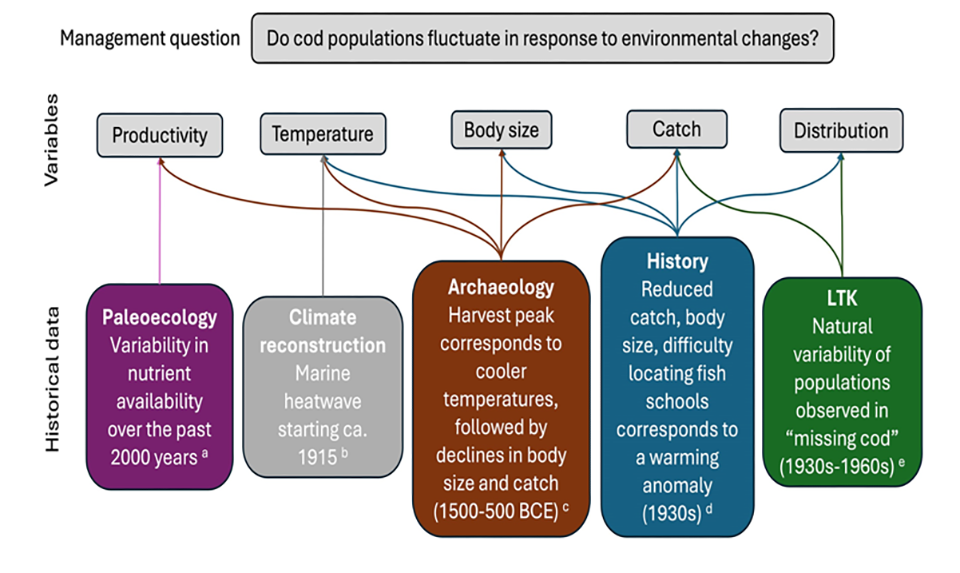
The authors argue that contemporary fisheries management often relies on short-term data (typically post-1970s or 1980s), which captures only recent variability and may underestimate baseline ecological ranges or resilience. MHE integrates archaeological, historical, paleoenvironmental, and local/traditional knowledge (LTK) sources to extend baselines backward centuries or millennia, revealing fuller ranges of natural variability, human influences, and species responses to past climate fluctuations.
Are marine heatwaves causing Pacific cod to reproduce and hatch earlier?
Key methods and data sources include:
- Archaeological fish remains (e.g., otoliths, bones from Indigenous middens in Kodiak Island and Aleutian regions) for reconstructing prehistoric abundance, size distributions, and habitat use.
- Historical records (e.g., Russian and early American commercial logs, explorer accounts from 18th–19th centuries).
- Paleoclimate proxies (e.g., otolith oxygen isotopes as paleothermometers to infer past temperatures and growth conditions).
- LTK and Indigenous knowledge from Alaska Native communities (e.g., Alutiiq/Unangan observations of cod behavior, seasonal patterns, and environmental cues).
Authors report that Pacific cod exhibited resilience to pre-industrial climate variability (e.g., Little Ice Age to Medieval Warm Period transitions), with evidence of larger fish sizes and broader distributions in some past periods compared to recent contractions. Recent declines are framed as potentially outside historical norms when viewed through extended baselines, suggesting intensified vulnerability under anthropogenic climate change.
The framework recommends integrating these long-term insights into management via:
- Expanded reference points and stock assessment models that account for historical variability.
- Scenario planning for climate adaptation (e.g., dynamic area closures, harvest control rules responsive to heatwave signals).
- Collaborative governance incorporating LTK to improve equity and local relevance.
Findings emphasize avoiding “shifting baseline syndrome” and using MHE to set more robust, climate-informed conservation targets, and advocate for this approach as a model for other climate-impacted fisheries, stressing interdisciplinary teams and data synthesis.
Relevance of research findings to the industry
Alaska’s Pacific cod fishery is a major economic driver (one of the largest U.S. groundfish fisheries, supporting trawlers, longliners, processors, and coastal communities in the Gulf of Alaska and Bering Sea). Recent climate-driven collapses (e.g., poor recruitment post-2010s heatwaves) have led to reduced quotas, fishery disasters declarations, and economic hardship.
By extending baselines via MHE, the study provides managers (e.g., North Pacific Fishery Management Council, NOAA Fisheries) with context to set precautionary yet realistic harvest levels, avoiding over-optimism from short baselines or undue conservatism.
Incorporating archaeological/LTK data can improve stock assessment accuracy, support adaptive strategies (e.g., climate-informed harvest rules), and enhance resilience against future heatwaves or shifts. For industry stakeholders, this offers a pathway to sustainable quotas, better predictability and justification for conservation measures that maintain access amid climate uncertainty – potentially aiding certification or disaster relief claims.
Perspectives
This research bridges archaeology, history, indigenous knowledge and modern fisheries science, demonstrating how “deep time” perspectives can inform urgent climate adaptation without requiring entirely new data streams. It highlights the risk of management based on recent, anomalous conditions and promotes inclusive, place-based approaches that respect Alaska Native expertise.
Future work could scale this framework (e.g., via otolith archives or expanded midden analyses) to other species or regions, test MHE inputs in management strategy evaluations, or address integration challenges (e.g., quantitative weighting of historical data). As climate pressures accelerate, such convergent research could foster more robust, equitable, and forward-looking fisheries governance, contributing to broader “climate-ready” paradigms in marine resource management globally.
Now that you've reached the end of the article ...
… please consider supporting GSA’s mission to advance responsible seafood practices through education, advocacy and third-party assurances. The Advocate aims to document the evolution of responsible seafood practices and share the expansive knowledge of our vast network of contributors.
By becoming a Global Seafood Alliance member, you’re ensuring that all of the pre-competitive work we do through member benefits, resources and events can continue. Individual membership costs just $50 a year.
Not a GSA member? Join us.
Author
-

Editor Emeritus
Related Posts

Responsibility
A wider view: Conservation aquaculture anchors coral reef restoration
Half a billion people depend on coral reefs for food, income, coastal protection and more. The need to protect and restore their biodiversity is urgent.
Responsibility
As ocean acidification threatens the shellfish industry, this California oyster farm is raising oysters resistant to climate change
Despite the dangers to shellfish posed by ocean acidification, a forward-thinking California oyster farm is producing oysters resistant to climate change.
Responsibility
Maine oyster farmer stares down climate change, learns to adapt
Bill Mook’s oyster farm is adapting to more frequent and intense rains, more acidic and warming seawater and other challenges that climate change brings.
Fisheries
Methods for quantifying gear density for fixed-gear commercial fisheries in the U.S. Atlantic
Demonstrating the use of the Fixed-Gear Fishery Layer for two marine spatial planning projects focused on conservation and wind energy.