


EU project tracks small-scale fishing vessels to improve fisheries management

The EM4SSF project is collecting GPS data from small-scale fishing vessels in five European countries to support fisheries management and marine planning
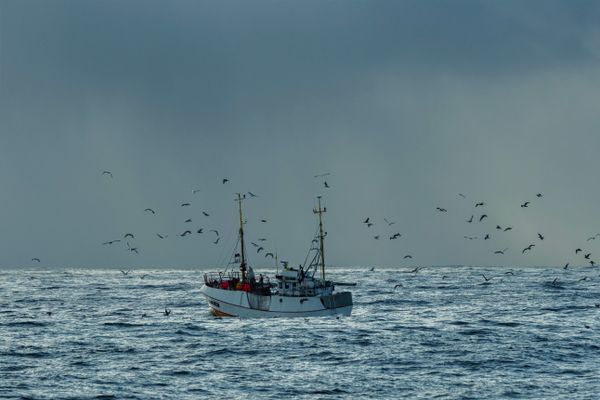
A European research project is collecting GPS tracking data from small-scale fishing vessels in five countries to improve fisheries management and better inform marine planning decisions.
The EM4SSF project, which is operating in Italy, Spain, Portugal, Greece and Denmark, aims to address longstanding gaps in information about where and how small-scale fisheries operate.
Small-scale fisheries account for approximately 85 percent of the European Union’s fishing fleet and support around 100,000 jobs. However, inconsistent vessel tracking and reporting have made it more difficult to manage fishing activity, protect marine biodiversity and account for small-scale fishers in maritime spatial planning.
“Small-scale fisheries are essential to coastal communities, yet they still remain largely invisible in the data,” said Nora Tassetti, the project’s scientific coordinator. “EM4SSF’s ultimate goal is to make them visible, not only on a map, but also in the decisions that shape the future of our seas.”

Coordinated by Italy’s National Research Council (CNR) and co-funded by the European Maritime, Fisheries and Aquaculture Fund (EMFAF), the project aims to establish a common framework for collecting, standardizing and analyzing vessel tracking data.
The research involves five pilot studies across the North Sea, Mediterranean and Atlantic, with GPS data collection planned for at least six months. As of October 2026, tracking systems were operating in all five locations.
Researchers are also developing shared data formats, quality control procedures and analysis tools that could be used across the EU.
A decade after anti-IUU fishing pact, Mediterranean and Black Sea overfishing drops
The project is working with local fishers, authorities, nongovernmental organizations and technology providers to develop and validate the tracking systems and data analysis methods. The collaboration is intended to ensure that the information is useful to fishing communities while addressing concerns about data access and confidentiality.
In Greece, the project is tracking the South Aegean Sea’s small-scale fishing fleet for the first time. A stakeholder meeting at Universitat Politècnica de Catalunya in Spain also helped incorporate agreements on data confidentiality, usability and trust into the project’s analysis design.
The resulting data and spatial maps are intended to support fisheries management and maritime spatial planning by providing a clearer picture of small-scale fishing activity.
Read more on the project website here.
Now that you've reached the end of the article ...
… please consider supporting GSA’s mission to advance responsible seafood practices through education, advocacy and third-party assurances. The Advocate aims to document the evolution of responsible seafood practices and share the expansive knowledge of our vast network of contributors.
By becoming a Global Seafood Alliance member, you’re ensuring that all of the pre-competitive work we do through member benefits, resources and events can continue. Individual membership costs just $50 a year.
Not a GSA member? Join us.
Author

Related Posts
Fisheries
Study of historic Baltic herring fishery collapse offers lessons for modern fisheries management
Study of a historic Baltic herring fishery collapse shows why fisheries management must consider environmental, economic and social pressures.

Fisheries
FAO opens Adriatic unit to strengthen fisheries management
The FAO has opened a new Adriatic Sea unit in Croatia to support science-based fisheries management and cooperation among six countries.
Fisheries
Tagged bigeye tuna recaptured after nearly a decade could help improve fisheries management
A tagged bigeye tuna recaptured after nearly 10 years is helping scientists refine growth estimates for fisheries management.

Fisheries
Does greater amberjack need a new fisheries management approach?
Study finds that greater amberjack in the Gulf of Mexico and South Atlantic may benefit from separate fisheries management approaches.