


‘I worked across every department.’ One woman’s journey within Thailand’s aquaculture sector

From fish health to farm leadership, Nam Sai Farms’ Jessica Kaye Turner discusses how culture shapes opportunities for women in Thailand’s aquaculture industry
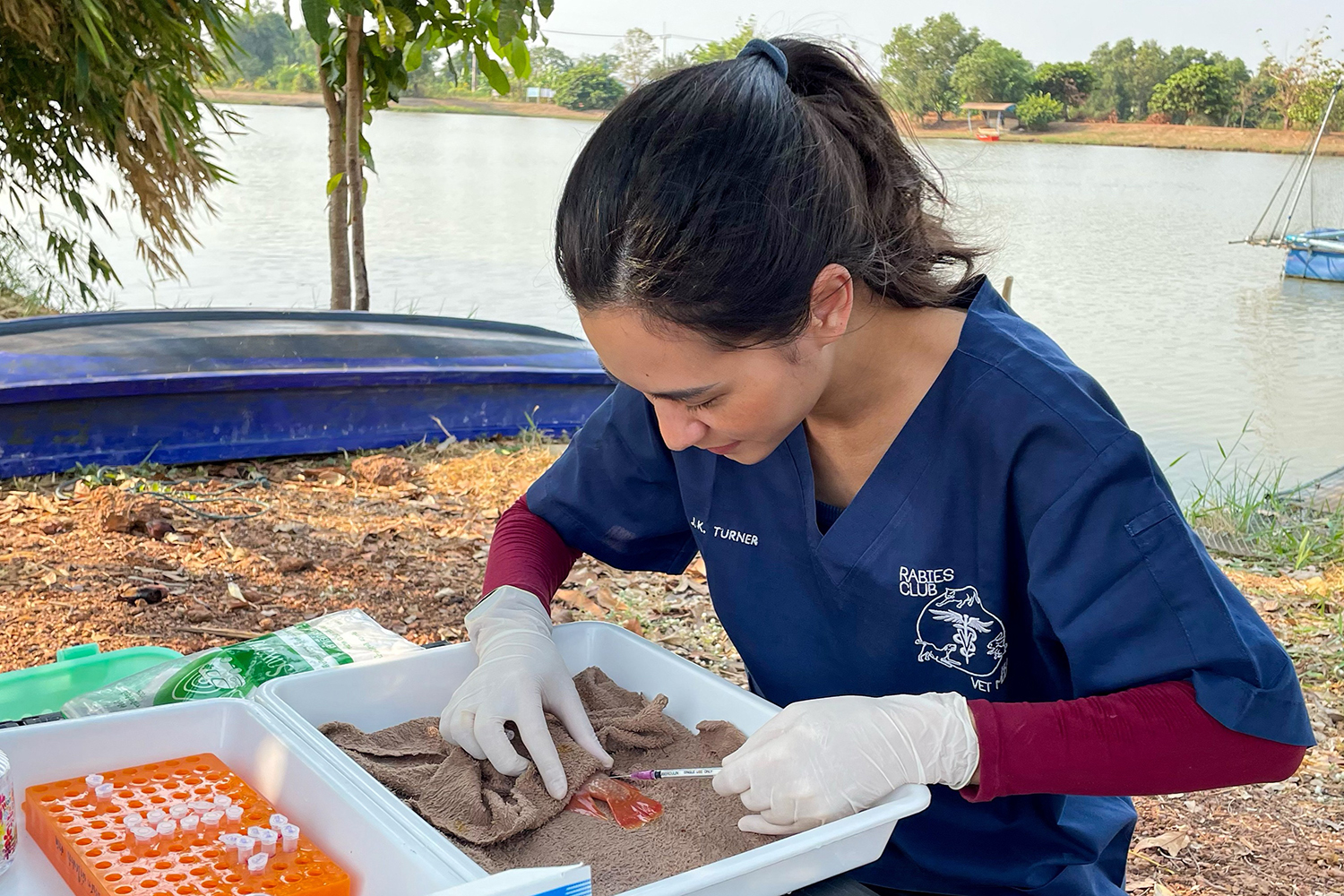
When Jessica Kaye Turner joined Nam Sai Farms six years ago, the aquatic veterinarian set out to learn the tilapia business from the ground up – quite literally.
At the Prachinburi-based tilapia breeding and hatchery operation, she worked across every department, including broodstock, hatchery, nursery and sales. The experience showed her how much skill and expertise are required for every role on the farm.
“For example, collecting eggs requires years of practice,” Turner told the Advocate. “Experienced staff can collect eggs from 300 to 400 fish in less than 15 minutes, but it took me more than 30 minutes to complete the same task after a month on the job. It gave me a real appreciation for the knowledge and experience our team has developed over many years.”
That willingness to learn across departments helped Turner move from hands-on production into fish health, research and development, and ultimately, farm leadership. Her career at Nam Sai Farms in Prachinburi also offers a window into the changing role of women in Thailand’s aquaculture industry.
![Ad for [membership]](https://www.globalseafood.org/wp-content/uploads/2025/07/membership_web2025_1050x125.gif)
The UN Food and Agriculture Organization (FAO) recognizes women as important agents of change in aquaculture, one of the fastest-growing sectors in global food systems. However, despite their significant contributions, women often face limited participation in decision-making processes, and their work is often categorized as informal, unpaid and unreported.
Still, women across the globe are finding innovative ways to expand their influence and contribute to the development of the sector. In Thailand, women’s participation in aquaculture is steadily increasing, supported by efforts from the country’s Department of Fisheries to promote gender equality and create more opportunities for women throughout the industry. Turner’s career is one example of that shift.
From fish health to managing people
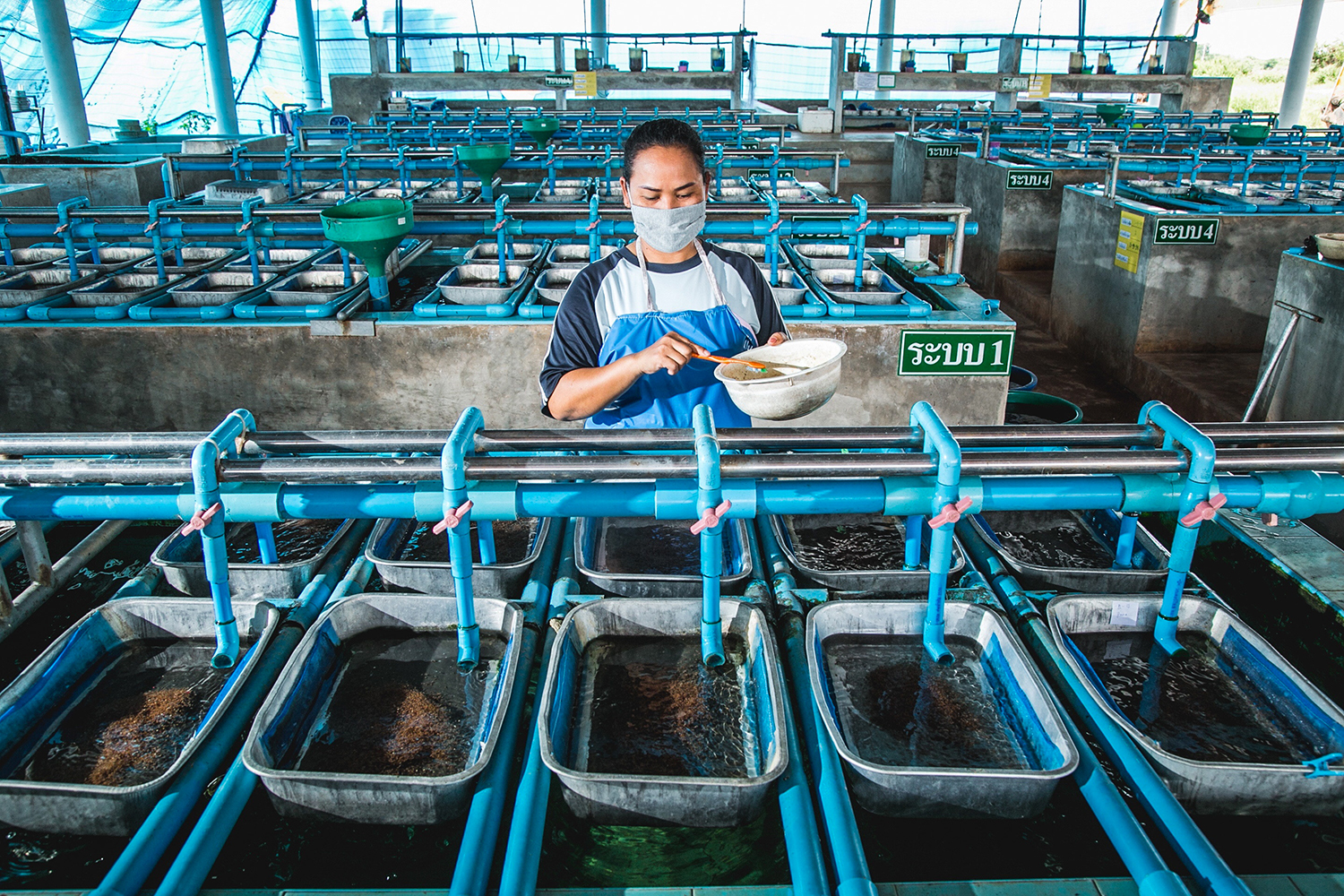
Working across every department gave Turner a deeper understanding of day-to-day operations and the challenges that producers face. By observing every stage of production, she gained insight into how diseases emerge, the role of environmental vectors in transmitting pathogens and the practical realities of farm management. That experience has enabled her to communicate more effectively with farm managers and make better informed decisions.
It has also shaped her perspective on aquatic animal health. Because fish farms operate in open environments, where insects, frogs and other wildlife can introduce pathogens, she believes it’s unrealistic to rely solely on biosecurity measures to prevent disease outbreaks. Instead, Nam Sai Farms focuses on breeding fish to be resilient and disease resistant.
After about two years, Turner realized that some of the biggest challenges in aquaculture extend beyond fish health and production. Farm management and people management, she found, often require a different set of skills. That realization motivated her to pursue an MBA on weekends while continuing to work full time.
“I learned a lot about raising fish and managing operations,” said Turner. “But the hardest part isn’t aquaculture. It’s managing people. We have staff from different backgrounds and education levels, so motivating everyone, supporting skill development and helping them reach their goals while running the farm is a huge challenge.”
Turner also had no formal background in finance, HR or accounting, so starting an MBA gave her a much better understanding of the business side.
“You can manage a farm, know fish health and raise great fish, but if you don’t know how to make a profit, it’s pointless,” she said.
Women’s changing role in Thai aquaculture
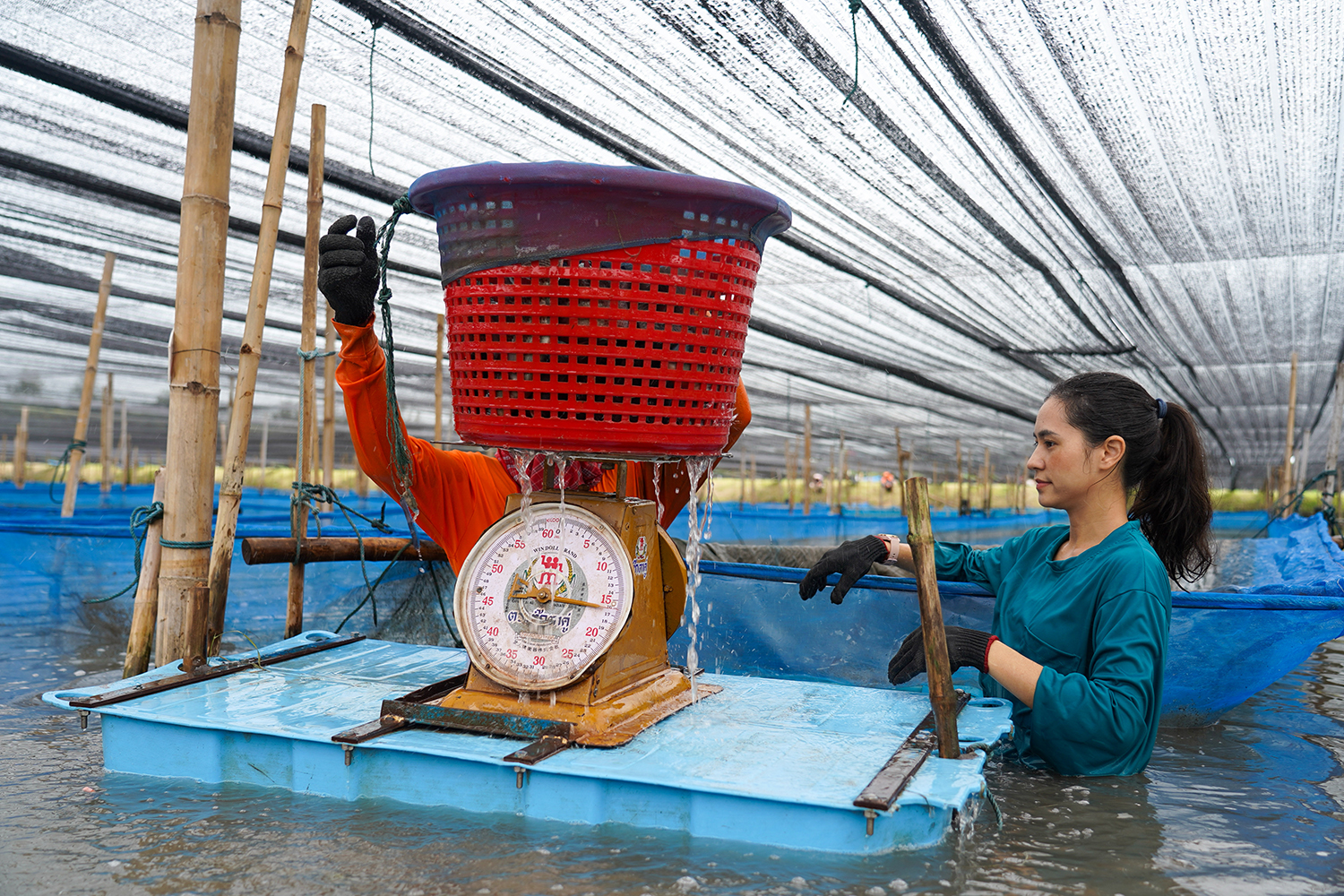
Turner’s progression from technical roles into leadership reflects broader changes taking place across Thailand’s aquaculture sector, where women are increasingly visible across the production chain. Women play important roles throughout the industry, from physical labor to technical and management roles. At Nam Sai Farms, approximately 45 percent of the company’s 220 labor positions are filled by women.
However, Turner believes that gender plays a relatively limited role in Thailand’s aquaculture sector, where women, men and LGBTQ individuals are generally accepted across the workforce. While opportunities are broadly equal, she noted that different individuals often bring different strengths to their roles.
“Women often have a more nurturing, caring nature,” she said. “When they work with fish, they tend to be more attentive and careful, while men often bring physical strength, which helps when managers work alongside staff on hands-on tasks. The caring nature of women can also help with people-related challenges. They communicate and solve problems effectively, which is just as important as physical strength on the farm.”
“Interestingly, in Thailand it has actually become more difficult to recruit male workers for farm labor,” she continued. “Even when we advertise specifically looking for men, many of the applicants are women. Farm work can be physically demanding, and traditionally many people associate these roles more with men. However, from my experience, women often demonstrate strong responsibility and attention to detail, which are extremely valuable qualities in aquaculture.”
Turner believes that the strongest workforce is one that combines a diversity of skills, experiences and perspectives. A balanced team of both men and women can distribute responsibilities more effectively and draw on a wider range of strengths, she said, while emphasizing that individual qualities ultimately matter far more than gender when it comes to performance and leadership.
“Aquaculture is fundamentally a gender-equal industry, where success depends on a person’s skills, attitude and abilities rather than their gender,” she said.
One challenge that continues to affect many women in aquaculture is balancing family responsibilities with professional ambitions. Turner acknowledges that combining a career in aquaculture with personal life can present difficulties, particularly for women who plan to have children. While remaining committed to their careers, many women also place significant value on being present for their families, she notes.
“Gender equality can bring new social challenges,” she said. “In Thailand, more and more women are pursuing higher education and careers, marrying later and having few children. I, too, think about having children in the future and how I can balance being a mother and a working woman with career ambitions. One thing businesses can do to support employees is to have someone else who can do your job as well. Looking at the bigger picture, I also think women need to keep learning, building their skills and creating more ability, so that they can be strong and effective in their roles.”
Despite these challenges, growing attention to gender equity in aquaculture reflects increasing awareness across the industry and creates opportunities for continued progress. Turner hopes that the sector will continue moving toward a future where hiring and advancement are determined primarily by skills and capability rather than gender.
As concerns over sex reversal grow, mixed-sex tilapia farming gets a second look
Culture shapes opportunity
One experience that particularly shaped Turner’s perspective came during a visit to a Nam Sai Farms joint-venture hatchery in Bangladesh.
“Our hatchery there has a 100 percent male workforce, and women are generally expected to remain at home to take care of children and other family responsibilities,” she said. “During my visit, I noticed people looking at me with curiosity because it was unusual for them to see a woman visiting and working with confidence in a fish farm environment, especially in a leadership or technical role.”
The experience highlighted how deeply cultural context can shape opportunities for women in aquaculture. For Turner, it also underscored the role that education and exposure can play in expanding those opportunities.
“It made me reflect deeply on how culture shapes opportunities for women,” she said. “In Thailand, although challenges exist, women generally have much more freedom to choose their own career paths and lifestyles. I hope that increased education and international exposure will gradually help create more opportunities and a broader acceptance of women in countries where traditional expectations are still very strong.”
Now that you've reached the end of the article ...
… please consider supporting GSA’s mission to advance responsible seafood practices through education, advocacy and third-party assurances. The Advocate aims to document the evolution of responsible seafood practices and share the expansive knowledge of our vast network of contributors.
By becoming a Global Seafood Alliance member, you’re ensuring that all of the pre-competitive work we do through member benefits, resources and events can continue. Individual membership costs just $50 a year.
Not a GSA member? Join us.
Author
-
Senior Writer Bonnie Waycott became interested in marine life after learning to snorkel on the Sea of Japan coast near her mother’s hometown. She specializes in aquaculture and fisheries with a particular focus on Japan, and has a keen interest in Tohoku’s aquaculture recovery following the 2011 Great East Japan Earthquake and Tsunami.
Related Posts

Innovation & Investment
‘Choices are limited when searching for alternatives to antibiotics’: How one veterinarian is employing bacteriophages to fight Vibriosis in shrimp farming
GOAL 2022: Bacteriophages can overcome antibiotics in aquaculture's fight against Vibriosis in shrimp farming, and Dr. C.R. Subhashini is leading that fight.
Responsibility
Raise the flag: South African veterinarian develops three-tiered tilapia-health system
South African veterinarian Gillian Taylor has developed a three-flag system to improve health management and biosecurity for the country’s tilapia farmers.
Responsibility
Mapping seafood workforce’s hidden gender gap: The challenge that ‘isn’t always visible’
A Maine researcher finds that a seafood industry workforce data gender gap leaves many women’s contributions uncounted.
Intelligence
Meet the woman who’s pioneering commercial kelp farming in New York
Former professional basketball player Sue Wicks launches New York’s first commercial kelp farm, spearheading a growing industry for the state.