


Study finds marine amphipods can upcycle crop waste into aquaculture feeds

Researchers found marine amphipods can convert agricultural waste into nutritious ingredient for aquaculture feeds
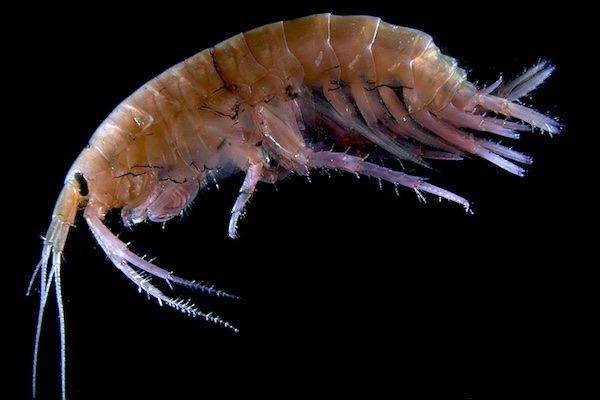
Researchers at the University of Aveiro have found that marine amphipods can convert agricultural byproducts into an aquafeed ingredient rich in essential omega-3 fatty acids, offering a potential way to reduce aquaculture’s reliance on nutrients derived from wild fish.
The findings, from the university’s PUFApods project, suggest the tiny crustaceans could provide a sustainable use for agricultural waste while producing biomass containing the omega-3 fatty acids eicosapentaenoic acid (EPA) and docosahexaenoic acid (DHA), which are important for farmed fish and subsequently for human health.
The researchers studied Gammarus locusta, a marine amphipod that naturally feeds on decaying organic matter. They found the animals maintained relevant levels of EPA and DHA across multiple generations, even when fed diets made entirely from vegetable byproducts such as peas and bell peppers.
To evaluate the approach over the long term, the team tracked three generations of amphipods raised on plant-based diets and compared them with amphipods fed conventional fish feed.

Amphipods fed pea-based diets reproduced at rates similar to those fed conventional feed, while those fed bell peppers reproduced less successfully and reached sexual maturity later. Even though the plant-based diets contained no EPA or DHA, the amphipods maintained relevant levels of the fatty acids, suggesting they can convert plant-based feed into a valuable source of marine omega-3s.
The researchers also found that the diet of parent amphipods influenced the fatty acid composition of their offspring, indicating that broodstock nutrition could affect the nutritional profile of future generations.
According to the research team, Gammarus locusta could be integrated into recirculating aquaculture systems, integrated multi-trophic aquaculture operations and traditional pond farms with minimal infrastructure changes. Because the animals can feed on agricultural by-products and other organic waste streams, they could provide farmers with an additional source of high-value biomass.
The researchers said the approach could help reduce pressure on wild fish stocks while supporting circular bioeconomy principles by converting agricultural waste into valuable aquaculture products.
Now that you've reached the end of the article ...
… please consider supporting GSA’s mission to advance responsible seafood practices through education, advocacy and third-party assurances. The Advocate aims to document the evolution of responsible seafood practices and share the expansive knowledge of our vast network of contributors.
By becoming a Global Seafood Alliance member, you’re ensuring that all of the pre-competitive work we do through member benefits, resources and events can continue. Individual membership costs just $50 a year.
Not a GSA member? Join us.
Author

Related Posts
Aquafeeds
Study examines the positive and negative environmental impacts of using fishmeal alternatives in aquafeeds
Study finds EU aquaculture’s shift from fishmeal to plant feed cut marine use but increased emissions, land and water impacts.
Aquafeeds
Canadian collaboration aims to expand canola for aquaculture feed
Joint project with Onda and the Canola Council of Canada aims to expand the use of canola as an ingredient for sustainable aquaculture feed.
Aquafeeds
Canadian salmon farmer to test algal oil in its feed
Cermaq Canada is testing a new salmon feed that incorporates Veramaris algal oil, aiming to reduce reliance on marine fish oils.
Aquafeeds
Novel omega-3-rich canola oil approved for salmon feed use in Norway
Novel omega-3-rich canola oil makes fish healthier and minimizes dark melanin spots in salmon fillets, Nofima scientists say.