


Can an electric-field device mitigate shark bycatch in commercial fisheries?

Tests show a zinc-and-graphite device can cut shark bycatch on longlines without reducing catches of tuna or swordfish
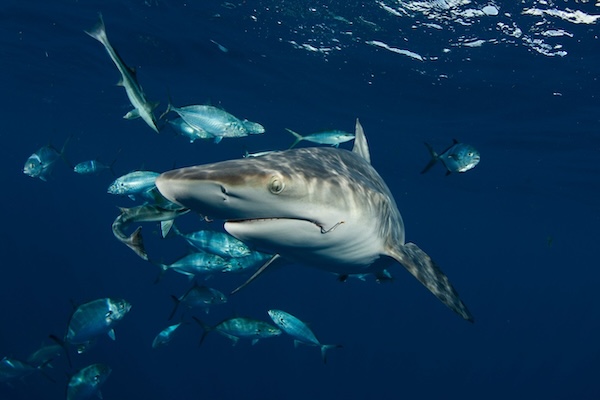
Researchers at Florida Atlantic University (FAU) have developed a new device aimed at reducing shark bycatch in longline fisheries, particularly for fleets targeting tuna and swordfish.
Sharks are frequently caught unintentionally on longlines, contributing to population declines and creating practical challenges for fishermen, including damaged gear, higher costs and safety risks during handling and release. Many efforts to limit shark bycatch have involved changes to fishing gear, but those measures often reduce catches of valuable target species as well.
The patent-pending device combines zinc and graphite to generate a small electric field in seawater that sharks can detect and avoid, while leaving target fish unaffected, researchers say.
“Sharks have an incredible ability to sense even the smallest electric fields, and our tests show that this new approach can be used to keep them away from baited hooks,” said Stephen Kajiura, senior author, inventor and professor at FAU. “At the same time, important target species like tuna and swordfish are completely unaffected.”
![Ad for [BSP]](https://www.globalseafood.org/wp-content/uploads/2025/07/BSP_B2B_2025_1050x125.jpg)
To test the device, researchers conducted field trials using longline gear in several locations, targeting both bottom-dwelling and open-water shark species. Demersal sharks were targeted off the Florida Panhandle and Massachusetts, while pelagic sharks were tested in the Gulf of America.
The results, published in the Canadian Journal of Fisheries and Aquatic Sciences, showed a substantial reduction in shark interactions. In Florida, longlines equipped with the zinc-and-graphite treatment reduced coastal shark catches by 62 to 70 percent compared with untreated hooks. The effect was strongest for Atlantic sharpnose and blacktip sharks, two of the most commonly encountered coastal species in the region.
The researchers found that the treatment did not reduce catches of commercially important fish. In preliminary pelagic trials, swordfish and yellowfin tuna were caught at similar or slightly higher rates on treated hooks, indicating the approach could reduce shark bycatch without affecting target species.
The study also addressed practical considerations for use at sea. Because the electric field is strongest near the hook, each line would need its own zinc-and-graphite unit. The zinc component wears down over time, but it is inexpensive and easy to replace.
“What makes this approach so exciting is its practicality – zinc and graphite are inexpensive, widely available and already familiar to fishers because zinc is commonly used to prevent corrosion on boats,” said Kajiura. “This means it could be adopted quickly and cost-effectively, providing a real solution to reduce shark bycatch while supporting sustainable fisheries.”
Millions of sharks are caught each year in fisheries targeting other species, and some estimates place the total in the tens of millions annually. In U.S. waters, sharks continue to be caught incidentally on longlines and other gear despite existing regulations. Because sharks reproduce slowly and have long life spans, sustained bycatch can drive populations toward sharp declines.
“Our approach could be scaled up to pelagic longline fisheries, where millions of sharks are caught as bycatch annually,” said Kajiura. “Even a 60 percent to 70 percent reduction in shark bycatch, like that observed in Florida demersal trials, could have a dramatic impact on global shark populations. The zinc/graphite treatment offers a practical, affordable and environmentally responsible tool for reducing shark bycatch while maintaining commercial catch rates.”
Now that you've reached the end of the article ...
… please consider supporting GSA’s mission to advance responsible seafood practices through education, advocacy and third-party assurances. The Advocate aims to document the evolution of responsible seafood practices and share the expansive knowledge of our vast network of contributors.
By becoming a Global Seafood Alliance member, you’re ensuring that all of the pre-competitive work we do through member benefits, resources and events can continue. Individual membership costs just $50 a year.
Not a GSA member? Join us.
Author

Related Posts
Fisheries
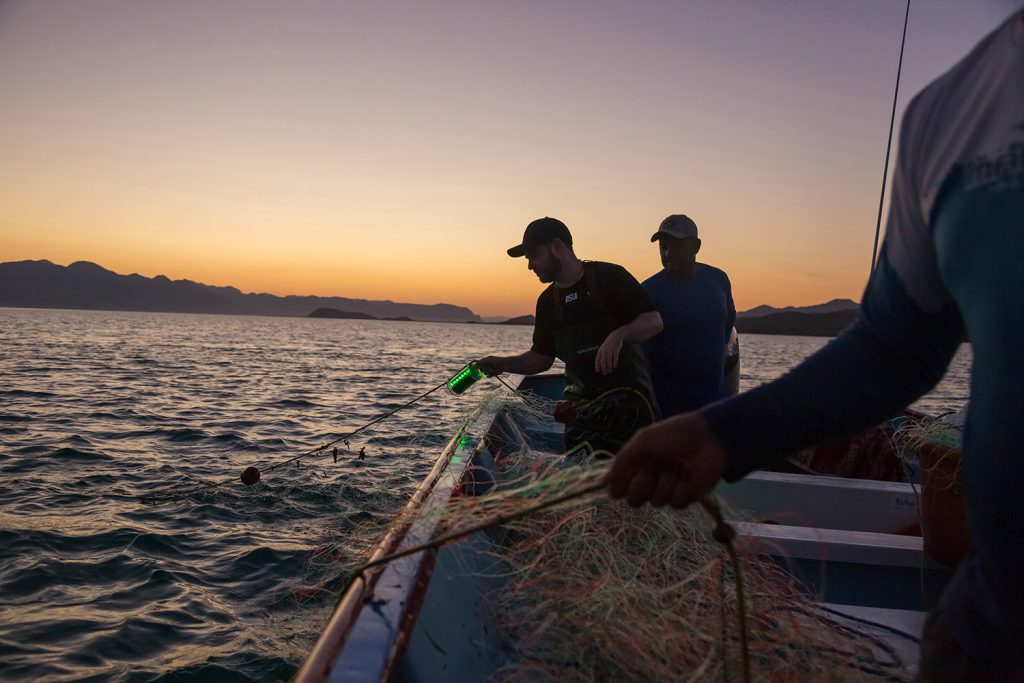
Can solar-powered net lights cut sea turtle bycatch without reducing target catch?
Solar-powered net lights cut sea turtle bycatch without reducing target catch, offering a practical, scalable fix for sustainable fisheries.

Fisheries
Bycatch release tools help boost crew safety and sustainability in tuna fisheries
New onboard tech helps tuna fisheries release bycatch with minimal handling, improving crew safety and advancing sustainability goals.

Fisheries
Study: Overfishing has halved shark and ray populations since 1970
Overfishing, bycatch, habitat loss and climate change have caused a 50 percent decline in shark and ray populations since 1970, study finds.

Fisheries
Ocean warming increases risk of salmon bycatch in Pacific hake fishery
Ocean warming and increased frequency of marine heatwaves could lead to higher Chinook salmon bycatch rates, scientists say.