


F3 launches global challenge to drive alternative aquaculture feed innovation

F3 launches $200k global competition to reward farms using alternative, fish-free aquaculture feeds
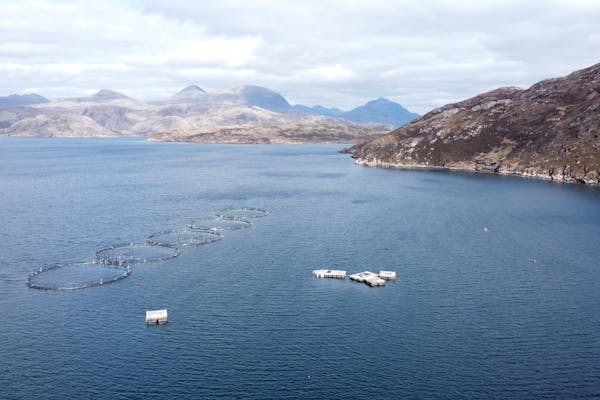
The Future of Fish Feed (F3) has announced the F3 Fish Farm Challenge, a global competition aimed at encouraging aquaculture producers to eliminate marine animal ingredients from their feeds.
The initiative will award $200,000 in cash prizes to four farms that demonstrate the greatest progress in raising carnivorous finfish on alternative, fish-free diets. The contest includes two tracks: a two-year competition for farms already using marine-animal–free feed, and a four-year competition for those developing new feed innovations or raising slower-growing species. Registration for both tracks opened Sept. 16.
“By incentivizing farms to innovate, the F3 Fish Farm Challenge reduces pressure on wild fish stocks while building a more resilient and sustainable farmed seafood system for the future,” said Kevin Fitzsimmons, F3 judge and professor at the University of Arizona. “Amid growing supply chain uncertainties, this contest offers an opportunity to future-proof farm operations by developing strong, sustainable feed contingency plans.”
The competition is open to farms producing carnivorous finfish on diets that contain no marine animal ingredients. Prize money will be awarded directly to the registered farms, though participants may collaborate with feed companies, ingredient suppliers or other partners. To qualify, farms must introduce diets free of marine animals no later than the fingerling stage, though earlier adoption is permitted.
![Ad for [membership]](https://www.globalseafood.org/wp-content/uploads/2025/07/membership_web2025_1050x125.gif)
The F3 Challenge is designed to cut the aquaculture industry’s dependence on wild-caught fish in feed. By encouraging farms to use new ingredients that provide the same nutrition, the competition pushes aquaculture toward a more stable, diverse and environmentally friendly future.
Aquaculture now supplies more than half of the world’s seafood, but many farmed species – including salmon – still depend on feeds made with wild-caught fishmeal, fish oil and krill. With many fisheries already at or beyond sustainable limits, reliance on these ingredients drives up costs and leaves producers vulnerable to supply shocks. The 2023 closure of the Peruvian anchoveta season underscored how quickly such disruptions can affect both production and global seafood security.
Full contest rules are available at: www.f3challenge.org
Now that you've reached the end of the article ...
… please consider supporting GSA’s mission to advance responsible seafood practices through education, advocacy and third-party assurances. The Advocate aims to document the evolution of responsible seafood practices and share the expansive knowledge of our vast network of contributors.
By becoming a Global Seafood Alliance member, you’re ensuring that all of the pre-competitive work we do through member benefits, resources and events can continue. Individual membership costs just $50 a year.
Not a GSA member? Join us.
Author

Related Posts
Aquafeeds
BioMar and Innovafeed to introduce insect protein to Ecuador’s shrimp feed industry
BioMar, Innovafeed and Auchan have announced the large-scale integration of insect protein into commercial shrimp feed in Ecuador.
Aquafeeds
Canadian salmon farmer to test algal oil in its feed
Cermaq Canada is testing a new salmon feed that incorporates Veramaris algal oil, aiming to reduce reliance on marine fish oils.
Aquafeeds
China approves the use of Calysta’s alternative protein in aquaculture feeds
Calysta has been approved by China’s Ministry of Agriculture and Rural Affairs to use its FeedKind® protein in fish and shrimp feeds.
Aquafeeds
Soy helped build aquaculture into a global force. How far can it take it?
Soy has fueled the growth of aquaculture, but environmental and social concerns for some producing areas are prompting some fish farmers to take stock.