


‘Here to stay and evolving fast’: How GreenFish’s AI-powered fish-forecasting tech is modernizing commercial fisheries

GreenFish forecasts optimal fishing locations up to eight days in advance – cutting costs and driving smarter decisions for commercial fisheries
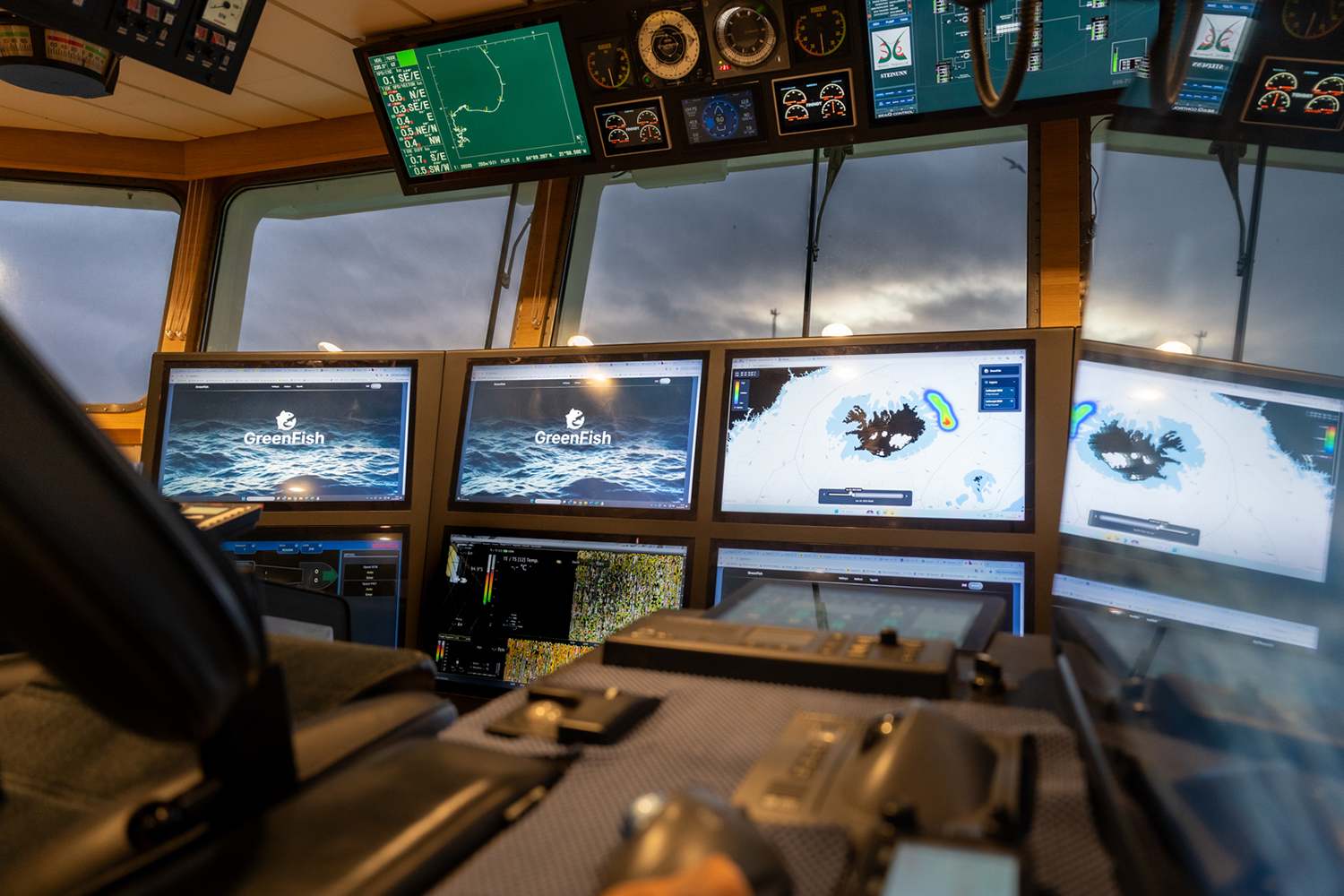
As an industry, commercial fishing doesn’t exactly scream “high-tech.” As one of the world’s oldest professions, it’s often, if sometimes unfairly, branded as old-fashioned or relying on outdated systems.
But for Sveinn Sigurður Jóhannesson, CEO of Icelandic artificial intelligence (AI) firm GreenFish, remedying the lack of technological development in the commercial fishing industry was an idea that haunted him for a long time.
“While conducting interviews for my bachelor’s thesis – Innovation with AI in Fisheries – it dawned on me that part of the fishing industry had been almost completely left behind in development and innovation,” Jóhannesson told the Advocate. “We have seen huge innovations in ships, engines and processing, but little to no development in tools that help fishers decide where to send their vessels and where to catch their fish.”
That realization led Jóhannesson to establish GreenFish in 2023, an AI research and deployment company developing next generation tools for the fishing industry. By analyzing millions of historical fishing logs alongside environmental data, the company develops tools tailored to fishers’ operational needs.
![Ad for [membership]](https://www.globalseafood.org/wp-content/uploads/2025/07/membership_web2025_1050x125.gif)
“These make predictions with actionable insights on a range of variables, enhancing decision-making and improving overall efficiency,” said Jóhannesson.
GreenFish combines AI, big data and satellite information – including decades of historical catch logs and environmental forecasts from the European Space Agency and NASA – to generate predictive models that help pinpoint optimal fishing locations, with forecasts extending up to eight days. In March 2025, the company won the international Seafood Innovation Award at the North Atlantic Seafood Forum in Bergen for its AI model, which provides fishermen with location-based predictions on where fish are most likely to be found.
Artificial intelligence is already helping improve fisheries, but the trick is in training the tech
Powered by supercomputing, the GreenFish model forecasts fishing grounds across all ocean zones for major pelagic and demersal species from cod and tuna to sardines and mackerel. It does this with a minimum of 75 percent accuracy to a recorded high of up to 92 percent. Beyond location, the model also estimates the fish quality, quantity and size, helping fishermen identify target areas that offer the highest possible value per catch – all within the same eight-day forecast window.
GreenFish draws on data from fisheries and oceanographic conditions to differentiate and make precise predictions. Jóhannesson and his team process and analyze vast datasets for each species, determining factors such as location, migratory patterns and behavioral changes aligned with shifting environmental variables.
Their model then learns about each species, including the environmental variables that affect them, how and over what timeframes. This enables it to forecast future behavior and likely ocean locations, while prioritizing the data that could deliver the most impact to fishers at a particular time. Designed for accessibility, the GreenFish software works on computers, tablets and smartphones, delivering critical insights whenever and wherever they’re needed.
“We began with prediction models for fishing locations to minimize fisher’s time at sea and help them reduce fuel and carbon emissions,” said Jóhannesson. “Then we developed catch volumes, quality and sizing prediction models. Our model also includes bycatch predictions so that areas with possible high bycatch levels can be avoided. One significant challenge for fishers today is the constant changes in the marine environment and the impacts on fish behavior. AI models like ours can play a crucial role by constantly re-adjusting to these changes and helping fishermen make decisions.”
According to Jóhannesson, the GreenFish model has the potential to significantly reduce the time and resources spent searching for fish – minimizing unnecessary travel, cutting operational and fuel costs and lowering carbon emissions. In turn, this could result in a smaller carbon footprint, and ultimately, more responsible, data-driven fishing practices.
By improving precision, the model also helps fisheries comply with sustainability regulations by minimizing bycatch and discards while protecting fish populations. Backed by endorsements from the Icelandic Ministry for the Environment, Energy, and Climate and the Marine Research Institute of Iceland, GreenFish is gaining recognition for its value – from improved efficiency and productivity to enhanced decision-making.
“The historical catch logs, environmental forecasts and other information that we gather and analyze are based on fishers’ knowledge and past experiences at sea,” said Jóhannesson. “We worked closely with the fishing industry while designing the model, and fishers understand that we are suggesting potential fishing locations rather than tell them where they should fish. They have their own knowledge and experience that they have accumulated over many years, and combining these with technology gives them huge advantages. AI can significantly change the way they interact with the world’s oceans.”
The AI tool that aims to make bottom trawling smarter and prevent bycatch and discards
Looking ahead, Jóhannesson envisions AI-powered tools like the GreenFish becoming standard equipment on all fishing vessels. With AI already integrated into various aspects of the fishing industry – from fisheries management and sustainable practices to research and safety on fishing vessels – Jóhannesson sees its potential to steer the sector toward a future where fish are harvested responsibly and conscientiously. To support that vision, he and his team are fast expanding and building on their AI model infrastructure to cover more fish species and ensure that more users can enjoy the same benefits and value proposition as their current customers.
“AI has already reached the fishing industry. It’s here to stay and evolving fast,” said Jóhannesson. “With climate change influencing the ocean and fishery patterns, the industry’s future lies in innovative technology and innovation. Our model is a hub of knowledge and a tool of responsibility that improves fishers’ understanding of the ocean and different species of fish, and enables them to make the right decisions.”
Winning the Seafood Innovation award was “a great honor” and “recognition of the hard work” put into building GreenFish, added Jóhannesson.
“We’ll use the support from the award to expand into new markets, continue developing innovative solutions that are tailored to fishing needs and make measurable impacts on the fishing sector,” he said.
Now that you've reached the end of the article ...
… please consider supporting GSA’s mission to advance responsible seafood practices through education, advocacy and third-party assurances. The Advocate aims to document the evolution of responsible seafood practices and share the expansive knowledge of our vast network of contributors.
By becoming a Global Seafood Alliance member, you’re ensuring that all of the pre-competitive work we do through member benefits, resources and events can continue. Individual membership costs just $50 a year.
Not a GSA member? Join us.
Author
-

Correspondent Bonnie Waycott became interested in marine life after learning to snorkel on the Sea of Japan coast near her mother’s hometown. She specializes in aquaculture and fisheries with a particular focus on Japan, and has a keen interest in Tohoku’s aquaculture recovery following the 2011 Great East Japan Earthquake and Tsunami.
Related Posts

Intelligence
AI is becoming an ‘integral part’ of fisheries management and seafood processing
Artificial intelligence (AI) is playing a larger role in seafood, as data is at the heart of the so-called fourth industrial revolution.
Fisheries
Artificial intelligence algorithm from WCS is the first to correctly estimate fish stocks
Researchers created an artificial intelligence model that has successfully estimated fish stocks with 85 percent accuracy in trials.
Innovation & Investment
‘We have 15 years to fix this planet’: Blue Food Innovation Summit explores potential of restorative aquaculture – and the challenges to scaling
At the Blue Food Innovation Summit, discussions centered on restorative aquaculture’s potential and financing the ocean’s capabilities.
Fisheries
‘A world down below’ – Deeper fishing insights lead to better tools for bycatch reduction
High-tech bycatch reduction devices – data analytics, cameras and sensors – are in play but SafetyNet Technologies says the secret is collaboration.