


Study finds that acoustics are seldom considered when developing strategies to protect fish populations at risk from extinction

Results indicate that 29 imperiled fish species in Canada produce sound for communication, and their status and recovery documents omit acoustics or noise impacts
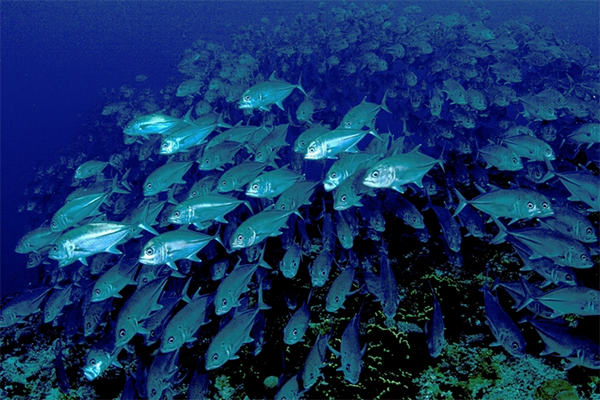
The results of research by scientists affiliated with several universities in Canada and the U.S. show that although over a thousand fish species are known to use sound to communicate, attract mates, avoid predators (using hums, grunts, clicks, and bubbles) and obtain information about their habitats quality – all of which can be negatively impacted by noises caused by humans – fish acoustics are rarely considered when developing strategies to protect fish populations at risk from extinction.
The study – authored by Drs. Kiara R. Kattler (Simon Fraser University, and University of Alberta, Canada); Audrey Looby (University of Victoria, Canada; and University of Florida, USA); Isabelle M. Côté (Simon Fraser University, Canada); and Kieran D. Cox (Simon Fraser University, and University of Victoria, Canada) – discusses research that examined the extent to which acoustics have been considered in recommendations for listings by the Committee on the Status of Endangered Wildlife in Canada (COSEWIC) and subsequent action plans following listings under the Species at Risk Act (SARA).
“Our study highlights a major gap in how we protect at-risk fish species by overlooking the role of sound. Many fish rely on acoustic communication to survive and reproduce, yet noise pollution and soundscapes are rarely considered in conservation planning in Canada. Integrating acoustics into recovery strategies is a necessary step to better protect these vulnerable populations,” corresponding author Dr. Kattler told the Advocate.
Authors examined the extent to which strategies for conserving fishes at risk in Canada have considered acoustics. They reviewed COSEWIC assessments as well as SARA Recovery Strategies and Action Plans of all assessed freshwater and marine fishes and established which fish species are actively soniferous using a global database. Authors then examined whether assessments of these actively soniferous fishes considered the species’ sound production, the soundscape of their habitats, or noise pollution as a threat to population recovery. And they provided evidence that this information exists for actively soniferous at-risk fishes, suggesting that integrating it into conservation planning would help to provide better protection to these populations.

Sound is an integral constituent of underwater environments, with wide-ranging implications for species and their habitats. Our understanding of how species use acoustics to discover and broadcast information has expanded in recent decades, with sound-producing (soniferous) mammals, invertebrates, and fishes known to use sound to communicate with conspecifics (other individuals of the same species. The sounds that species produce actively are different from those produced passively from activities like feeding; although both are ecologically pertinent, species generate active sounds to exchange information between con- and heterospecifics (individuals of a different species).
More than 1,000 fish species globally have been classified as actively or passively soniferous, despite less than 4 percent of species having been examined for sound production, and evolving estimates show that a substantial number of fish species are likely soniferous but these have not been examined yet. The ecological implications of noise – sounds of man-made origin – are well established.
In some instances, concern over noise impacts has resulted in policies that consider underwater noise a threat. However, these strategies are commonly used as guiding documents but do not have enforceable regulations. Consequently, the most viable course of action to mitigate the impacts of noise pollution is to include considerations of noise and the use of sound by species in conservation strategies.
Ecoacoustics is an emerging field of research, and global databases on fish sound production have emerged only recently. However, research recentness or confidence cannot fully explain the lack of consideration given to ecoacoustics in recent policy documents. Integrating acoustics into conservation assessments would also incorporate aspects of fish ecology that are currently lacking. The interaction between a species’ sound production, its habitat’s natural soundscape, and noise pollution can influence individuals and populations.
Authors determined soundscapes, sound production, and noise pollution have seldom been considered in documents assessing stressors to at-risk actively soniferous fishes in Canada. After examining all COSEWIC assessments as well as SARA Recovery Strategies and Action Plans for fishes in Canada, they found only two assessments of actively soniferous species that considered soundscapes, sound production, or noise pollution, neither of which considered all three aspects simultaneously. Moreover, noise pollution was listed as a potential threat in the assessments of 9 percent of other fish species, of which 69 are likely soniferous.
Effects of anthropogenic noise on prey quality of the forage fish Pacific sand lance
“We find that acoustics are rarely considered when developing strategies to safeguard at-risk fish populations from extinction. Integrating fish sonifery, soundscapes, and noise pollution considerations into Canadian policies will improve species management, conservation, and recovery efforts,” stated the authors.
All the documents considered various non-acoustic man-made threats to the recovery of species, with other pollutants and perturbations like waves created by boats, commonly considered. Over the past two decades, Canadian policy has not adequately protected soundscapes from noise pollution where actively soniferous fishes at risk live. The limited consideration of soundscapes, fish sounds and noise pollution in fish species management is reflected by other governing bodies globally.
The challenges associated with implementing management plans that mitigate the ecological effects of noise pollution will vary depending on which environment the at-risk fish species occupies. Noise pollution in marine ecosystems commonly results from industrial activities, commercial shipping, military activity, and resource extraction, requiring coordination between several government agencies to mitigate impacts. Noise pollution in brackish and freshwater ecosystems, in contrast, is mainly due to local industries, urban infrastructure, and recreational activities, requiring considerations of municipal, provincial, and federal regulations. However, in all cases, species-specific consideration would help navigate the challenges associated with these different environments.
“The protection of the soundscape and communication spaces for charismatic marine mammals is well established; indeed, it has been transformative for the conservation of the Southern Resident Killer Whale and other cetaceans. There is ample evidence to show that sound and noise are as crucial for fishes as they are for charismatic marine megafauna. As such, the importance of acoustics transcends taxonomic boundaries as sound serves similar functions across taxa, its effectiveness in communication can be influenced by disruptions to the soundscape, and all soniferous species should be afforded equal protection. Now is the time to integrate this understanding into the protection of fish species at risk,” concluded the authors.
Now that you've reached the end of the article ...
… please consider supporting GSA’s mission to advance responsible seafood practices through education, advocacy and third-party assurances. The Advocate aims to document the evolution of responsible seafood practices and share the expansive knowledge of our vast network of contributors.
By becoming a Global Seafood Alliance member, you’re ensuring that all of the pre-competitive work we do through member benefits, resources and events can continue. Individual membership costs just $50 a year.
Not a GSA member? Join us.
Author
-

Editor Emeritus
Related Posts
Fisheries
Can electronic tags fill knowledge gaps between offshore wind and fisheries?
A first-of-its-kind study will explore fish behavior in response to offshore wind turbines and construction activities in the Atlantic Ocean.
Fisheries
Using high-resolution acoustic data to explore fish interactions with offshore platforms
The environmental impact of offshore structures may extend further than previously thought and should be considered for pending decisions.
Fisheries
Comparing imaging sonar and optical camera technologies for estimating fish densities at artificial reefs
Study demonstrates the value of imaging sonar for quantifying fish communities, with limitations and recommendations for deployment in future surveys.
Responsibility
The sounds of settlement: Marine acoustics could revitalize ecosystems and enhance fisheries and aquaculture management
Researchers consider the implications of underwater acoustics in restoring marine ecosystems, rebuilding biodiversity and improving fisheries.