Responsibility
Floating skimmers improve water quality in tanks, ponds
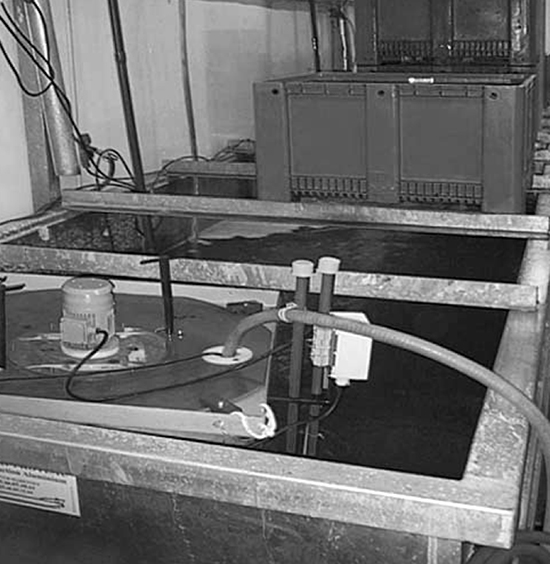
In aquaculture, foam fractionation involves the use of a protein skimmer to remove dissolved organic compounds from aquaculture systems.


Responsibility
Probiotics used as bottom soil and water quality enhancers are primarily cultures of living bacteria, enzyme preparations, or the two combined.
Responsibility
In aquaculture, foam fractionation involves the use of a protein skimmer to remove dissolved organic compounds from aquaculture systems.
Responsibility
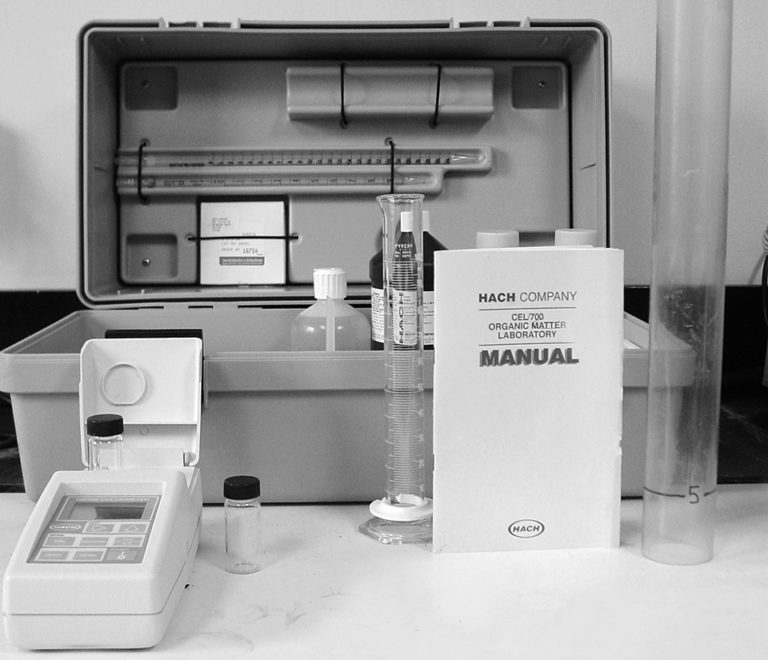
Organic matter – including fertilizers, unconsumed feed and feces of culture animals – settles to pond bottoms, often with a negative impact on water quality.
Health & Welfare
Consumer interest in water quality may prompt industry to further limit chemical use and improve biosecurity programs as an alternative to antibiotics.

Health & Welfare
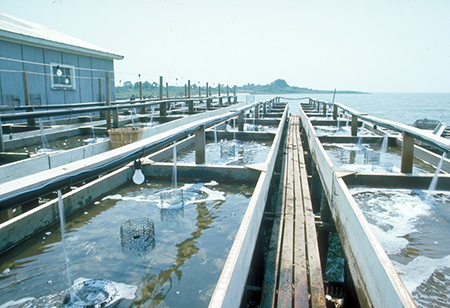
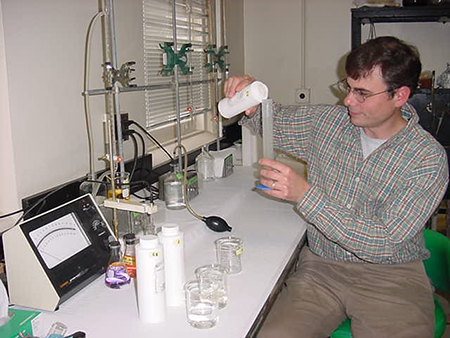
Future increases in U.S. shrimp farming are likely to be inland, which entails the use of ground waters with an ion concentration vastly different from seawater.
Responsibility
The ionic composition of inland well water can vary from suitable to toxic to cultured animals. Reliable data on concentrations of major cations (calcium, magnesium, potassium, and sodium) and major anions (bicarbonate, sulfate, and chloride) is therefore important in the management of waters for inland shrimp farming.