Health & Welfare
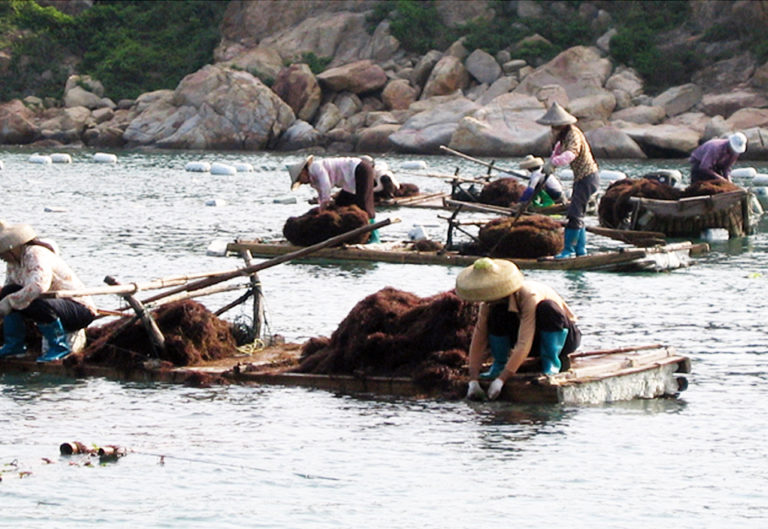
Gracilaria cultivation can provide bioremediation in Chinese mariculture
Large-scale Gracilaria cultivation can be an effective means of improving water quality and promoting a more sustainable mariculture industry in China.


Health & Welfare
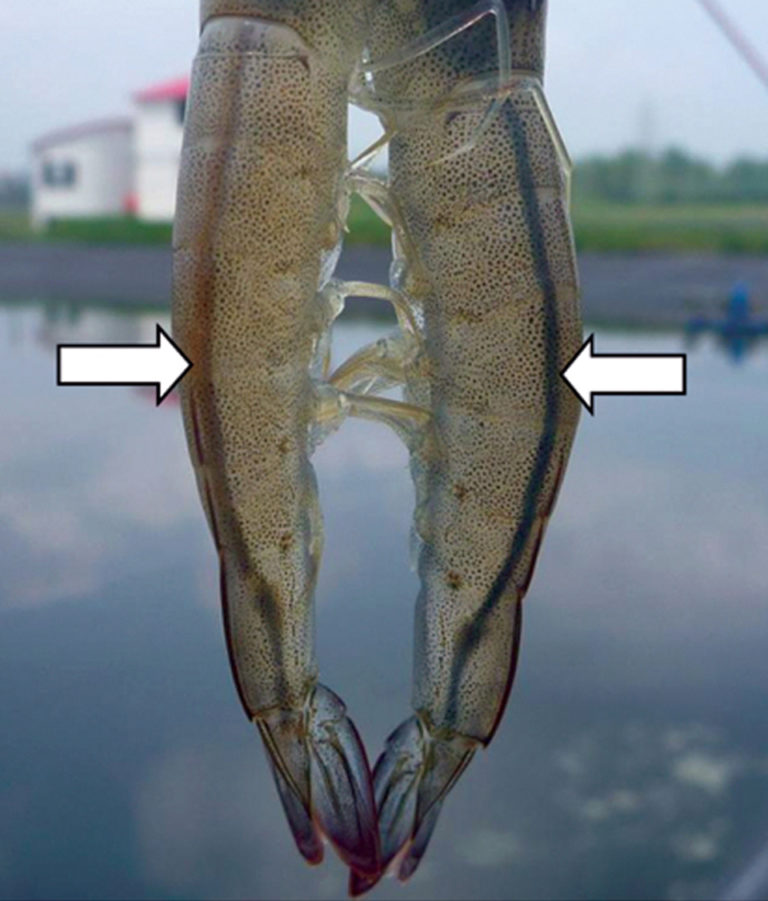
A technique based on checking the color of the shrimp intestine can complement the use of feed tables and trays, which are less effective at high temperatures, when no leftovers are found.
Health & Welfare
Large-scale Gracilaria cultivation can be an effective means of improving water quality and promoting a more sustainable mariculture industry in China.
Responsibility
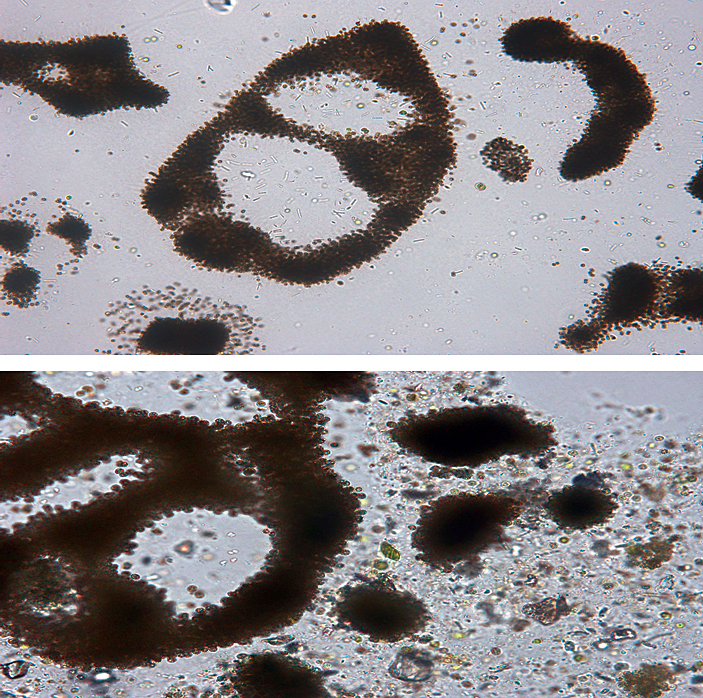
The most promising microcystin control in aquaculture is flocculation and sedimentation of harmful algal blooms with clay.
Health & Welfare
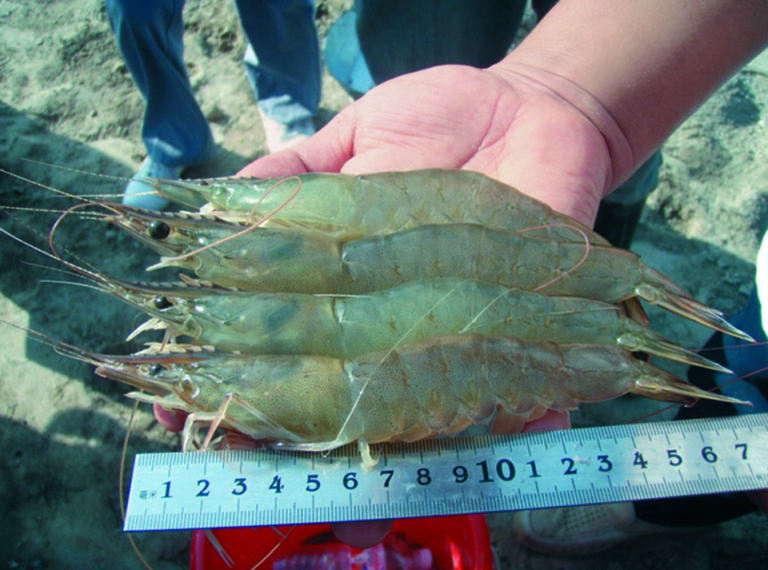
In China, fleshy shrimp have had much higher market value than other shrimp species. China’s aquaculture scientists and fishery agencies have therefore worked closely with shrimp farmers to rebuild the farming industry for F. chinensis.
Health & Welfare
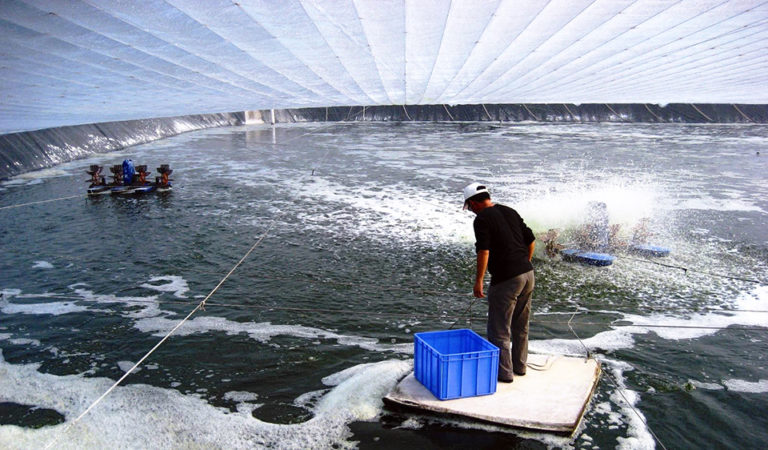
Biofloc technology provides high productivity, low feed-conversion ratios and a stable culture environment. Also, with viral problems and rising costs for energy, biofloc technology can help deliver sustainable production at lower cost.
Intelligence
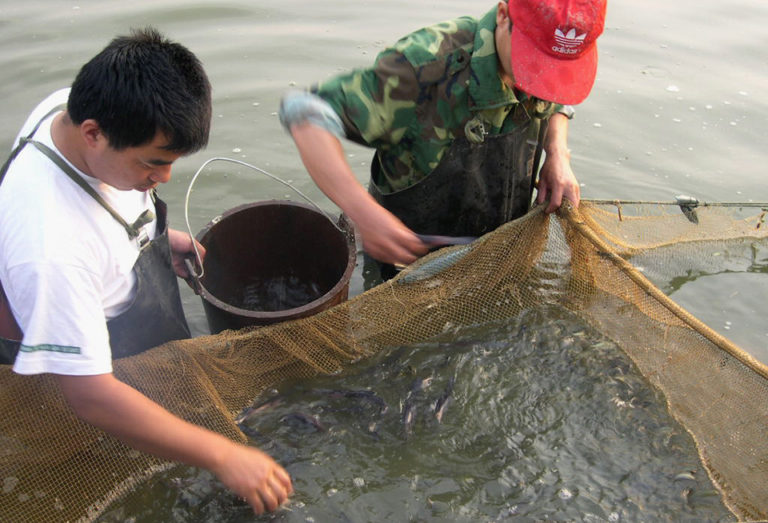
Fish farmers rear paddlefish as a substitute for bighead carp in more than 10 provinces in China. Limited supply and high fingerling prices limit expansion of production.
Responsibility
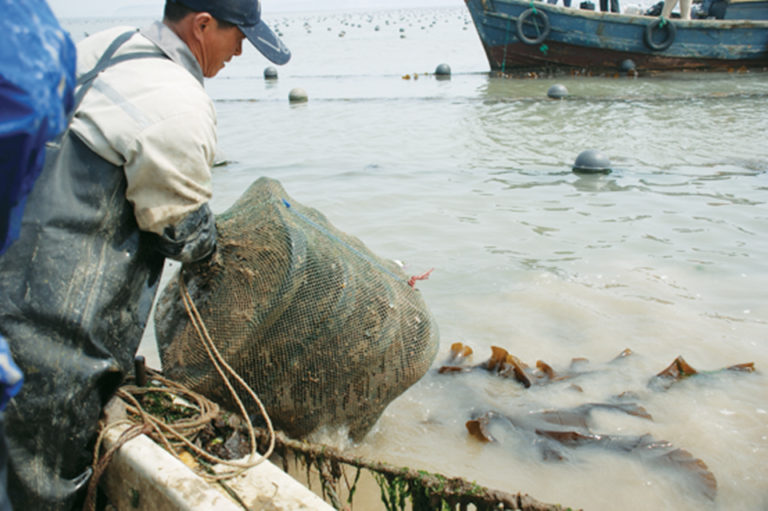
In the authors’ recent study, sea cucumbers were added directly to abalone cages with no modifications of the culture equipment to form a simple, low-cost IMTA production system.
Responsibility
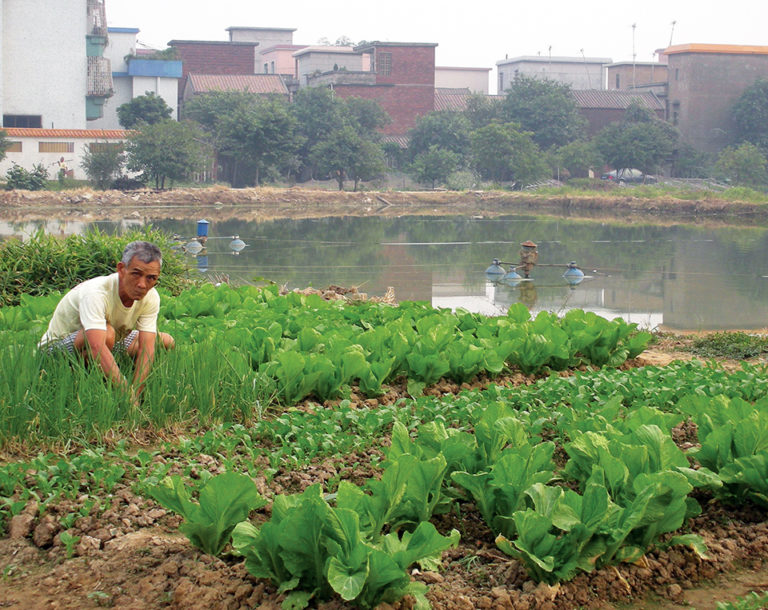
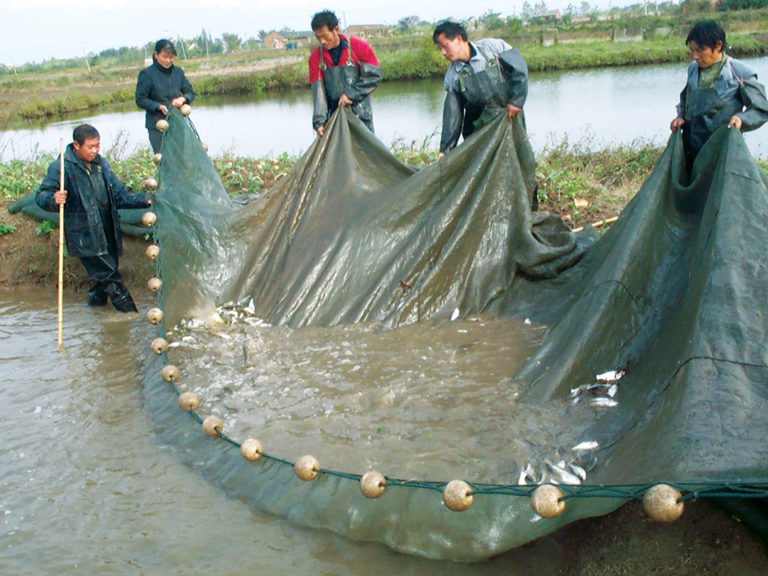
Pond aquaculture in China is trending further from traditional carp polyculture toward monoculture of higher-value fish species.
Aquafeeds
Results of studies indicate that soy protein concentrate can be substituted for fishmeal in diets for common carp, grass carp, tilapia and channel catfish fingerlings raised in ponds and cages.
Health & Welfare
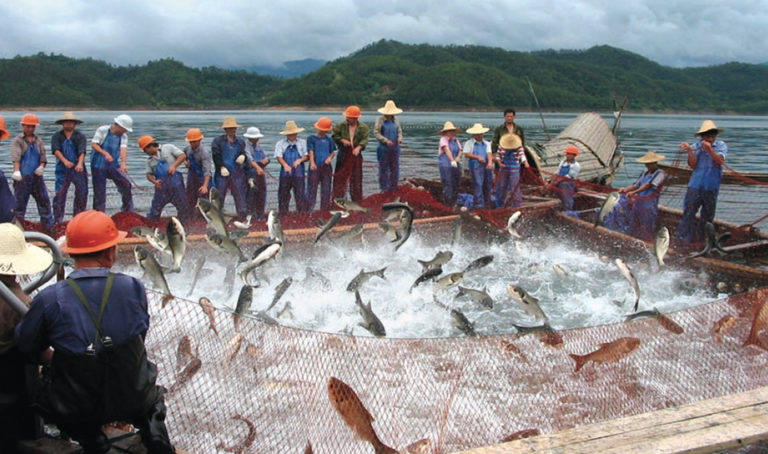
About 60 percent of China’s aquaculture production is freshwater fish. Carps top the list, although many other native and non-native species are also raised.