


Tasmanians pursue selective breeding to produce salmon with improved heat and disease tolerance

Producers say selective breeding has yielded salmon with stronger tolerance to heat and P. salmonis after last summer’s mass losses
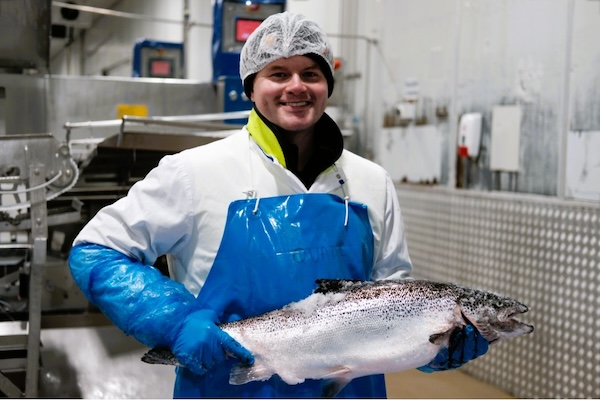
Two salmon producers operating in Tasmanian waters have used selective breeding to produce Atlantic salmon that can better withstand warmer conditions and Piscirickettsia salmonis – a bacterial disease linked to a mass mortality event last summer that killed up to 15,000 tonnes of fish.
Huon Aquaculture and Tassal, which farm salmon in south-east Tasmania, report that they examined the DNA of about 10,000 fish to identify individuals that showed greater resilience to heat stress and the P. salmonis pathogen. The companies say the approach marks the first time their selective breeding programs have specifically targeted resistance to the bacteria.
“We can use the top 1 per cent of our males like a stud bull,” Huon breeding program manager Lewis Rands told the Australian Broadcasting Corporation (ABC) News. “Choosing the very best fish has a massive impact on our whole industry.”
P. salmonis can cause fish to stop feeding and become emaciated, often leading to death. The pathogen was identified as a major factor in the January to April mortality event, during which time dead fish matter washed ashore on southern Tasmanian beaches.
![Ad for [BSP]](https://www.globalseafood.org/wp-content/uploads/2025/07/BSP_B2B_2025_1050x125.jpg)
As reported by ABC News, juvenile salmon from the selective breeding program are expected to be transferred to ocean pens in February. However, Salmon Tasmania’s chief executive, John Whittington, said any gains from the new genetics are not expected to influence outcomes in the coming summer.
“We will see [that] over the coming years,” he said. “This summer, it’s the other tools in the toolbox that we’re relying on: the vaccines, the feeding and antibiotics, when necessary.”
Does aquaculture really need a heat-tolerant salmon to adapt to rising ocean temperatures?
In September, producers announced that salmon in the state’s south-east had been vaccinated against P. salmonis, although vaccine efficacy is not yet known. Last week, the industry received federal approval for florfenicol, a new antibiotic that Huon Aquaculture and Tassal have since administered at several sites.
Selective breeding has been part of the companies’ operations since 2004, but Rands said this year’s effort was the first to focus directly on P. salmonis.
“This stock we know for sure will have a better survivability, and we’ll have to measure that when it gets to sea,” he said. “As devastating as it was to lose fish over summer, we collected a lot of genetic knowledge […] and we’ve used that to create this new generation.”
A Tasmanian government debrief released after the mortality event found the industry lacked a mass mortality response plan, which contributed to delayed decision-making. The report recommended the use of multiple disease-management measures, including selective breeding, vaccination, antibiotic treatment, epidemiological surveillance, on-farm practices and pathogen-specific regulations.
Company scientists say monitoring of the selectively bred fish will continue after their release into ocean pens early next year.
Now that you've reached the end of the article ...
… please consider supporting GSA’s mission to advance responsible seafood practices through education, advocacy and third-party assurances. The Advocate aims to document the evolution of responsible seafood practices and share the expansive knowledge of our vast network of contributors.
By becoming a Global Seafood Alliance member, you’re ensuring that all of the pre-competitive work we do through member benefits, resources and events can continue. Individual membership costs just $50 a year.
Not a GSA member? Join us.
Author

Related Posts
Aquafeeds
Selective breeding represents a fresh hope for microalgae as a feed ingredient
Nofima researchers find that selective breeding yields faster-growing microalgae that produce more omega-3 fatty acids crucial to aquafeeds.
Intelligence
Playing favorites: How selective breeding can grow the seaweed sector
Seaweed farming experts are urging producers to employ selective breeding to capitalize on desired traits amid a changing climate.
Innovation & Investment
With tools like CRISPR, can genome editing deliver more resilience for aquaculture?
Research in Japan shows genome editing can improve muscle growth in farmed fish, resulting in less feed and boosting disease resistance.
Health & Welfare
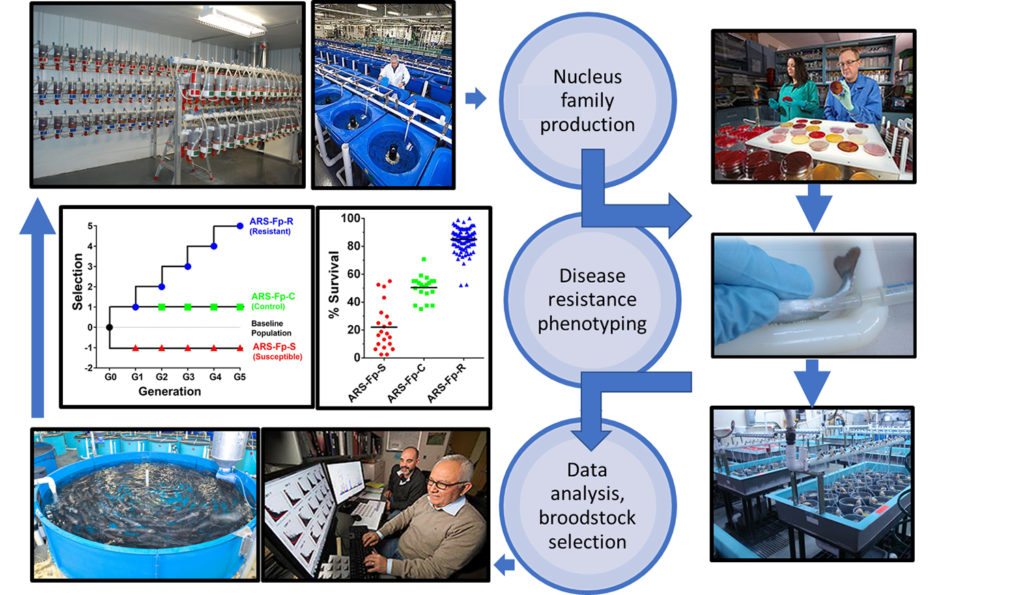
Genetic improvement of disease resistance through selective breeding
This study, involving more than 10 years of research on selective breeding, has shown that selective breeding can create considerable phenotypic divergence in rainbow trout lines when targeting a specific pathogen.