


Study focuses on tissue remodeling and disease resilience in farmed salmon

University of Stirling study to examine tissue repair during smoltification to improve farmed salmon health in aquaculture
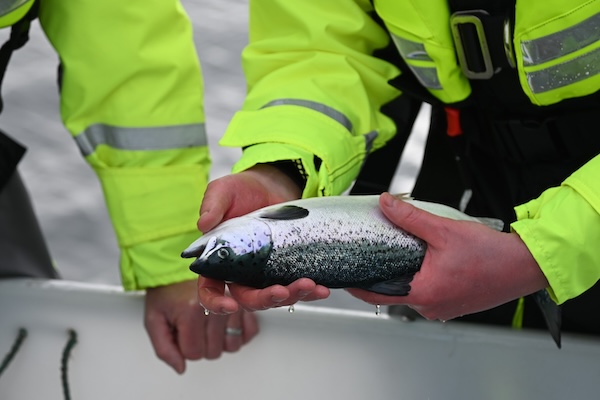
A University of Stirling-led research team has received more than £1.4 million (U.S. $1.87 million) to investigate salmon health, targeting gill and skin conditions that contribute to high mortality rates in UK aquaculture. Funded by the UKRI Biotechnology and Biological Sciences Research Council (BBSRC), the project will examine how farmed salmon remodel and strengthen their tissues during early development, with the aim of improving disease resilience in farmed fish.
The study will be based at the University of Stirling’s Institute of Aquaculture and is supported by £120,000 (about $150,000) in support from Benchmark Genetics. Researchers will study salmon during smoltification – a key stage when young fish adapt from freshwater to seawater. This critical process involves major changes in the body, making it valuable for understanding how fish both repair and strengthen their tissues.
“When smoltification fails to proceed normally, the fish become more vulnerable to stress and disease,” said Dr. Ruiz Daniels. “By examining smoltification as a biological remodeling event, we can identify how salmon repair tissues, resist disease, and adapt to changing environments. The findings will help inform improved breeding and health management strategies that enhance resilience across the industry.”
The project has three primary aims: to develop tools that measure how effectively salmon repair tissues during smoltification; to assess whether those repair mechanisms have a genetic basis that could inform breeding programs; and to identify the cellular processes involved in tissue repair and their relationship to long-term health.
![Ad for [Aquademia]](https://www.globalseafood.org/wp-content/uploads/2025/07/aquademia_web2025_1050x125.gif)
By linking genes and biological pathways to successful smoltification, the team aims to develop tools that support fish health and productivity while improving the sustainability of Scotland’s salmon farming sector.
“This work will help transform how we understand salmon biology,” said Daniels. “Recognizing remodeling as a selectable trait will support breeding strategies that enhance survival and welfare across aquaculture.”
The study builds on existing research and continues the university’s collaboration with Benchmark Genetics and other aquaculture partners.
“Developing new health traits that complement existing gill health traits marks an important step toward improving salmon welfare at critical stages of production, including during smoltification,” said Andrew Preston of Benchmark Genetics. “By broadening our understanding of the biological processes behind cell repair, our goal is to harness this knowledge to enhance robustness in salmon farming, supporting healthier fish at all stages during production.”
Now that you've reached the end of the article ...
… please consider supporting GSA’s mission to advance responsible seafood practices through education, advocacy and third-party assurances. The Advocate aims to document the evolution of responsible seafood practices and share the expansive knowledge of our vast network of contributors.
By becoming a Global Seafood Alliance member, you’re ensuring that all of the pre-competitive work we do through member benefits, resources and events can continue. Individual membership costs just $50 a year.
Not a GSA member? Join us.
Author

Related Posts
Innovation & Investment
Chinese scientists tour University of Stirling’s research hub to explore aquaculture innovation
A delegation of Chinese scientists explored how the University of Stirling's new research hub could drive sustainable aquaculture innovation.
Health & Welfare
Salmon skin cell discovery could improve wound healing and fish health in aquaculture
Scientists discover stem-like skin cells in salmon that aid healing, offering new ways to boost fish health and survival in aquaculture.
Innovation & Investment
University of Stirling leads sustainable aquaculture project in Vietnam’s Mekong Delta
The AquaSoS project uses digital tools to boost sustainable aquaculture in Vietnam, addressing disease, climate change and pollution.
Innovation & Investment
New UK aquaculture hub aims to drive industry innovation and sustainability
The National Aquaculture Technology and Innovation Hub will create jobs and position the UK as innovation leader for the seafood industry.