


Responsible Seafood Innovation Awards finalist: The on-board innovation set to improve animal welfare – and life on deck – for the U.K. scampi industry

New on-board technology that stuns and tails nephrops promises better animal welfare, safer crews and added value for UK scampi industry
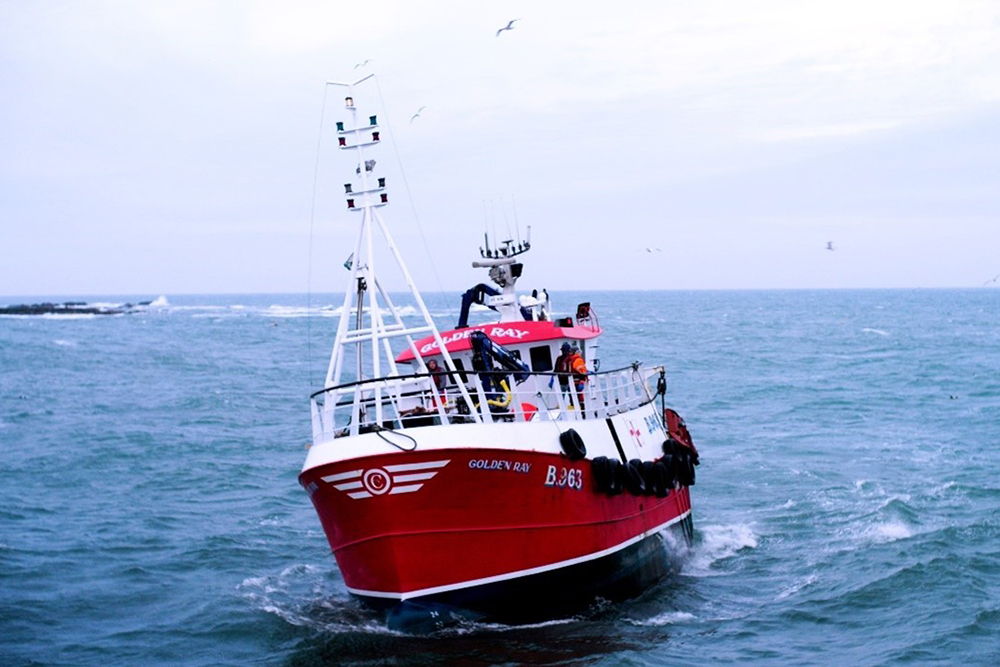
Two years ago, a group of nephrops fishing producers, processors, retailers and scientists stepped out for a coffee break during a skipper expo in Aberdeen, Scotland. The conversation turned to a shared challenge: how to improve animal welfare practices and working conditions in the United Kingdom’s (U.K.) scampi supply chain.
At the time, crews were expected to remove live nephrops’ tails by hand, one-by-one – a repetitive task that was increasingly at odds with the UK’s evolving animal welfare legislation. Out of that discussion came a coalition determined to find a better way for the animals and the crew.
Now, their innovative solution – an on-board machine that electrically stuns and removes the tails of nephrops (also known as the langoustine or Nephrops norvegicus) – is a finalist in this year’s Responsible Seafood Innovation Awards in the fisheries category.
The team, led by Fisheries Innovation & Sustainability (FIS) with funding from the English and Northern Irish governments, is testing a prototype that uses laser-guided precision technology to stun nephrops before de-heading them. Developed by Optimar, the system merges two existing technologies that have never been combined on nephrops vessels in U.K. waters. Once transferred from the net to a conveyer belt, nephrops are stunned and then cleanly tailed to maximize the yield.
![Ad for [membership]](https://www.globalseafood.org/wp-content/uploads/2025/07/membership_web2025_1050x125.gif)
“Usually there would be lots of crew members working on these animals in a task that is stressful and repetitive,” said Kara Brydson, executive director at FIS. “This machine ticks all the boxes. It maintains a high level of quality, creates a better working environment for the crew and allows businesses to meet new requirements for animal welfare.”
Moreover, the machine isn’t replacing the jobs of highly skilled fishermen – instead, it releases them to perform other tasks.
“In the summer, for example, when catches are high, the machine will ensure processing is done at pace and with precision, which means the crew can resume fishing faster,” said Brydson. “And for skippers who are struggling to find crew, the machine could take up the slack and ensure the business stays viable.”
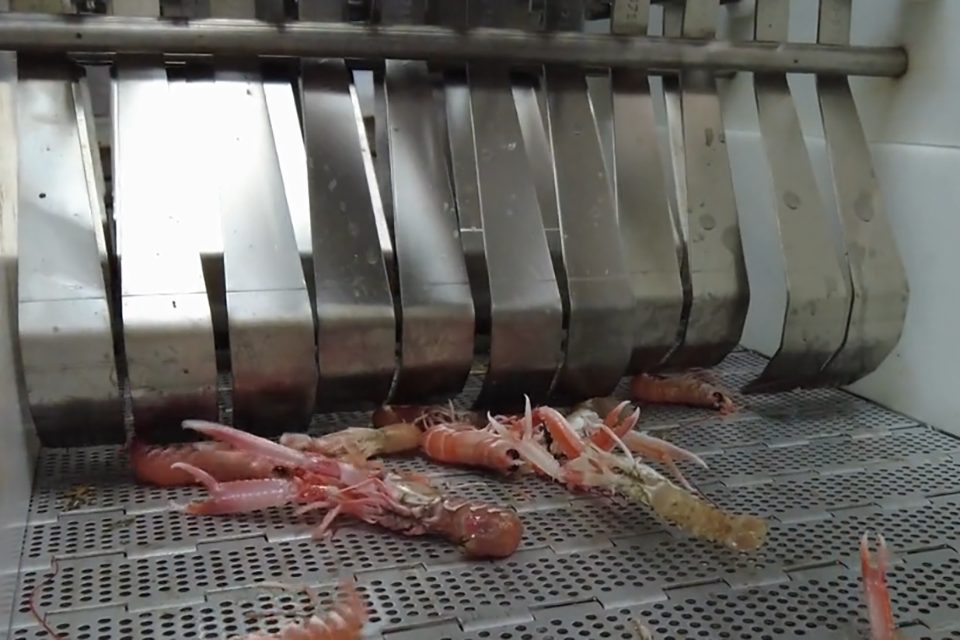
Now that the prototype machine has performed well at sea, a full-capacity stunning and tailing machine is being tested at the Optimar factory in Norway. In the spring, it will return to sea trials aboard the commercial fishing vessel, the Golden Ray. Its size is crucial, as it must fit below the deck of a typically small nephrops fishing boat.
“We’re in the process of ensuring it’s a practical solution, as well as safe and secure for the vessel and crew,” Brydson said, adding that the price of the machine has yet to be determined. “It has to be affordable and accessible for fishermen, and early adopters will help us learn and understand the business benefits of using this unique technology and what additional support is needed to ensure that fishing communities are ready to meet new rules on crew employment and animal welfare.”
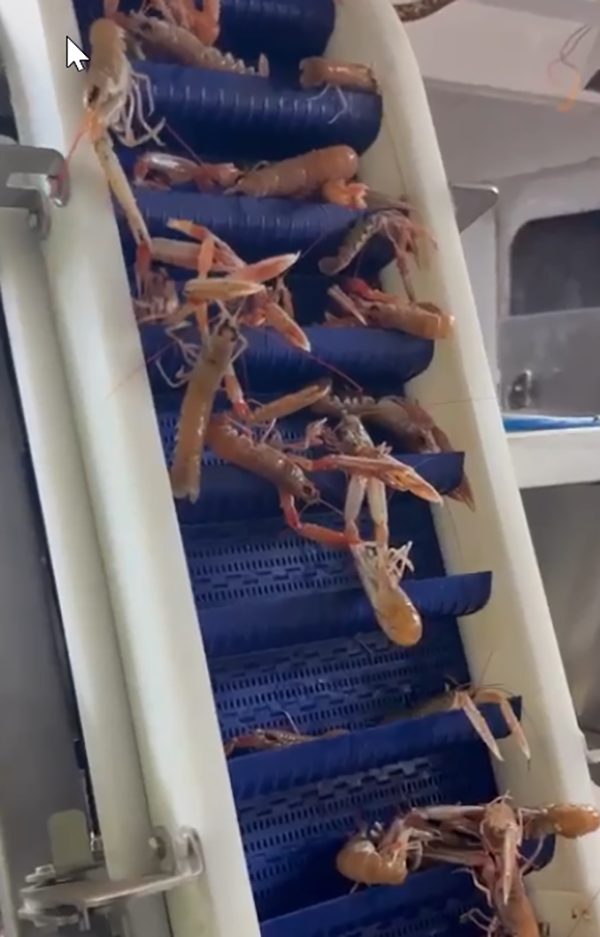
If the trials prove successful, the team expects the machine to be available for commercial use within the next year – a development that could reshape how nephrops are processed at sea.
“We don’t have years to wait for this, because this is such an important market in the UK,” she said. “As more and more markets are understanding the humane and ethical issues affecting wild-caught fish, they want to know about welfare at time of killing. Fishermen who want to access those markets have to show they’re doing the right thing and are compliant with new welfare legislation.”
The technology could provide other benefits, too, such as making it easier to collect shells for zero-waste initiatives. For fishermen, that could mean adding a new value stream to their vessel, such as selling the shells for the extraction of chitin – a valuable natural product used in medical and industrial processes.
Brydson said it’s been “amazing” to see coalition members’ place their trust in the process of pre-competitive collaboration.
“People have been thinking about this type of machinery for years and working on it in individual silos at great expense, but with no success,” she said. “Now, for the first time, everyone has been working together to crack this nut, improve welfare practices, reduce costs and make this fishery more efficient. This machine will create business and community resilience in a valuable market that feeds our families.”
GSA’s Responsible Seafood Innovation Awards – sponsored by the U.S. Soybean Export Council – for the aquaculture and fisheries categories will be awarded at the Responsible Seafood Summit in Cartagena, Colombia, on September 30, 2025. The winner will be decided by an audience poll. Learn more about the Summit here.
Now that you've reached the end of the article ...
… please consider supporting GSA’s mission to advance responsible seafood practices through education, advocacy and third-party assurances. The Advocate aims to document the evolution of responsible seafood practices and share the expansive knowledge of our vast network of contributors.
By becoming a Global Seafood Alliance member, you’re ensuring that all of the pre-competitive work we do through member benefits, resources and events can continue. Individual membership costs just $50 a year.
Not a GSA member? Join us.
Author
-

Vancouver-based correspondent Lauren Kramer has written about the seafood industry for the past 15 years.
Related Posts
Responsibility
A helping hand to lend: UK aquaculture seeks to broaden its horizons
Aquaculture is an essential contributor to the world food security challenge, and every stakeholder has a role to play in the sector’s evolution, delegates were told at the recent Aquaculture’s Global Outlook: Embracing Internationality seminar in Edinburgh, Scotland.
Fisheries
Why WiFi? A connectivity crisis is a threat to fishing crews’ well-being
A lack of affordable and reliable Wi-Fi for crews jeopardizes their well-being and exposes them to exploitation and illegal fishing practices.
Intelligence
Alternative feeds, sea lice solutions and animal welfare innovations for aquaculture addressed in Bergen
Addressing aquaculture’s top challenges and opportunities, a call for collaboration emerges at the North Atlantic Seafood Forum in Norway.
Health & Welfare
Coho salmon farmer sees Ike Jime partnership as a welfare and quality differentiator
New York-based Local Coho is the first aquaculture company to partner with Shinkei Systems and its automated Ike Jime humane slaughter technology.