


Responsible Aquaculture Innovation Award Finalist: Can InnoCreate Bioscience completely reform pondside white spot syndrome virus detection on shrimp farms?

InnoCreate pioneers world’s first rapid test to quickly and affordably detect white spot syndrome virus (WSSV) on shrimp farms
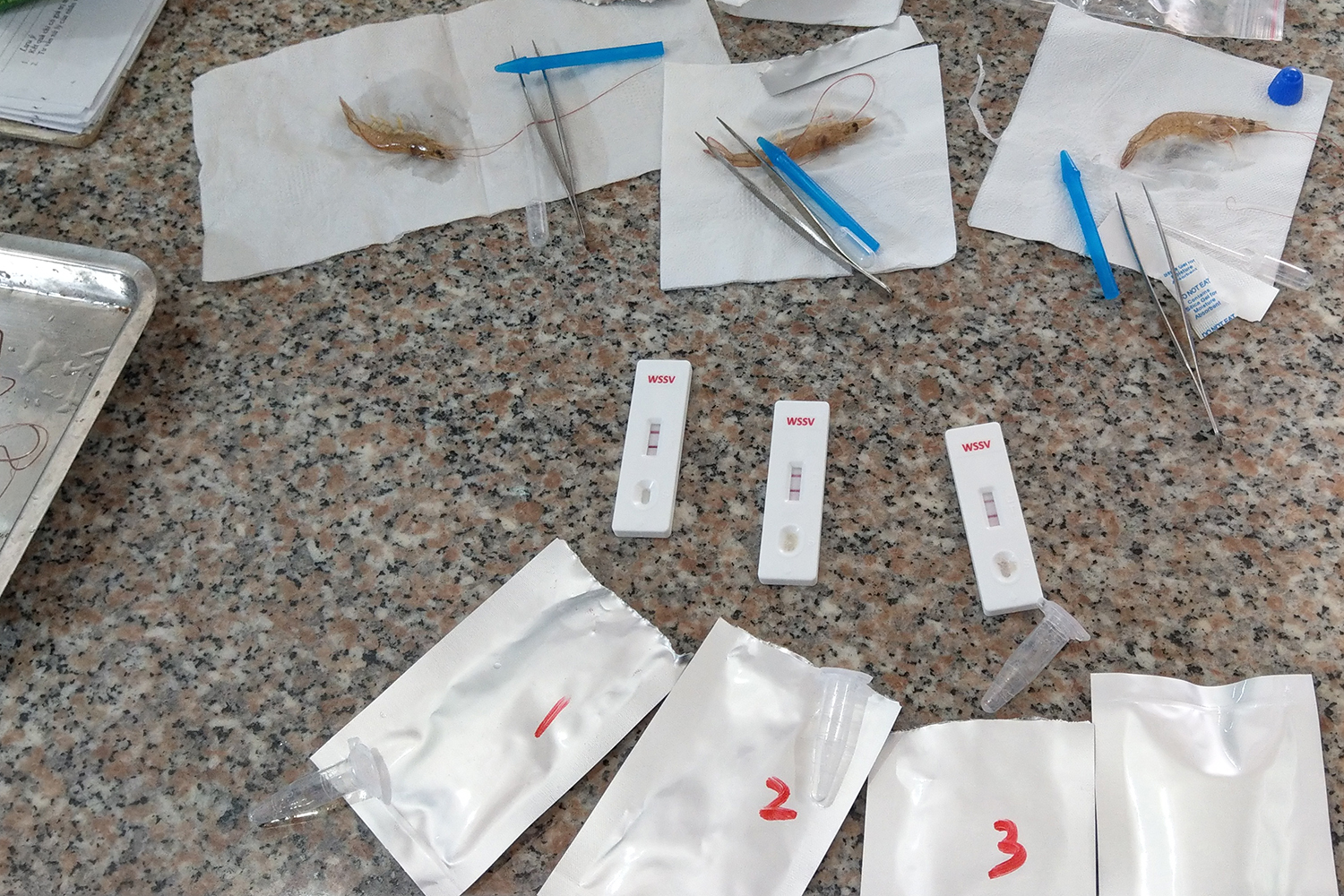
White spot syndrome virus (WSSV) is one of the most virulent diseases in shrimp aquaculture, causing rapid mass mortality in farmed penaeid shrimp and leading to billions in global losses annually. Despite prevention and control efforts, outbreaks of the virus persist, spreading quickly and leaving farmers little time to respond.
In some cases, studies show that infected shrimp can reach mortality rates of up to 100 percent within a week, said Dr. Jeff Chia-Kai Hsu, CEO of InnoCreate Bioscience Co., Ltd.
“Seeing the severity of WSSV on shrimp farms made me decide to tackle one of the most significant threats to successful shrimp farming,” Hsu told the Advocate. “It’s impossible to treat viral diseases like WSSV with antimicrobials, as there are no vaccines or treatment solutions available. It became clear to me how crucial it is for shrimp farms to have proper risk management strategies and accurate diagnostic solutions, especially when it comes to devastating pathogens like WSSV.”
Specializing in medical genetics, Hsu worked as a genetic disease technician before starting a research company and testing laboratory, Seeing Bioscience Co., Ltd in 2002. The company provided contract research and testing services in the medical field. His trajectory shifted after working with Professor Grace Chu-Fang Lo, a specialist in white spot bacilliform virus (WSBV) at National Cheng Kung University in Taiwan. Recognizing the need for better disease control on shrimp farms, Hsu redirected his expertise to the shrimp sector. In 2014, he established his second company, InnoCreate Bioscience, to commercialize the research and development outcomes from Seeing Bioscience.
![Ad for [membership]](https://www.globalseafood.org/wp-content/uploads/2025/07/membership_web2025_1050x125.gif)
Fast forward to today, and Hsu has pioneered game-changing technology that could transform how shrimp farms detect deadly WSSV. After years of research and development, his team at InnoCreate Bioscience has developed the WSSV RP Rapid Test Kit, a lateral-flow immunoassay to quickly and reliably detect WSSV infection on-site. The first of its kind for aquatic animals, the contribution has earned the company a spot as a finalist for the 2025 Responsible Seafood Innovation Award in the aquaculture category.
Similar to a COVID-19 rapid test, the kit detects viral proteins directly on a test strip. Users place a gill sample from shrimp in a tube with an extraction buffer, mixed and applied to a test strip. Within 15 to 30 minutes, results appear: Two lines indicate the presence of a viral protein.
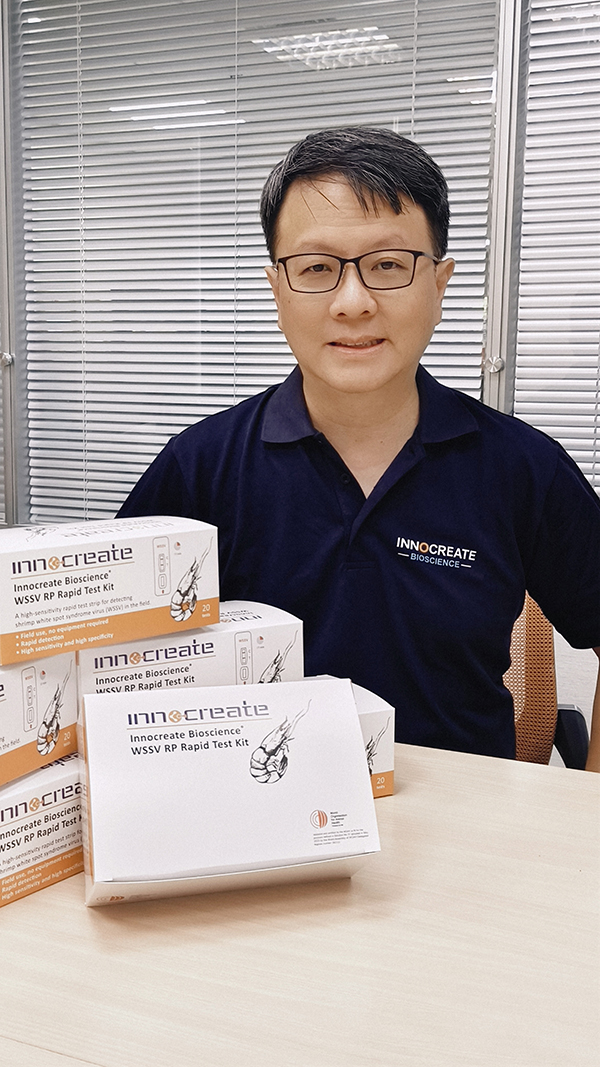
Designed for low-resource environments, the kit gives shrimp farmers a timely, field-based diagnosis tool to diagnose and proactively manage disease risks. Using immunochromatographic technology, it provides visual results without the need for electricity, additional instruments, trained personnel or professional training. Farmers can identify infection before clinical signs or mortality occur, allowing them to act quickly with measures such as quarantine, early harvest or biosecurity measures.
In 2023, the test kit was recognized by the World Organization for Animal Health (WOAH) as fit-for purpose for field-based confirmatory diagnosis.
“Our solution gives shrimp farmers better control over health risks on their farms, enhances responsiveness to WSSV and supports responsible aquaculture practices by identifying infections accurately, reducing the risk of unnecessary antibiotic use,” said Hsu. “It makes disease diagnosis a part of daily farm operations and supports a resilient and scalable approach to aquatic animal health.”
WSSV first emerged in shrimp farming in the early 1990s, when it was detected in Taiwan and China. Research from India shows that the virus occurs at a rate of approximately 25 percent, Hsu noted, inflicting severe damage on shrimp gills and hepatopancreas organs. Environmental or physiochemical factors – such as changes in salinity, temperature or oxygen – can cause viral multiplication and trigger disease outbreaks. Incidents have grown as shrimp production systems have become more intensive and stock densities have increased.
While continual disease surveillance remains essential, Hsu says that farmers need affordable, accessible management tools to minimize production and economic losses.
“Standard diagnostic tools like qPCR are mainstream in aquaculture, but they require specialized equipment and training, so farmers in rural areas cannot use them,” said Hsu. “Instead, they send samples to laboratories and wait for a result. But they may lose a significant number of their shrimp in the meantime. Lacking access to timely diagnostics also results in delayed responses or a misinformed use of antibiotics.”
The test kit also does more than quickly diagnose disease, Hsu added.
“A lot of farmers don’t have enough knowledge of viral diseases, so if they find something abnormal, they will use antibiotics or release infected shrimp into nearby rivers, but this has negative implications on wider areas such as animal welfare, the environment and human health,” he said. “Our test kit goes beyond precisely diagnosing WSSV infection. It has far-reaching, positive impacts on farm health, shrimp yields, farmers’ livelihoods and food security.”
So far, trials show promise: Sensitivity analyses indicated that the kit can reliably detect 0.4 nanograms of a recombinant target protein in just 15 minutes. Crucially, the test kit didn’t return false positive reactions when testing samples infected other pathogens, including Vibrio parahaemolyticus (the causative agent of acute hepatopancreatic necrosis disease, or AHPND), Enterocytozoon hepatopenaei (EHP). After analyzing 231 samples, the test kit achieved a 99.2 percent sensitivity and 100 percent specificity.
Feedback from the field has also been positive, said Hsu, who has received several testimonials from customers who have successfully used the test kit and now feel more confident about making timely management decisions.
“Our test kit is a convenient, practical diagnostic tool,” said Hsu. “We are trying to solve a problem in a way that makes disease management much easier for farmers.”
Building on its research successes, InnoCreate Bioscience is now developing rapid tests for other major shrimp diseases and exploring potential kit application in fish farming–an expansion opportunity with market potential. With the high demand for better disease control tools in aquaculture, Hsu is confident that the kit’s affordability, simplicity and non-reliance on infrastructure will drive adoption among both smallholders and large-scale commercial farms alike.
Looking ahead, another goal is to establish a comprehensive disease diagnostic platform for aquaculture, with easy field laboratory tests that will provide results within hours.
Our solution gives shrimp farmers better control over health risks on their farms, enhances responsiveness to WSSV and supports responsible aquaculture practices by identifying infections accurately, reducing the risk of unnecessary antibiotic use.
“Disease prevention and the detection of viruses are key to good farm management and the foundation of disease and product quality control,” said Hsu. “We expect that our innovation will become a key health strategy in shrimp farming going forward and are confident that it will help shrimp farmers worldwide meet responsible aquaculture goals. We are honored and thrilled to be considered for a Responsible Seafood Innovation Award, and are primed to build connections with other sectors in aquaculture as we continue our important work.”
GSA’s Responsible Seafood Innovation Awards–sponsored by the U.S. Soybean Export Council–for the aquaculture and fisheries categories will be awarded at the Responsible Seafood Summit in Cartagena, Colombia, on September 30, 2025. The winner will be decided by an audience poll. Learn more about the Summit here.
Now that you've reached the end of the article ...
… please consider supporting GSA’s mission to advance responsible seafood practices through education, advocacy and third-party assurances. The Advocate aims to document the evolution of responsible seafood practices and share the expansive knowledge of our vast network of contributors.
By becoming a Global Seafood Alliance member, you’re ensuring that all of the pre-competitive work we do through member benefits, resources and events can continue. Individual membership costs just $50 a year.
Not a GSA member? Join us.
Author
-

Correspondent Bonnie Waycott became interested in marine life after learning to snorkel on the Sea of Japan coast near her mother’s hometown. She specializes in aquaculture and fisheries with a particular focus on Japan, and has a keen interest in Tohoku’s aquaculture recovery following the 2011 Great East Japan Earthquake and Tsunami.
Related Posts
Health & Welfare
The unmet promise of pondside PCR
A new generation of technology, portable PCR, offers potential for affordable, immediate, pondside diagnosis in easy-to-use handheld kits. But will it live up to the hype?
Health & Welfare
Rapid test detects NHP in penaeid shrimp
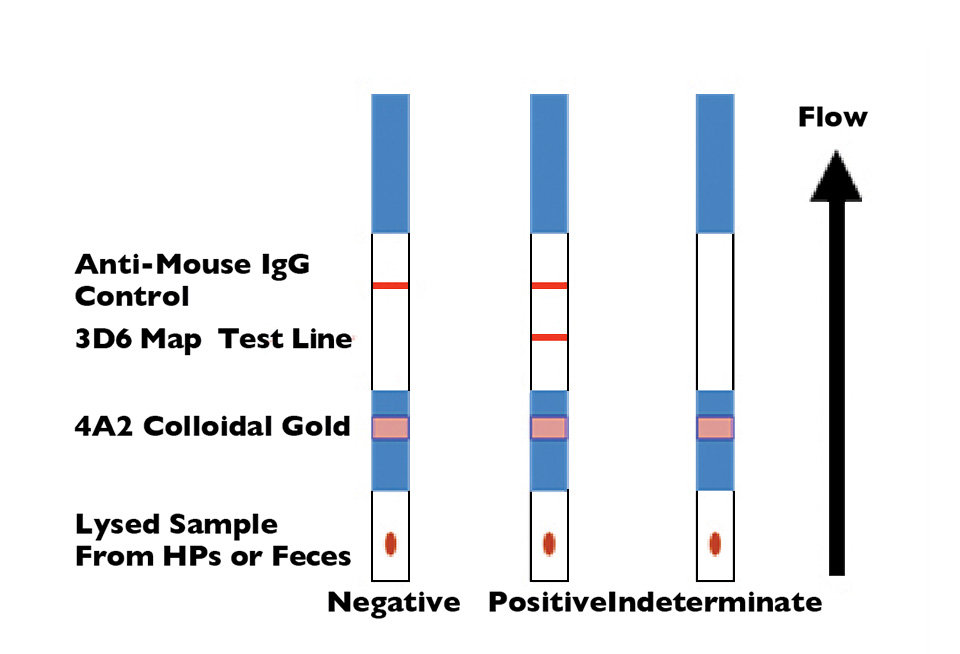
A rapid lateral-flow immunoassay using monoclonal antibody combinations can identify necrotizing hepatopancreatitis (NHP) infection in less than 15 minutes.
Health & Welfare
How can Norway defeat pancreatic disease in salmon? By detecting it faster.
Polish pathogen diagnostics group will soon launch a test system that can identify the costly pancreatic disease (and six others) in just 10 minutes.

Innovation & Investment
Proteon Pharmaceuticals poised to grow its bacteriophage products for aquaculture
Bacteriophage producer nets €21 million to accelerate the commercialization of its products, which aim to reduce antibiotic usage in aquaculture.