


Project targets fish welfare to protect Amazonian livelihoods and rainforest conservation

Fish welfare improvement work includes practical, low-cost changes to reduce stress and mortality in wild-caught fish during capture, transport and holding
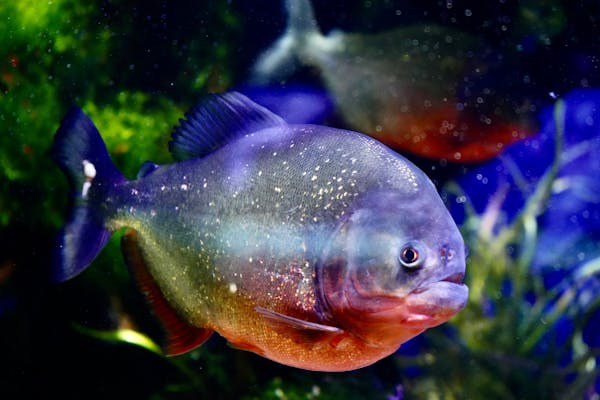
A new international research project aims to improve welfare in the ornamental fish trade by developing practical, low-cost changes that support Amazonian livelihoods and rainforest conservation.
The two-year project led by the University of Glasgow is funded with £980,000 (about $1.3 million USD) from UK Research and Innovation, and brings together researchers from the United Kingdom, Brazil and Norway across biology, economics and social science. It aims to develop practical, low-cost changes to reduce stress and mortality in wild-caught fish during capture, transport and holding, while also supporting rainforest conservation.
“This project is about finding practical ways to make the ornamental fish trade work better for everyone involved,” said Shaun Killen, project lead and professor at the University of Glasgow. “By working directly with Amazonian fishing communities, we want to improve welfare for wild-caught fish, improve the reliability of incomes for fishers and help maintain the strong link between sustainable livelihoods and rainforest conservation.”
Each year, the ornamental fish trade moves millions of tropical fish to home aquariums worldwide and generates an estimated $15 billion to $20 billion in economic value. In rural communities of the Brazilian Amazon, the trade provides more than half of household income and is one of the few sustainable livelihood options available. Because the trade depends on healthy rivers and intact forests, it also creates an incentive to preserve the Amazonian rainforest.
![Ad for [BSP]](https://www.globalseafood.org/wp-content/uploads/2025/07/BSP_B2B_2025_1050x125.jpg)
In recent years, shifting market demand, low and inconsistent compensation for fishers, and growing concerns over fish welfare have contributed to a decline in Brazilian exports of ornamental fish. Retailers increasingly report that fish sourced from Brazil arrive in poor condition, prompting buyers to favor farmed alternatives.
These shifts threaten both local livelihoods and the conservation benefits associated with wild, low-impact fisheries. Women, who participate directly in the fishery, are among the most affected by these changes, according to the project description.
The research team will work closely with Amazonian fishing communities to track how fish move through the supply chain and identify problem areas where fish welfare and economic losses overlap.
The project will focus on developing and testing low-cost changes to reduce fish stress and mortality, providing fishers with simple tools to monitor fish condition in real time, and examining consumer and retailer preferences in the United Kingdom, including willingness to pay for higher-welfare fish.
“The solutions we’re developing are designed to be low-cost, evidence-based and feasible to implement in real supply chains,” said Killen.
Researchers also plan to model ecological and economic outcomes to inform long-term sustainability and policy options, including the potential use of welfare-linked certification.
The research will focus on two species – the cardinal tetra (Paracheirodon axelrodi) and dwarf cichlids (Apistogramma species) – chosen for their different behaviors and handling requirements. By studying both, the team aims to assess fish welfare across a range of conditions commonly encountered in the trade.
The project will also develop a simple welfare scoring system that fishers can use to quickly assess fish condition, allowing them to release compromised individuals early or adjust handling practices to improve fish survival and overall quality.
“Improving the welfare of fish transported within the ornamental trade is of vital importance,” said Kath Sloman, project co-lead and professor at the University of the West of Scotland. “Not only does it improve the lives of the fish people keep in their home aquaria, but it also contributes to the sustainability of the fishery and the Amazonian rainforest.”
Now that you've reached the end of the article ...
… please consider supporting GSA’s mission to advance responsible seafood practices through education, advocacy and third-party assurances. The Advocate aims to document the evolution of responsible seafood practices and share the expansive knowledge of our vast network of contributors.
By becoming a Global Seafood Alliance member, you’re ensuring that all of the pre-competitive work we do through member benefits, resources and events can continue. Individual membership costs just $50 a year.
Not a GSA member? Join us.
Author

Related Posts
Health & Welfare
TCRS secures grant to advance farmed fish welfare research
A grant from Coefficient Giving will fund research into humane slaughter methods, advancing animal welfare during seafood processing.
Health & Welfare
Handbooks help salmon farmers improve fish welfare during crowding
A new resource from Nofima and the Institute of Marine Research aids salmon farmers in monitoring and improving fish welfare during crowding.
Health & Welfare
University of Stirling’s new grant aims to advance fish welfare and responsible aquaculture in Southeast Asia
The University of Stirling has received $2.6M to improve fish welfare in Southeast Asia and promote responsible aquaculture practices.
Health & Welfare
Study calls for animal welfare improvements in global aquaculture
New study measures fish suffering during slaughter, offering data-driven, cost-effective solutions to improve animal welfare globally.