

Handbooks help salmon farmers improve fish welfare during crowding
New handbooks aim to help salmon farmers monitor and manage fish welfare during crowding – a critical, high-stress stage in aquaculture
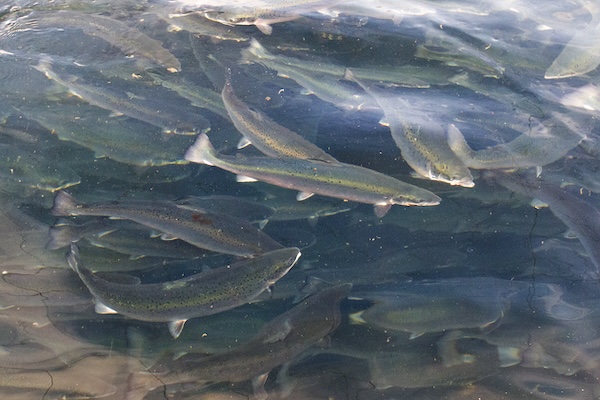
Food research institute Nofima and the Institute of Marine Research have released two handbooks on measuring and monitoring salmon welfare during crowding – one for tanks and another for marine net pens.
Crowding occurs when fish are moved or treated, temporarily increasing density and reducing water volume. The new handbooks update existing frameworks and tools for assessing welfare before, during and after this process. They include guidance for monitoring conditions above and below the waterline and introduce an underwater crowding intensity risk scale – the first of its kind – developed for remotely operated vehicle operators through research led by the Institute of Marine Research.
“We have received many inquiries about this from the industry in Norway and abroad, so there is clearly a need for more information,” said Chris Noble, project manager from Nofima.
The recommendations provide practical guidance for operators, though careful observation and data collection remain essential, the authors noted.

Recordings of the launch webinar are available on Nofima’s website, which will soon host the handbooks, posters and fact sheets. The publications are currently available in English and will be translated into Norwegian this winter. Noble and Lars Helge Stien of the Institute of Marine Research plan to host another webinar in April 2026 to gather feedback and, if needed, release an updated edition.
The handbooks were developed through the CrowdMonitor project, funded by the Norwegian Seafood Research Fund (FHF), with contributions from Cermaq Norway and Grieg Seafood.
Now that you've reached the end of the article ...
… please consider supporting GSA’s mission to advance responsible seafood practices through education, advocacy and third-party assurances. The Advocate aims to document the evolution of responsible seafood practices and share the expansive knowledge of our vast network of contributors.
By becoming a Global Seafood Alliance member, you’re ensuring that all of the pre-competitive work we do through member benefits, resources and events can continue. Individual membership costs just $50 a year.
Not a GSA member? Join us.
Author
Related Posts
Health & Welfare
Warmer water temperatures boost farmed salmon growth in seawater but raise health concerns: Nofima study
Nofima study finds farmed salmon raised in warmer freshwater grew faster and thrived in seawater, but higher temperatures may impact health.
Health & Welfare
Early immune response key to sea lice resistance in Pacific salmon, study finds
Study links Pacific salmon’s rapid immune response to sea lice resistance – insights that could benefit Atlantic salmon farming.
Health & Welfare
Salmon skin cell discovery could improve wound healing and fish health in aquaculture
Scientists discover stem-like skin cells in salmon that aid healing, offering new ways to boost fish health and survival in aquaculture.
Health & Welfare
Nofima gleans new insights on how to protect farmed salmon from winter ulcers
The vaccine for Moritella viscosa, which causes winter ulcers, performs better if developed with the correct strain of bacteria, Nofima says.